All our daily guided tours to Stonehenge allow ample time to visit this superb English Heritage exhibition.

StonehengeNews's avatarStonehenge Stone Circle News and Information

New ‘Stonehengiana’ exhibition created by archeologist Julian Richards displays souvenirs and other ephemera charting history of site as tourist attraction since the 19th century. It has been a place of pilgrimage for many centuries and a tourist attraction probably since Roman times.  Wish You Were Here! takes a look back at how the ‘henge was viewed by previous generations and it provides a glimpse at the iconic role it has played in popular culture.

A new Stonehenge exhibition, Wish You Were Here, reveals the site’s history as a tourist attraction since Victorian times. Photograph: English Heritage/PA A new Stonehenge exhibition, Wish You Were Here, reveals the site’s history as a tourist attraction since Victorian times. Photograph: English Heritage/PA

From 1st May 2015 explore the ‘Wish You Were Here’ special exhibition in the Stonehenge visitor centre.  Celebrating both the changing ways in which Stonehenge has been experienced by its many visitors, and its status as a world-wide icon, through historical souvenirs, guidebooks, postcards and photographs.

The exhibition features items from the personal collection of Julian…

View original post 129 more words

StonehengeNews's avatarStonehenge Stone Circle News and Information

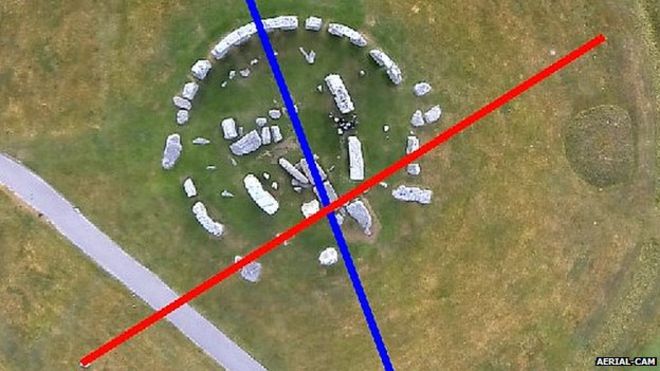
The tallest stone at Stonehenge points towards the sunrise on the midwinter solstice, according to a new theory from an English Heritage steward.

Aerial photograph of Stonehenge
The newly observed alignment (red line) is at 80 degrees to the line of the axis of the monument (blue line)

Historians have long known the circle of stones is aligned with the midsummer sunrise but Tim Daw says the tallest one is lined up with the midwinter sun.

It was previously thought the stone had been put back at the wrong angle when it was re-erected in 1901.

But Mr Daw, who works there, says his research shows its angle is deliberate.

‘Botched job’

Mr Daw said: “The largest stone at Stonehenge is not where it ‘should’ be, it is twisted.

“This stone, Stone 56, is the tallest one at the end of the inner horseshoe of sarsen stones.

“Because it was put back to the…

View original post 384 more words

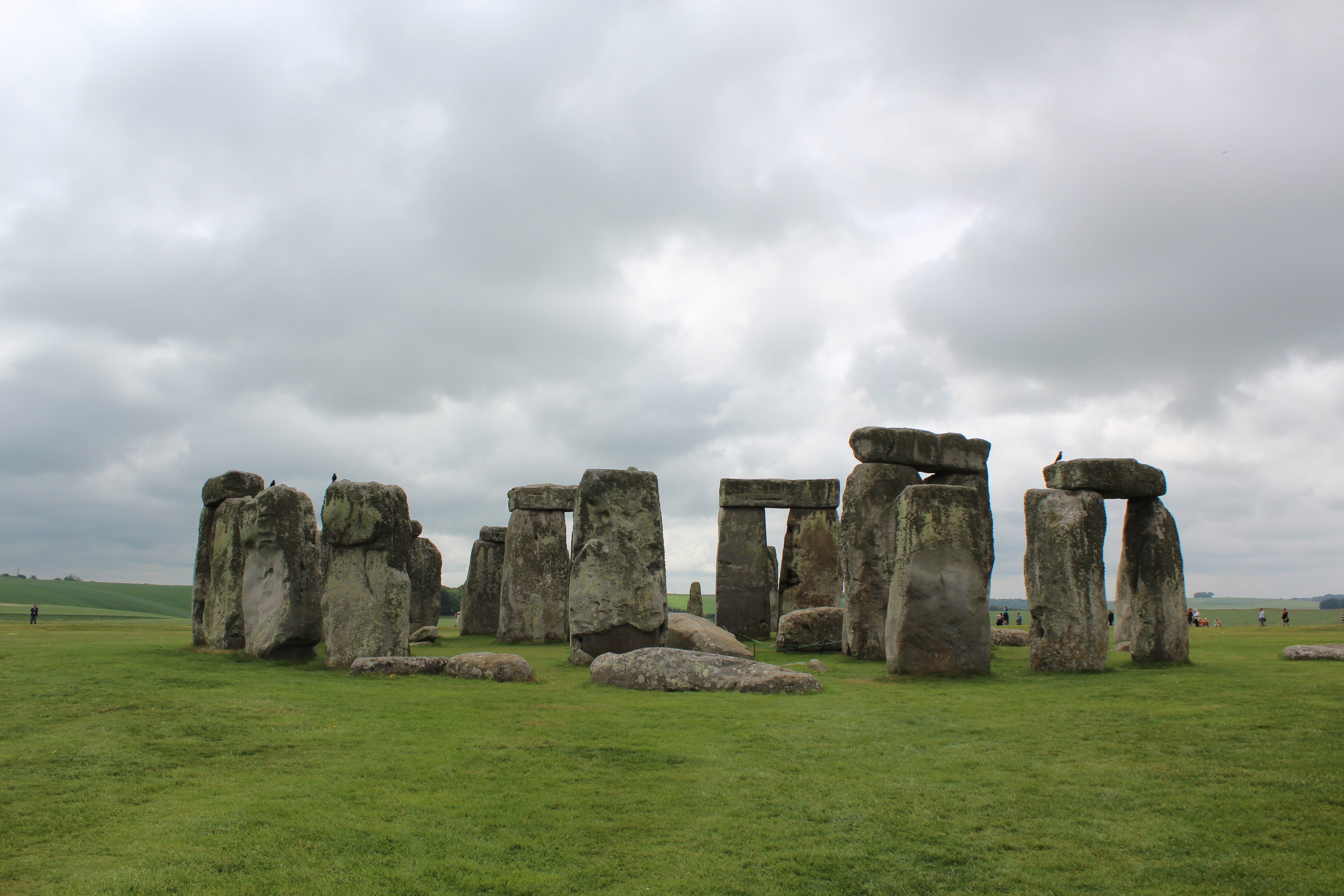
Stonehenge is one of the most recognized monuments in the world. We thought it would be fun to delve into the history of the place and focus on 10 interest facts and figures that people may not have known about Stonehenge.

IMG_9119

Date Built?

Much about Stonehenge remains a mystery – the biggest unanswered question is when was it built? Archaeologists believe it was built anywhere from 3000 BC to 2000 BC. Radiocarbon dating done in 2008 suggested that the first stones were raised between 2400 and 2200 BC, whilst another theory suggests that bluestones may have been raised at the site as early as 3000 BC.

Big Visitor Numbers

Stonehenge has over 1,000,000 visitors from all over the world ever year – making it one of Britain’s most popular tourist attractions.

The Stones Are Generally Off Limits

When Stonehenge was first opened to the public it was possible to walk among and even climb on the stones, but the stones were roped off in 1977 as a result of serious erosion. Visitors are no longer permitted to touch the stones, but are able to walk around the monument from a short distance away. English Heritage does, however, permit access during the summer and winter solstice, and the spring and autumn equinox. Additionally, visitors can make special bookings to access the stones throughout the year.

Massive Weight

Some of the stones can weigh up to 60 tons. One of the biggest mysteries is how the builders managed to get them onto the site and lift them in the prehistoric era.

The Stonehenge site is more than just the iconic stones at the center – the land surrounding the henge is a massive burial ground with over 200 people buried on the site.

A Bit of Wales

Some of the stones are Welsh bluestone – which only exists in Wales. The stones have been geologically placed to have in origin in western Wales – which is very far away from Wiltshire!

Who Owns It?

Stonehenge used to be a neglected monument on some absentee landowner’s land (and much damage was done to the monument). Eventually it was decided to be too important to trust to private ownership and the British Crown now owns the site. It is managed by English Heritage and the land surrounding the site is owned by the National Trust (which has a remit to protect its properties forever).

Check Your Sums

Those who built Stonehenge had to have been extremely sophisticated in mathematics and geometry. It was aligned with the midwinter sunset and the midsummer sunset. It was also aligned with the most northerly setting and most southerly rising of the moon.

Multiple Stones

The monument is made of two major types of stone, sarsens and bluestones (mentioned above). Sarsens are the larger ones, some of them reaching 9m tall and weighing over 20 tons. They are thought to have come from the Marlborough Downs, around 20 miles from Salisbury Plain.

Building A Tunnel

You can see Stonehenge from the main road – the A303 – as you drive by. This is also a major problem for the site as it creates a lot of road noise and pollution that damage the stones. The British government has just announced that they’re going to build tunnel under Stonehenge that will make the site almost as it was when it was built – silent to the winds of the Salisbury plain

Article source:http://www.anglotopia.net/british-history/seeing-stones-10-facts-figures-stonehenge-might-now-know/
March 26, 2015 By

The Stonehenge Experts
http://www.StonehengeTours.com

StonehengeNews's avatarStonehenge Stone Circle News and Information

As the eclipse plunges Wiltshire and other places into darkness this Friday (March 20th), two other rare if less spectacular celestial events will be taking place, too: the Spring equinox and a Supermoon. Friday will see three rare celestial events and this will be the first time in living memory that the Spring equinox, a solar eclipse, and a supermoon are all taking place on the same day in the UK.

One of the most intriguing mysteries in the world is the Stonehenge. Nobody knows who built the mysterious Stone Circle in Wiltshire, or what its purpose was exactly. There are many theories associated with Stonehenge and archaeologists have been debating for ages to determine why it was built. Most experts believe that Stonehenge is actually an ancient astronomical calculator.

Eclipses have long been feared as bad omens, but the equinox is celebrated as a time of renewal Eclipses have long been feared as bad omens, but the equinox is celebrated as a time of renewal

Eclipse…

View original post 839 more words

Buzz Aldrin, the second man to set foot on the moon, has sent a “message to the Red Planet” from Stonehenge.
(Buzz Aldrin was the second man to set foot on the surface of the moon, after Neil Armstrong, in July 1969)

English Heritage said a number of people had questioned whether the image had been doctored. Copyright James O, Davis

English Heritage said a number of people had questioned whether the image had been doctored. Copyright James O, Davis

The 85-year-old donned a T-shirt urging travel to Mars as he was snapped striking a Superman pose in front of the pre-historic monument.

Following his Wiltshire visit, he tweeted: “While at Stonehenge I decided to send a message to the cosmos.”

The veteran astronaut has called for renewed efforts to not only send a manned mission to Mars but colonize it.

Jessica Trethowan, from English Heritage, said there had been several enquiries about whether the image was real.

“Someone asked if it had been Photoshopped it, but it is real,” she said.

“It was a private visit for him and his family. We were told about it a week or so ago and everyone was very excited about meeting him.”

After a tour of the ancient site, the charity said Aldrin had asked “where we hide the aliens”.

Article Source: BBC – http://www.bbc.co.uk/news/uk-england-wiltshire-31920141

Enjoy a Stonehenge private Access viewing like Buzz on one of our ‘Stonehenge inner circle access tours

Stonehenge Guided Tours
http://www.StonehengeTours.com

Solstice Events UK are offering their usual small group tour visitng Stonehenge at sunrise on the Spring Equinox: Book here: http://stonehengetours.com/stonehenge-spring-equinox-tour-2013.htm

StonehengeNews's avatarStonehenge Stone Circle News and Information

English Heritage will welcome people to Stonehenge to celebrate the Spring (Vernal) Equinox on Saturday 21st March.
Expect a short period of access, from  first light (approximately 05:45am) until 08:30am.

• Access to Stonehenge will cease at 0830h and the cooperation of all of visitors in ensuring the monument is vacated at this Stonehenge Equinoxtime would be most appreciated. Please note that, in previous years, access for the Equinox ceased earlier at 0800h, however English Heritage has permitted an additional half an hour within the monument for our visitors.

• Temporary toilets (Porta-Loos) will be available at the monument once the site is open for public access. This includes a provision for those with disabilities.

•The Cafe and Shop at the new Visitor Centre at Airmans Cross should be opening for visitors from approximately 0800h on the morning of Saturday 21st March. Please note that the toilets at this location will…

View original post 74 more words

What do we know about Wiltshire? we asked one another as we headed off for a weekend break.

And, to our shame, the answer was little.

Vist Stonehenge

The World Heritage Site of Stonehenge near Salisbury in Wiltshire

As one of the country’s lesser known counties, Wiltshire had us stumped for its list of attractions much beyond Stonehenge.

But there are parts of the county you’ll already know well, even if you don’t know their names.

From the chocolate-box village of Lacock– location for Meryton in the BBC adaptation of Pride and Prejudice – to Mompesson House in Salisbury – used in the Emma Thompson film of Sense and Sensibility – there are places period drama fans at least will know very well.

Other draws – not just Stonehenge, but Swindon, Salisbury Cathedral, the sweet little village of Bradford on Avon, and stately homes aplenty – are here too, making Wiltshire a perfect destination for an attractions-packed short break.

We were taking in the county from the stress-free comfort of a coach, safe in the knowledge negotiating a route and finding somewhere to park would be taken care of for us, and we’d be able to really see the scenery, not just the road ahead.

A packed itinerary made for a whistlestop tour – quite literally at our first stop, Swindon and the Great Western Railway Museum STEAM, where our guide spoke with such passion about the heyday of the railway you could almost hear the pistons and smell the coal.

It was here thousands of men once toiled, making Swindon the locomotive manufacturing capital of the world – and where, tragically, all that now remains is a poignantly moving museum, and replica period platforms with carriages from through the ages to wander through and explore.

Onwards to Stonehenge we explored history of an altogether vintage.

We were surprised by the 4,500-year-old stone circle’s scale – smaller than we had imagined – and a little underwhelmed by its acclaimed new ‘world class’ English Heritage open air visitor centre which, on the wet and blustery day we were there, allowed the rain to lash in.

But we could not fail to be impressed by Stonehenge’s enduring enigma – and, as a British ‘must see’, we were pleased to have seen it.

There was history of yet another kind at Salisbury Cathedral – home to the finest of the four surviving original 1215 Magna Carta documents, marking their 800th year in 2015. A major new anniversary exhibition explores one of the most celebrated documents in English history and it was spine-tingling to see the parchment skin and tightly-packed Latin script up close.

Salisbury has been ranked the seventh best city in the world to visit during 2015 – and the Magna Carta is one reason for that, but there are plenty of others too.

The cathedral itself is full of interest, explained to us by an extremely enthusiastic guide. Afterwards we found Chorister’s Green, the beautiful lawned square outside the cathedral, to be the city’s prettiest spot.

It was here scenes for Sense and Sensibility were filmed in 1995, at the calm and elegant Mompesson House – a Queen Anne townhouse of perfect proportions and symmetry, its interiors decorated as they might have been in the 1700s.

A few doors along, we visited Arundells, the home of former Prime Minister Sir Edward Heath, whose wish was ‘for the public to share the enjoyment’ of his house after his death. We were given a tour by his clearly devoted former landscape gardener, now the house’s manager and curator, whose personal anecdotes added a unique intimacy and depth to rooms still furnished with Sir Edward’s furniture, ornaments, ceramics and books.

In the National Trust village of Lacock we wandered pretty winding streets, popped into perfect pubs and gazed at timber-framed 13th century cottages so unspoilt by the modern age it’s obvious why they were chosen as a backdrop for Pride and Prejudice and the Harry Potter films.

Read the full story in the Star: http://www.thestar.co.uk/news/travel-discovering-hidden-gem-is-best-by-coach-1-7093719

Stonehenge Guided Tours
The Stonehenge Experts
www.StonehengeTours.com

10-day exploration of ancient sites from Stonehenge to the Aran Islands.

Across the lush landscapes of England and Ireland lie some of the most important and intriguing prehistoric monuments in the world. In the company of local archaeologists, authors, and historians, uncover the stories of Neolithic and Bronze Age civilizations—and the mysteries of their legacies—as we make our way from Stonehenge to Ireland’s Bend of the Boyne, the Aran Islands, and more. –

National Geographic Trip Highlights

Take an insider’s tour of legendary Stonehenge and its adjacent sites with a local expert.
Explore the boglands of Céide Fields, a 6,000-year-old site excavated by archaeologist Seamus Caulfield.
Delve into the heritage of the Aran Islands with the director of the islands’ college.
Take a walking tour of the Burren National Park with a local author and discover Bronze Age sites amid this otherworldly limestone landscape.

This superb 10 Day Expedition Tour includes:

Avebury and Stonehenge (Day 3)
Step back thousands of years among remarkable megalithic monuments at the UNESCO World Heritage site of Avebury and Stonehenge. At Stonehenge close up
Avebury, stroll around the largest stone circle in the world, excavated in the early 20th century by archaeologist Alexander Keiller. Examine the site’s standing megaliths with a local expert, and examine artifacts found here at the Alexander Keiller Museum. Walk past Silbury Hill, Europe’s largest man-made, prehistoric mound, on the way to the Neolithic chambered tomb at West Kennet Long Barrow, which predates Stonehenge by some 400 years. Then head to legendary Stonehenge for an insider’s tour with local expert Pat Shelley. Visit the adjacent sites of Woodhenge and Durrington Walls, where the site’s builders are believed to have lived, and learn about recent discoveries that have shed light on the mysteries surrounding these sites. –

Learn about prehistoric civilizations with a seasoned archaeologist

2015 Tour departures:
June 06th – 15th
June 13th – 22nd
September 05th – 14th

Mysteries of Prehistoric England and Ireland Tour can be booked direct via the National Geographic Expedition Website

Stonehenge Guided Tours
http://www.StonehengeTours.com

For people from overseas visiting England, or even English people that want to experience something different, the summer solstice is a big draw. For anybody in or near to Salisbury on 20th and 21st June (every year), I strongly recommend a visit to Stonehenge which is a UNESCO World Heritage Site along with it’s neighbour Avebury.
Theories about Stonehenge - Wikipedia, the free encyclopedia

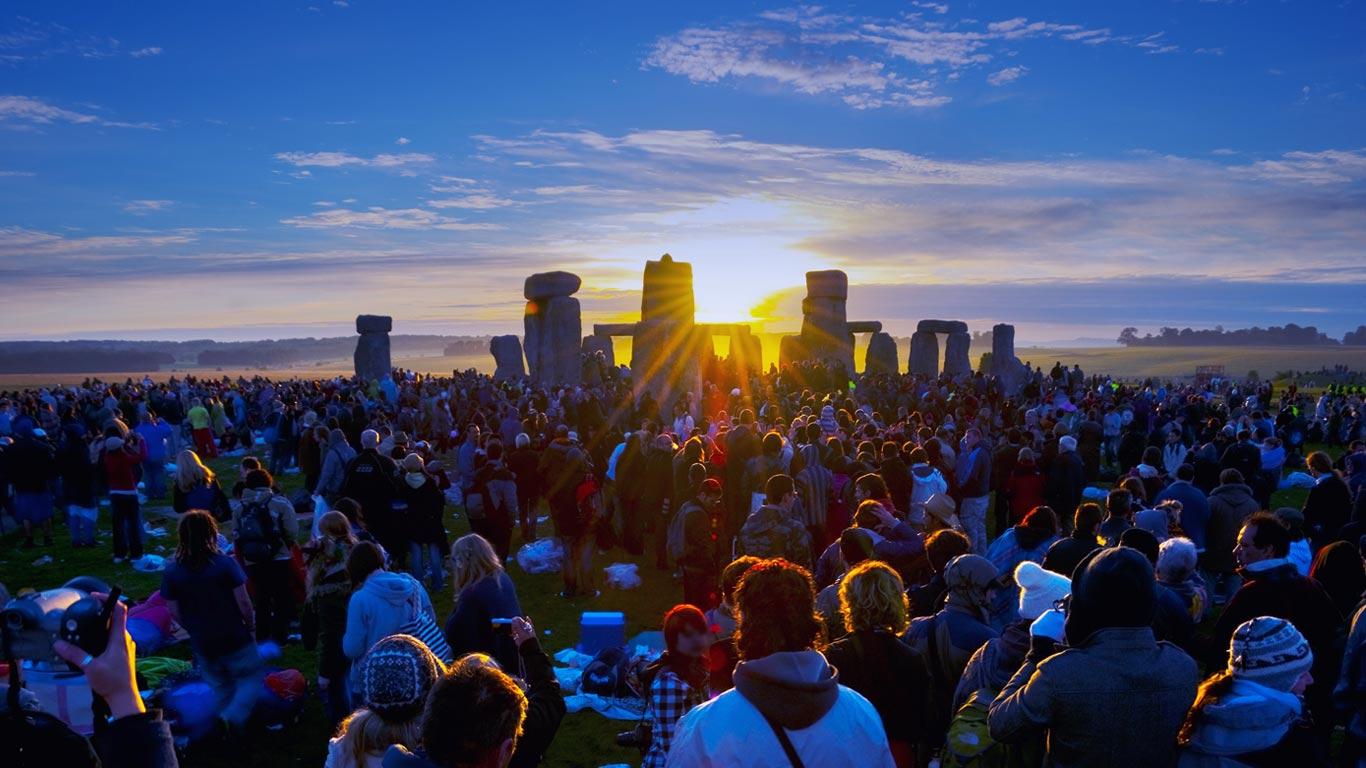
The story of Stonehenge is still not 100% known, there are many theories ranging from an alien landing site to an ancient temple. While some theories hold more weight than others, none have been confirmed to be 100% true yet. However the National Trust (the body that looks after Stonehenge) has allowed for the site to be open each summer solstice,  at the request of druid and other pagan communities. This is to allow the druids to celebrate the sunrise of the longest day, but the opening is not restricted to just druids, over 20,000 people attend the event each year and it really is a great atmosphere. There are acoustic instruments, dancing, hula hooping and just about any other natural form of entertainment you can think of. There are food stalls to cater for all of the hungry attendees and portable toilets around the area. With police and st. John’s ambulance in attendance people will be happy to know that they are safe.  The venue usually opens at 7pm on 20th June and closes at 7am on 21st June. I have been 6 times before and I would strongly recommend this to anybody in the area.

Summer Solstice 2012: Astro-Science & Pagan Ritual | Cierra

a travel blog by Graham Targett
Full story at the ‘bigger than England’  website

U.K Solstice Events offer Stonehenge tours of the Summer Solstice, Winter Solstice, Spring Equinox and Autumn Equinox.

Stonehenge Guided Tours
http://www.StonehengeTours.com

The Winter Solstice, which takes place on 21st December in the Northern Hemisphere, is celebrated in various forms all over the world. In astronomical terms, this is the shortest day of the year, when the sun is at its lowest in the sky. After the solstice, the days begin to get longer again, and it is for this reason that it was celebrated as the beginning of a new year by pagan cultures.

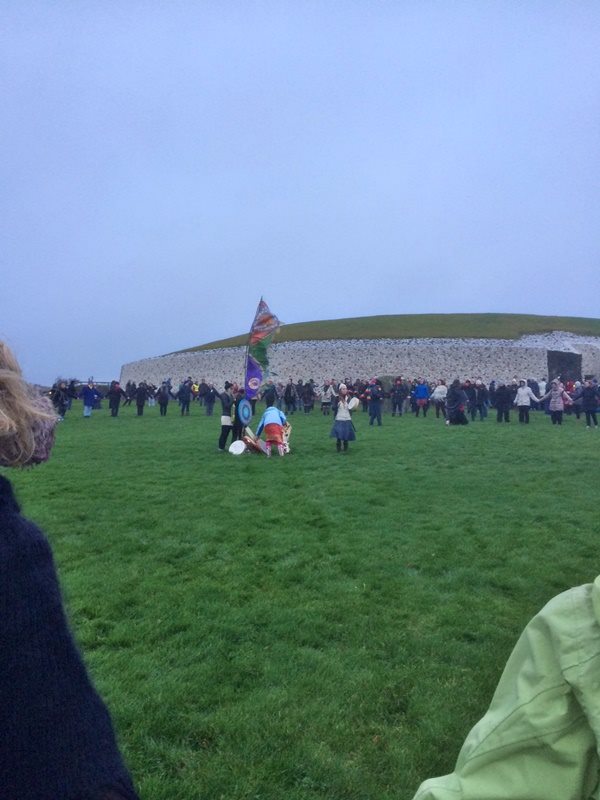
I celebrated the winter solstice at Newgrange, a Neolithic passage tomb in Co. Meath, Ireland. This monument is an Newgrangeastounding feat of engineering: dating from around 3,200 B.C. (that’s older than the Pyramids!) it is aligned exactly with the rising of the midwinter sun. Above the entrance to the tomb there is an opening called the roof-box. On 21st December, the light of the rising sun passes through the roof-box and travels up the narrow passage, illuminating the inner chamber.

Entry to the chamber on the morning of the solstice is decided by a lottery. Alas, I was not one of the lucky few chosen. Indeed, further misfortune was in store as, after having dragged myself out of bed at 6am and trekked across narrow country lanes, the weather was cloudy and the sun barely visible.

But the unlikelihood of a clear sunrise (this is Ireland, after all) did not deter the hundreds of people who turned out to welcome the new year. We were an eclectic bunch, ranging from the mildly curious to the deeply spiritual.

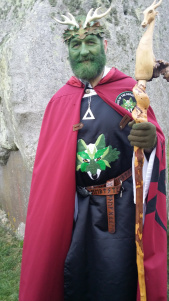
Dedicated believers, dressed in long cloaks with wreaths of leaves and twigs on their heads, led the welcoming of the sun. They banged drums and chanted, softly at first, the volume rising in a crescendo as the sky got gradually lighter.

Another group were gathered in a circle taking part in a guided meditation as part of a two-day retreat. As the drum-banging unofficial leaders of the celebration shepherded bemused bystanders into an enormous circle, the meditation group moved into the centre and stood facing out. Eventually they moved out to join the larger circle as the chanting reached its height, and the revellers greeted the sun (still hidden behind a cloud) with whoops and cries of ‘Happy Solstice!’

It would be difficult to find someone less spiritual than myself, and I’ll admit to finding most of the celebrations frankly a bit odd. Yet there was something undeniably refreshing about standing in that field at dawn, waiting to mark the most natural sign of the new year. It was definitely more enjoyable than the repetitive and ultimately disappointing festivities of the 31st.

Similar celebrations take place at Stonehenge, Britain’s most famous prehistoric monument, which is also aligned with the rising and setting of the sun. Huge crowds gather there annually for exuberant solstice festivities.

There is a lot of wisdom to be found in prehistoric pagan cultures. Not only have they given us some of the most awe-inspiring architectural accomplishments in the world, but they have also left us a legacy of spiritualism which has survived the advance of scientific understandings of the world.

If you come to visit Newgrange or Stonehenge just for the views and the guided tours, you might end up leaving with a new and perhaps more optimistic perspective on the coming year. Even if the sun fails to make an appearance.
By Naoise Murphy
Photograph: Naoise Murphy
Source: http://www.palatinate.org.uk/?p=53515

Stonehenge Winter Solstice Tour: Click here

Stonehenge Guided Tours
http://www.StonehengeTours.com