A new study of prehistoric bones discovered at Stonehenge has found around half belonged to women.
In 2008 archaeologists first explored the site in Wiltshire examining the cremated remains of some 200 adults.
Researchers said their findings showed a “surprising degree of gender equality” despite artists portraying prehistoric man as in charge of the site “with barely a woman in sight”.
Image copyrightAdam StanfordMost of the material dug up in the 1920s from the periphery of the stones was reburied in Aubrey Hole seven (seen excavated in 2008)
The study showed the finding are important because burial at Stonehenge was likely to have been reserved for selected people of higher status.
It also contrasts with the evidence from older Neolithic tombs in southern Britain, with their higher ratios of adult males to females.
All of our Stonehenge Guided Tours include the Stonehenge entrance fee and we promise at least 2 hours at Stonehenge and the exhibition centre plus we enjoy priority entrance – no lines or queues!
Entrance to Stonehenge is now managed through timed tickets and advance booking is the only way to guarantee entry on the day and time of your choice. By booking in advance you will also benefit from an advanced booking discount.
2500 BC: Stonehenge is the talk of prehistoric Europe
Visitors have always been part of Stonehenge, even the stones are foreigners: the small ones from Wales, the large ones probably from the Marlborough Downs, 20 miles to the north.
Stonehenge was truly unique in Europe and so, at its height around 2500 BC, it must have been talked about across the continent.
Evidence of houses in the area suggests that far more people lived near to the stones than we would normally expect. Drawing labour and representatives from different tribes or groups, Stonehenge must have played a part in alliances that reached across Britain, and perhaps even beyond.
Tests on a man buried nearby around 2300 BC have revealed that he grew up in central Europe, was rich, but had a bad knee and a limp. Other men buried in the area originated at least as far away as Wales. Could these have been among Stonehenge’s first tourists?
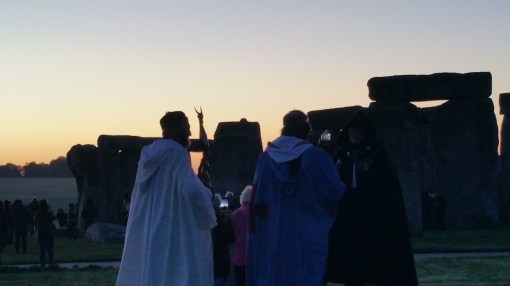
At various times and in different (mostly Northern European) cultures, the solstice has gone by different names, such as Yule, Midwinter, and Jól. Nowadays, the solstice gets overshadowed by its more commercial and religious winter relatives: Christmas, Hanukkah, and Kwanzaa; but plenty of people still celebrate the winter solstice in its own right.
If you’ve ever wondered what the solstice is, or why it matters, here’s the lowdown.
What is it?
The winter solstice is the shortest day of the year in the Northern Hemisphere. From June to December, the days shorten and shorten until the solstice. After the winter solstice, days gradually grow longer again (yay!), which brings warmer temperatures. On the actual solstice, the North Pole gets zero energy from the sun — that is, no sunlight at all.
In the summer, we celebrate the summer solstice, the longest day of the year. (In the Southern Hemisphere, everything is flip-flopped — they’re celebrating the summer solstice in December.)
When is it?
Each year, the winter solstice falls on either December 21 or 22. This year, it takes place Tuesday, December 22 at 4:48 UTC (December 21 at 11:48 p.m. EST).
But I noticed the sun started setting later before the solstice…
An astute observation! Depending on where you live, the shortest day of the year doesn’t necessarily fall on the day with the earliest sunset or the latest sunrise. This has to do with what’s called “true solar noon,” the time when the sun is at its highest point in the sky. In early December, solar noon is about ten minutes earlier than it is when we hit the solstice. Thus, depending on the latitude where you live, the sunset may actually be slightly later on the solstice than it was earlier in the month. The closer you live to the Arctic, the more closely the earliest sunset and the winter solstice will match up.
What about the latest sunrise?
Unless you live in the Arctic Circle, the latest sunrise usually arrives in early January, which makes sense, knowing that solar noon moves later in the day starting in early December. There’s a variation in solar noon and noon on the clock, because of the tilt of the earth’s axis and the earth’s not-quite-circular orbit around the sun.
How long have we known about the solstice?
Our earliest ancestors tracked the seasons and years by changes in the sky: the movement of the sun, stars, and moon. Stonehenge is one of the most famous monuments in the world built to observe and celebrate our trek around the sun. Nowadays, 3,000 to 5,000 people visit Stonehenge to watch the sunrise on the winter solstice and up to 30,000 visit for the summer solstice.
A great article by Professor of Archaeology, UCL – Mike Parker Pearson:
I led the team of researchers that discovered that Stonehenge was most likely to have been originally built in Pembrokeshire, Wales, before it was taken apart and transported some 180 miles to Wiltshire, England. It may sound like an impossible task without modern technology, but it wouldn’t have been the first time prehistoric Europeans managed to move a monument.
Archaeologists are increasingly discovering megaliths across the continent – albeit a small number so far – that were previously put up in earlier monuments.
Other ‘second-hand’ monuments
The best example of such a structure outside the UK is La Table des Marchand, a Neolithic tomb in Brittany, France, built around 4000BC. The enormous, 65-ton capstone on top of its chamber is a broken fragment of a menhir, a standing stone, brought from 10km away. The original menhir may be 300 years (or more) older than the tomb. Another fragment of this same menhir was incorporated into a tomb at Gavrinis, 5km away. This menhir, originally weighing over 100 tons, is actually one of the largest blocks of stone that we know of to have been moved and set up by Neolithic people.
Another example of a standing stone reused in a megalithic monument is an anthropomorphic menhir – a standing stone carved in the form of a human figure – incorporated as the capstone of another tomb at Déhus on Guernsey. Another megalithic tomb, La Motte de la Jacquille in western France, is built of dressed stones that have been rearranged into a new tomb but it is not known if they came from a different location or were an earlier version of the tomb rebuilt on the same spot.
Archaeologists have known for many years that some of Stonehenge’s bluestones (the shorter stones in the monument) were reused. Two are lintels reused as standing stones, and two others have vertical grooves that show they were part of a wall of interlocking standing stones. Until now it was thought that these were evidence of reuse just within Stonehenge which was first built around 2900BC and rebuilt circa 2500BC (at this point, large local sandstones known as “sarsen” were erected). It was then rebuilt again in around 2400BC and 2200BC.
However, we identified the actual quarries in Pembrokeshire, Wales (around 3400BC and 3200BC) that the bluestones came from. This is a period before prehistoric people were building stone circles (normally dating from 3000BC onwards) so we also think it is very likely that the bluestones originally formed a rather different type of monument from a stone circle.
People in western Britain and Ireland at this time were building Neolithic stone tombs known as passage tombs – Newgrange in Ireland is the best known example. So it is just possible that there is a dismantled passage tomb somewhere near the bluestone quarries. That’s what we will be looking for in 2016.
Stonehenge – an unusual distance
An interesting outcome from a recent conference in Redondo, Portugal, on prehistoric megaliths and “second-hand monuments” is that – while some megalithic stones for monuments in Portugal and elsewhere were brought as far as 8km from their sources – the vast majority of Neolithic stone monuments throughout Western Europe were built less than 2km to 3km away from their stone quarries. So Stonehenge is a major exception to this rule, as its bluestones were dragged around 290km. This makes it unique for prehistoric Europe.
How the stones were moved from Wales to Stonehenge is something of a mystery but our excavations at one of the Welsh quarries reveals that the trackway leading from the outcrop was too narrow for rollers to have been used. Instead, we think that monoliths were loaded onto wooden sledges and dragged over logs and branches laid rail-like in front of the sledge.
Some archaeologists have speculated that Stonehenge’s bluestones must have been thought to have had special properties – as musical “gongs” or healing stones – for them to have been sought out from so far away.
But we think it is far more likely that the bluestones were derived from quarries in close proximity to each other – within 2km to 3km – and brought together to build a local monument in Pembrokeshire. Scientific analysis of strontium isotopes in the teeth of people buried in the Stonehenge area reveals that many of them have values consistent with growing up in western Britain. So the stones may have been brought by people migrating from Wales, bringing their ancestral monument as a symbol of their history and identity. Strontium isotope analysis is currently being carried out on the people actually buried at Stonehenge when the bluestones were erected, and we await the results to see if they show a similar picture.
It’s also possible that the bluestones were put up somewhere on Salisbury Plain before they arrived at Stonehenge. For example, one of the bluestones never quite made it to Stonehenge and was dug out in 1801 from the top layer of a Neolithic burial mound called Boles Barrow, near Warminster, also in Wiltshire.
Although this tomb was first built around 3700BC, it seems to have gone through modifications, of which adding a layer of large stones (mostly local sarsen stones and this one bluestone) happened at the end of its use. So we don’t know precisely when it got there but it may have been set up as a burial marker before the rest of the bluestones were erected at Stonehenge.
Rebuilding tombs and other megalithic structures as second-hand monuments is only now turning out to be recognised in various parts of western Europe as archaeologists start to look more closely at the detailed aspects of construction. Simple expediency of finding suitable stone does not explain sites such as Stonehenge and the Table des Marchand – they were most likely incorporating aspects of the past which had rich historical resonance for them.
Excavation of two quarries in Wales by a UCL-led team of archaeologists and geologists has confirmed they are sources of Stonehenge’s ‘bluestones’– and shed light on how they were quarried and transported.
New research by the team published this week detail evidence of prehistoric quarrying in the Preseli hills in Pembrokeshire, helping to answer long-standing questions about why, when and how Stonehenge was built.
The team of scientists includes researchers from UCL, University of Manchester, Bournemouth University, University of Southampton, Amgueddfa Cymru – National Museum Wales, and Dyfed Archaeological Trust.
The very large standing stones at Stonehenge are of ‘sarsen’, a local sandstone, but the smaller ones, known as ‘bluestones’, come from the Preseli hills in the Pembrokeshire Coast National Park. Geologists have known since the 1920s that the bluestones were brought to Stonehenge from somewhere in the Preseli Hills, but only now has there been collaboration with archaeologists to locate and excavate the actual quarries from which they came.
Director of the project, Professor Mike Parker Pearson (UCL Institute of Archaeology), said: “This has been a wonderful opportunity for geologists and archaeologists to work together. The geologists have been able to lead us to the actual outcrops where Stonehenge’s stones were extracted.”
The Stonehenge bluestones are of volcanic and igneous rocks, the most common of which are called dolerite and rhyolite. Dr Richard Bevins (Amgueddfa Cymru – National Museum Wales) and Dr Rob Ixer (UCL and University of Leicester) have identified the outcrop of Carn Goedog as the main source of Stonehenge’s ‘spotted dolerite’ bluestones and the outcrop of Craig Rhos-y-felin as a source for one of the ‘rhyolite’ bluestones. The research published today details excavations at Craig Rhos-y-felin specifically.
The special formation of the rock, which forms natural pillars at these outcrops, allowed the prehistoric quarry-workers to detach each megalith (standing stone) with a minimum of effort. “They only had to insert wooden wedges into the cracks between the pillars and then let the Welsh rain do the rest by swelling the wood to ease each pillar off the rock face” said Dr Josh Pollard (University of Southampton). “The quarry-workers then lowered the thin pillars onto platforms of earth and stone, a sort of ‘loading bay’ from where the huge stones could be dragged away along trackways leading out of each quarry.”
Professor Colin Richards (University of Manchester), an expert in Neolithic quarries, said: “The two outcrops are really impressive – they may well have had special significance for prehistoric people. When we saw them for the first time, we knew immediately that we had found the source.”
Radiocarbon-dating of burnt hazelnuts and charcoal from the quarry-workers’ camp fires reveals that there were several occurrences of megalith-quarrying at these outcrops. Stonehenge was built during the Neolithic period, between 4,000 to 5,000 years ago. Both of the quarries in Preseli were exploited in the Neolithic, and Craig Rhos-y-felin was also quarried in the Bronze Age, around 4,000 years ago.
“We have dates of around 3400 BC for Craig Rhos-y-felin and 3200 BC for Carn Goedog, which is intriguing because the bluestones didn’t get put up at Stonehenge until around 2900 BC” said Professor Parker Pearson. “It could have taken those Neolithic stone-draggers nearly 500 years to get them to Stonehenge, but that’s pretty improbable in my view. It’s more likely that the stones were first used in a local monument, somewhere near the quarries, that was then dismantled and dragged off to Wiltshire.”
Professor Kate Welham (Bournemouth University) thinks that the ruins of any dismantled monument are likely to lie somewhere between the two megalith quarries. She said: “We’ve been conducting geophysical surveys, trial excavations and aerial photographic analysis throughout the area and we think we have the most likely spot. The results are very promising – we may find something big in 2016.”
The megalith quarries are on the north side of the Preseli hills, and this location undermines previous theories about how the bluestones were transported from Wales to Stonehenge. Previous writers have often suggested that bluestones were taken southwards from the hills to Milford Haven and then floated on boats or rafts, but this now seems unlikely.
“The only logical direction for the bluestones to go was to the north then either by sea around St David’s Head or eastwards overland through the valleys along the route that is now the A40” said Professor Parker Pearson. “Personally I think that the overland route is more likely. Each of the 80 monoliths weighed less than 2 tons, so teams of people or oxen could have managed this. We know from examples in India and elsewhere in Asia that single stones this size can even be carried on wooden lattices by groups of 60 – they didn’t even have to drag them if they didn’t want to.”
Phil Bennett, Pembrokeshire Coast National Park Authority’s Culture and Heritage Manager, said: “This project is making a wonderful contribution to our knowledge of the National Park’s importance in prehistory.”
The new discoveries may also help to understand why Stonehenge was built. Parker Pearson and his team believe that the bluestones were erected at Stonehenge around 2900 BC, long before the giant sarsens were put up around 2500 BC.
“Stonehenge was a Welsh monument from its very beginning. If we can find the original monument in Wales from which it was built, we will finally be able to solve the mystery of why Stonehenge was built and why some of its stones were brought so far”, said Professor Parker Pearson.
The project’s results are published this week in British Archaeology magazine. It also features in our new book Stonehenge: making sense of a prehistoric mystery available from Oxbow Books. Further excavations are planned for 2016.
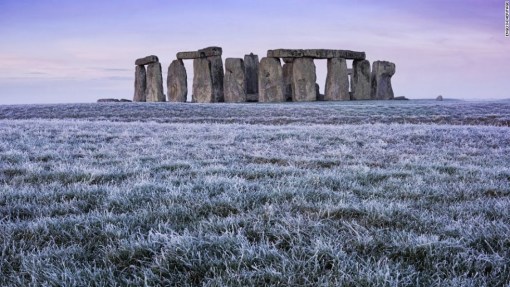
Exclusive VIP Tours at Stonehenge (UK). Read the full story on the CNN News Channel here
You’ll need to book a VIP tour if you want a Stonehenge shot like this
It’s every traveller’s nightmare: You finally make it to one of the wonders of the world only to find a horde of other tourists already there tarnishing your view.
But there’s an alternative if you don’t want your perfect shot of Stonehenge ruined.
Stonehenge Tours inked a special arrangement with preservation agency English Heritage to offer privileged access to the Stone Circle at dawn and dusk when the site is closed to the general public.
Of course, there’s a slight catch.
Demand for VIP access far exceeds the sporadic supply, and the £97 ($149) tours are often sold out months in advance.
A unique look at the dramatic landscapes, rich history and picturesque villages surrounding Stonehenge, Salisbury and the Plain.
From our Land Rover Discovery (As used on Safaris the world over) you will enjoy an on and off road experience, resulting in dramatic vantage points, unique plants and animals and visits to places around Salisbury and Stonehenge that your average tour bus just cannot match. In the company of our fully qualified and licensed drivers, you are sure to have a blast.
“A unique look at the dramatic landscapes, rich history and picturesque villages surrounding Stonehenge, Salisbury and the Plain”
Our Journey begins from Salisbury train station (local hotels or combined with our Stonehenge private tours or popular helicopter flights), this tour takes in Wiltshire’s delightful villages such as Wilton, Wishford, the Langfords and Stoford offering a picturesque view of Salisbury unavailable from the usual bus tours.
“Capture your memories at stunning locations. Down small roads and byways that are inaccessible by Coach, Bus or Car”
From here we take a short trip down the A303 before turning off at Yarnbury Castle. (the first view of the Plain is breathtaking we promise) Following some very rough byways (don’t worry we go slowly and our Land Rover is more than up to the job) we stop next to Parsonage Down Nature Reserve for more spectacular views and a short photo and refreshment break, before climbing back in and making the trip across the Plain as only a Land Rover can! We pop out just west of the tiny village of Shrewton and make our way via Larkhill (Home of the Royal Artillery and birthplace of the Royal Air force) to see an alternative view of Stonehenge (This view puts the stones in a real perspective, set in the landscape and seen as they would have been for thousands of years) One last off road trip will see us hit the roads again and make our way back to Salisbury for the end of the tour.
A 2 hour tour will cost £120 with a £10 supplement per person up to a maximum of 6 people. each tour can be tailored to suit your taste if needed.
Guests can be driven to Stonehenge visitors centre or perhaps Durrington Walls and collected at a pre-arranged time for ongoing travel at additional cost.
A four hour tour will cost £230 with a £10 supplement per person up to a maximum of 6 people and includes a more detailed glimpse at the monuments above with the opportunity to explore the area on foot with one of our guides and really get a sense of what the plain can offer.
All tours will include refreshments which include biscuits and a flask of tea or coffee.
Customised Private Tour Service This 2 hour landrover experience can be booked separately or easily combined with our customised private tours with departures from London, Southampton, Salisbury, Bath or Oxford.
‘THE STONE MONUMENT IS ICONIC, BUT IT’S ONLY A LITTLE PART OF THE WHOLE THING’
The New York Times has an interesting roundup of recent discoveries made at and around Stonehenge that could shed new light on the famous monument and the people who built it nearly 5,000 years ago. Last month, archaeologists dug up an ancient house at an area called Blick Mead about a mile from Stonehenge. Built around 4300 BC, they believe the house is one of the oldest in England. In September, a team of archaeologists using radar imaging found what they believe are 90 standing stones buried at another nearby site called Durrington Walls. Teams also think they’ve found where Stonehenge’s builders lived around 2600 BC. Fatty acids still inside ancient pots show the people of the time had a “very meat-heavy diet” of grilled and boiled pork and beef with some apples, berries, and hazelnuts.
Our Stonehenge private access tours get you inside the inner circel. Visit Stonehenge with the experts!
But despite the recent discoveries, the major question remains: Why was Stonehenge built? Some archaeologists believe it was a “land of the dead” used to honor the builders’ ancestors, the Times reports. Others believe it was the opposite: an area renowned for its life-giving healing properties. A team used an isotope contained in ancient cattle teeth to deduce people came to the area around Stonehenge from far and wide. Archaeologists are also left wondering if Stonehenge was built atop a site that was already revered by ancient peoples. For example, charcoal and bones found in nearby pits left by large posts—possibly totem poles—date back to nearly 8000 BC. “The stone monument is iconic,” one archaeologist says. “But it’s only a little part of the whole thing.” Read the full story here.
THIS BLOG claims no credit for any images posted on this site unless otherwise noted. Images on this blog are copyright to its respectful owners. If there is an image appearing on this blog that belongs to you and do not wish for it appear on this site, please E-mail with a link to said image and it will be promptly removed.
We do not operate any guided tours. This is 3rd party Blog and all posts are published by freelance independent bloggers with complimentary links to www.StonehengeTours.com Please contact us direct with any queries.
FREE BLOG TRAFFIC We create high-quality, long-form content optimized for search engines (SEO) and promote it across social media platforms and relevant online communities like Reddit and Quora and direct links to your website. We help build an email list to drive consistent traffic, and repurpose your content for different platforms such as YouTube or podcasts. Collaborating on relevant guest posts and being a guest on podcasts can also introduce your blog to new audiences, whatever the industry.

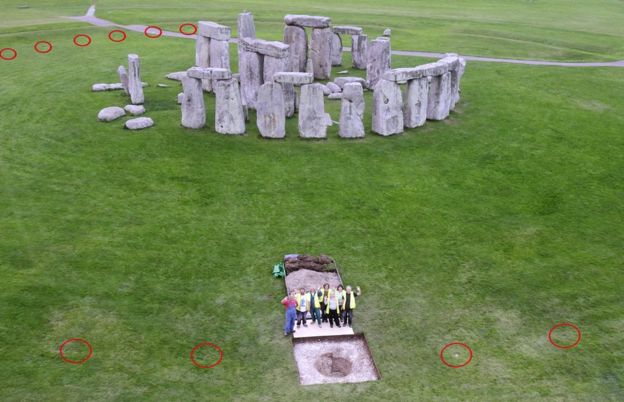 Image copyrightAdam Stanford
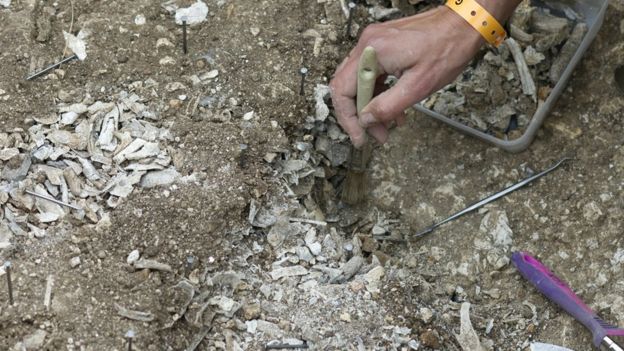 Image copyright Mike Pitts


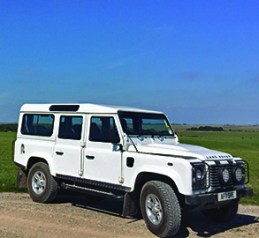 From our Land Rover Discovery (As used on Safaris the world over) you will enjoy an on and off road experience, resulting in dramatic vantage points, unique plants and animals and visits to places around Salisbury and Stonehenge that your average tour bus just cannot match. In the company of our fully qualified and licensed drivers, you are sure to have a blast.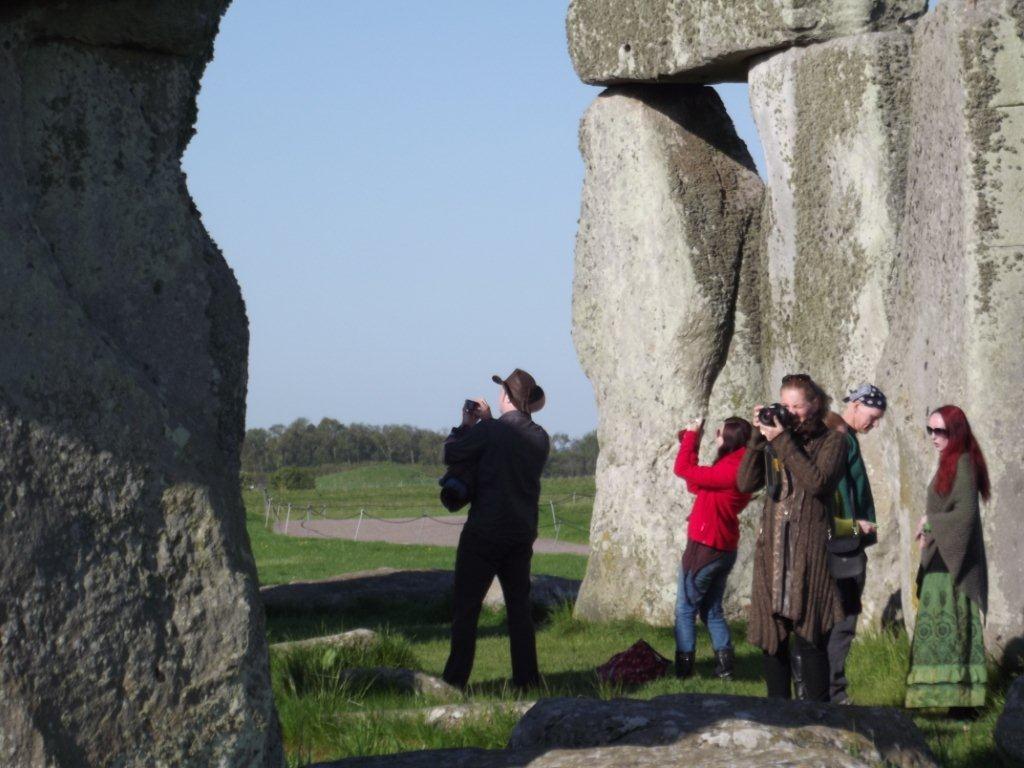


 Stonehenge Guided Tours
