Travel blogger Teri Didjurgis joined us on our small group  Autumn Equinox tour and here is her story:

How to legally go inside Stonehenge Circle

Though some say Stonehenge is overrated, I found a way to visit the iconic site in a unique way to get a glimpse of the past……………………….

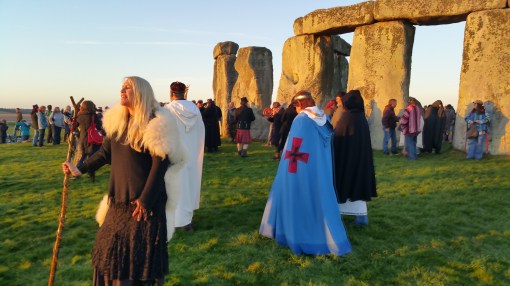
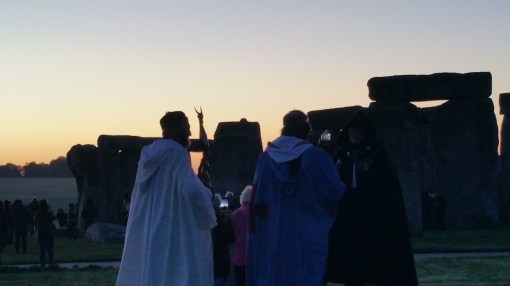
Druids and Pagans enjoying the Equinox sunrise celebrations at Stonehenge.


You can read the full story and tour experience on the BlueSkyTraveler  Blog:
How to legally go inside Stonehenge Circle

Experience for yourself our Stonehenge Equinox or Solstice Tours and remember to book in advance as these small group tours are very popular.

Stonehenge Guided Tours
http://www.StonehengeTours.com

Stonehenge Special Access Tours – Go beyond the fences in 2017

Demand for Stonehenge access tours far exceeds supply, dates are often sold out many months in advance. Do not expectStonehenge inner circle tours to get tickets without ordering well in advance. Register your interest with now with no obligation by simply sending us your email address and we will offer you 2017 tours before they are published online giving you the opportunity to secure your preferred travel date. These will include our exclusive small group tours and our preferred travel partner with departures from London, Salisbury and Bath.

Stonehenge Private Access visits are available most but not all months of the year, (no visits in October and November and are not available on and around the midsummer’s day).  Evening Special Access is only available in the summer months

Email: Experts@StonehengeTours.com

2017 Stonehenge Access Private Group Tours

In addition to our regular ‘scheduled group tour’ departures we are often able to get permission from the English Heritage for additional ‘inner circle’ tours for small groups (1-16 persons). These can be sunset or sunrise times depending on availability. These bespoke tours can also include Salisbury, Avebury, Bath, or Warwick Castle etc and can depart from London, Salisbury or Bath. This can often be cheaper than joining a scheduled tour, offers more flexibility, more personal and a better allround experience. Email us your desired dates and group size for a prompt reply

We specialise in arranging customised Stonehenge tours to suit your requirements. Our door to door service will take you wherever you want to go…….at the time and pace to suit you. Our personalised service gives you the ultimate freedom and flexibility without the worry of driving so you can all relax and enjoy the day.

Email: PrivateGuidedTours@StonehengeTours.com

Stonehenge Guided Tours
The Stonehenge Experts
Operating Exclusive Stonehenge Tours since 1995

Flickr:  http://www.flickr.com/photos/stonehenge-stone-circle/sets/
Stonehenge Tours on Instagramhttp://instagram.com/stonehengetours
Stonehenge Tour Videos on YouTube: http://www.youtube.com/stonehengetours

Superhenge’ Found Buried Near Stonehenge
A row of huge stones stood some 4,000 years ago just two miles from Stonehenge, dwarfing the iconic stone circle.

Dubbed “Superhenge,” the site is five times bigger than the iconic stone circle and lies buried three feet beneath a thick, grassy bank at a Stone-Age enclosure known as Durrington Walls. Full story

* This new Half Day tour departs from Bath. Visiting Stonehenge, Durrington Walls, Woodhenge, the newly discovered ‘Superhenge’ and Lacock Village in the Cotswolds *

20150626_104439_resized


We drive through the beautiful Wiltshire countryside to Stonehenge . This amazing monument was first mentioned as one of the wonders of Britain only seventy years after the Norman Conquest. It has aroused awe and curiosity ever since. This is your chance to experience it for yourself. During the journey to Stonehenge your driver guide will give you commentary on the sites we pass and there is also plenty of information for you to browse through. If English is not your first language there are audio presentations at the monument in all major languages

SUPERHENGE

´We also take a look at Durrington Walls where nearly 100 stones 4,500 years old, some measuring 15ft (4.5m) in length, were discovered under 3ft of earth at Durrington Walls using geophysical imaging technology. Experts think it may have surrounded traces of springs and a dry valley leading into the River Avon. Close by is Woodhenge which consisted of six concentric rings of wooden post holes within a bank and ditch, now marked by concrete posts. In the middle of the circle the grave of a three year old girl was found suggesting possible ritual sacrifice. We firmly believe that viewing these other two henges ´complete the circle´ – if you will pardon the pun – and help to show you that Stonehenge is not ´just a bunch of rocks in the middle of nowhere´ !

On a clear day we get a view of the Westbury White Horse.

Lacock National Trust Village

This wonderful village consists of properties which date from the 13th and 18th centuries. It was once a prosperous woollen town but now it seems like a village trapped in time. There has been no major building here in the last 200 years so you really feel as if you’re stepping back into English history.

If you’re interested in film locations Lacock has been used many times. It became the town of Meriton in the BBC production of Pride and Prejudice and more recently Downton Abbey (second episode of final series). The Abbey was also used in the filming of the first two Harry Potter movies. We will take you to Godric’s Hollow, the home of James and Lilly Potter (Harry’s parents) and to professor Horace Slughorn’s house from Harry Potter and the Half Blood Prince. Other film credits for Lacock include Emma, Moll Flanders, Robin of Sherwood/Robin Hood, Randall & Hopkirk (Deceased), The Mayor of Casterbridge, The Other Boleyn Girl, Cranford, and The Wolfman.

Your fully guided return mini coach tour includes:
Stonehenge Stone Circle
Stonehenge Visitor Centre
Durrington Walls
Woodhenge
Newly discovered Superhenge
Lacock Village
The Cotswolds
Chalk Hill-Figures
Crop Circles (seasonal)

Book this small group tour here

Stonehenge Guided Tours
The Original and Best Stonehenge Tour Operator

You can also experience sunrise at Stonehenge on our exclusive private access guided tours.

StonehengeNews's avatarStonehenge Stone Circle News and Information

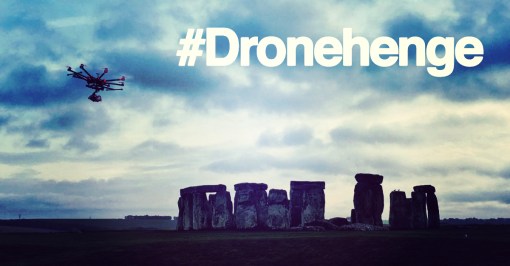
LIVE! Catch the sunrise at Stonehenge. With Dan Snow #Dronehenge #Periscope.

Stonehenge is a magical place to be, steeped in mystery and History. We’re delighted that English Heritage have given us special access to film from this ancient stone circle, a UNESCO World Heritage site. Live on March 2nd from 6 am. The sunrise is at 6:50 am GMT.

dronehenge

How do we let people, a lot of people, know about a very special live event that is only happening online without a massive marketing budget? How can live streaming compete with the mass of distractions out there? There’s no TV schedule. No billboards. No iPlayer for this sort of thing.
Live streaming is special; Periscope is special because the audience is there with you. People ask Dan Snow, “Why do you Periscope? The audience isn’t massive…it doesn’t pay anything. What’s the point?”
If you haven’t watched one of Dan’s ‘scopes’ you haven’t…

View original post 447 more words

We offer archeological tours of Stonehenge and the ancient Landscape. Join one of our experts and learn more about recent discoveries.

StonehengeNews's avatarStonehenge Stone Circle News and Information

A Bronze Age cremation burial has been discovered near Stonehenge after being accidentally dug up by a badger.

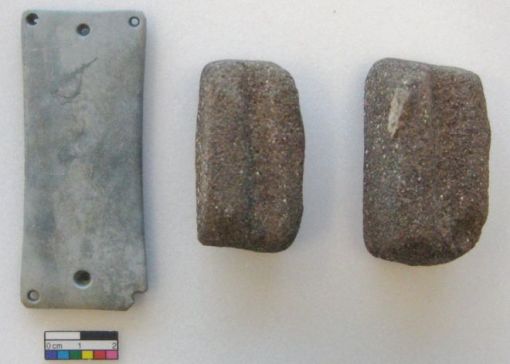
bronze-age-find An archer’s wrist guard and shaft straighteners were among the objects discovered

Objects found in a burial mound at Netheravon, Wiltshire, include a bronze saw, an archer’s wrist guard, a copper chisel and cremated human remains.

Experts believe the burial may have been that of an archer or a person who made archery equipment.

The artefacts date back to 2,200-2,000BC, senior archaeologist Richard Osgood, of the MOD, said.

The burial mound, about five miles north of Stonehenge, lies on MOD land.

Mr Osgood, from the MOD’s Defence Infrastructure Organisation, said it was “an exciting find”.

“It was utterly unexpected. These are wonderful artefacts from the early Bronze Age, about 2,200-2,000 BC,” he said.

wilts-mapOther archaeological finds in Wiltshire:

1. Bronze Age burial discovered by a badger

2. Soldiers uncover 27 ancient…

View original post 238 more words

A NEW study of prehistoric bones discovered at Stonehenge has found around half actually belonged to women.

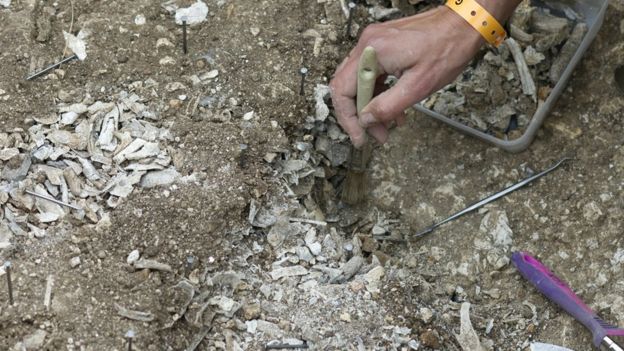
In 2008, archaeologists first explored the site in Wiltshire examining the cremated remains of some 200 adults.

In 2008, archaeologists first explored the site in Wiltshire examining the cremated remains of some 200 adults.

The remains of 14 women found at the iconic prehistoric monument in Wiltshire, England, along with other findings, are important because it supports the theory that Stonehenge functioned, at least for part of its long history, as a cremation cemetery for leaders and other noteworthy individuals. It also means the women are believed to have been of high status and importance.

Researchers said their findings showed a “surprising degree of gender equality” despite artists portraying prehistoric man as in charge of the site “with barely a woman in sight”.

The findings, which are the results of the dig which took place in 2008, have been reported in British Archaeology magazine.

“In almost every depiction of Stonehenge by artists and TV re-enactors we see lots of men, a man in charge, and few or no women,” archaeologist Mike Pitts, who is the editor of British Archaeology and the author of the book Hengeworld, told Discovery News.

“The archaeology now shows that as far as the burials go, women were as prominent there as men. This contrasts with the earlier burial mounds, where men seem to be more prominent.”

Christie Willis of the University College London Institute of Archaeology worked on the project, sorting through some 45kg of bone fragments.

Her task was to identify which part of the skeleton each fragment came from and to then establish the age and sex of the remains. She identified 14 females and nine males — some of them children.

Ms Willis said the samples had originally been place in a series of Aubrey Holes around the periphery of the site, which were originally excavated in the 1920s by William Hawley.

“These were dug up and reburied in Aubrey Hole seven with the hope that one day there would be a breakthrough to allow them to be analysed.

“Because of this the fragments have become co-mingled — or mixed up — which is why the work has taken so long.”

The fragments were also sent to universities in Oxford and Glasgow to be radiocarbon-dated. (news.com.au)

Join us on a Stonehenge Guided Tour with a local expert and here all about the many new theories.

Stonehenge Guided Tours
http://www.StonehengeTours.com
The Stonehenge Experts (Est 1995)

Stonehenge News: Find out about this and other new Stonehege discoveries on a guided tour with the Stonehenge Experts,

StonehengeNews's avatarStonehenge Stone Circle News and Information

A new study of prehistoric bones discovered at Stonehenge has found around half belonged to women.

In 2008 archaeologists first explored the site in Wiltshire examining the cremated remains of some 200 adults.

Researchers said their findings showed a “surprising degree of gender equality” despite artists portraying prehistoric man as in charge of the site “with barely a woman in sight”.

The findings are reported in the magazine British Archaeology.

Stonehenge digImage copyrightAdam Stanford
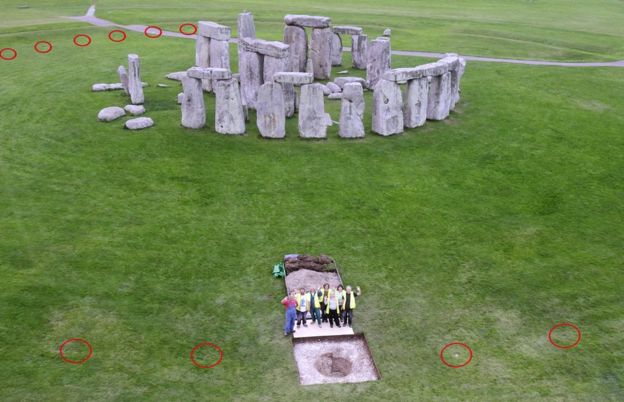
Most of the material dug up in the 1920s from the periphery of the stones was reburied in Aubrey Hole seven (seen excavated in 2008)

The study showed the finding are important because burial at Stonehenge was likely to have been reserved for selected people of higher status.

It also contrasts with the evidence from older Neolithic tombs in southern Britain, with their higher ratios of adult males to females.

Stonehenge digImage copyright Mike Pitts

View original post 195 more words

All of our Stonehenge Guided Tours include the Stonehenge entrance fee and we promise at least 2 hours at Stonehenge and the exhibition centre plus we enjoy priority entrance – no lines or queues!

StonehengeNews's avatarStonehenge Stone Circle News and Information

Entrance to Stonehenge is now managed through timed tickets and advance booking is the only way to guarantee entry on the day and time of your choice. By booking in advance you will also benefit from an advanced booking discount.

1st JANUARY 2016 – 15 MARCH 2016

Monday9:30 – 17:00
Tuesday9:30 – 17:00
Wednesday9:30 – 17:00
Thursday9:30 – 17:00
Friday9:30 – 17:00
Saturday9:30 – 17:00
Sunday9:30 – 17:00

16 MARCH – 24 MARCH 2016

Monday9:30 – 19:00
Tuesday9:30 – 19:00
Wednesday9:30 – 19:00
Thursday9:30 – 19:00
Friday9:30 – 19:00
Saturday9:30 – 19:00
Sunday9:30 – 19:00

25 MARCH – 31 MAY 2016

Monday9:30 – 19:00
Tuesday9:30 – 19:00
Wednesday9:30 – 19:00
Thursday9:30 – 19:00
Friday9:30 – 19:00
Saturday9:30 – 19:00
Sunday9:30 – 19:00

1 JUNE 2016 ONWARDS

Opening times will be…

View original post 190 more words

Wiltshire’s world-famous stones have been attracting sightseers for thousands of years. Here, Mike Pitts tells the tourists’ story.

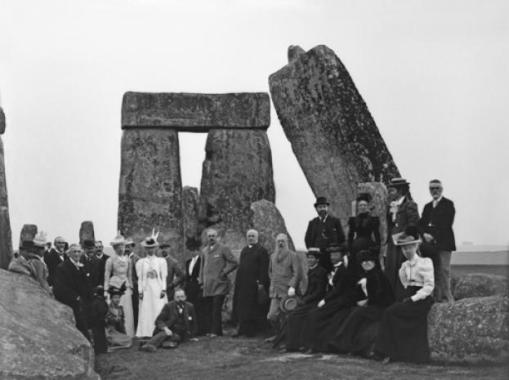
A group of Victorian tourists pose in front of Stonehenge, c1900. © Corbis

A group of Victorian tourists pose in front of Stonehenge, c1900. © Corbis

2500 BC: Stonehenge is the talk of prehistoric Europe

Visitors have always been part of Stonehenge, even the stones are foreigners: the small ones from Wales, the large ones probably from the Marlborough Downs, 20 miles to the north.

Stonehenge was truly unique in Europe and so, at its height around 2500 BC, it must have been talked about across the continent.

Evidence of houses in the area suggests that far more people lived near to the stones than we would normally expect. Drawing labour and representatives from different tribes or groups, Stonehenge must have played a part in alliances that reached across Britain, and perhaps even beyond.

Tests on a man buried nearby around 2300 BC have revealed that he grew up in central Europe, was rich, but had a bad knee and a limp. Other men buried in the area originated at least as far away as Wales. Could these have been among Stonehenge’s first tourists?

Read the full story at History Extra

Stonehenge Guided Tours
The Stonehenge Experts
http://www.StonehengeTours.com

At various times and in different (mostly Northern European) cultures, the solstice has gone by different names, such as Yule, Midwinter, and Jól. Nowadays, the solstice gets overshadowed by its more commercial and religious winter relatives: Christmas, Hanukkah, and Kwanzaa; but plenty of people still celebrate the winter solstice in its own right.
20150923_063326

If you’ve ever wondered what the solstice is, or why it matters, here’s the lowdown.

What is it?

The winter solstice is the shortest day of the year in the Northern Hemisphere. From June to December, the days shorten and shorten until the solstice. After the winter solstice, days gradually grow longer again (yay!), which brings warmer temperatures. On the actual solstice, the North Pole gets zero energy from the sun — that is, no sunlight at all.

In the summer, we celebrate the summer solstice, the longest day of the year. (In the Southern Hemisphere, everything is flip-flopped — they’re celebrating the summer solstice in December.)

When is it?

Each year, the winter solstice falls on either December 21 or 22. This year, it takes place Tuesday, December 22 at 4:48 UTC (December 21 at 11:48 p.m. EST).

But I noticed the sun started setting later before the solstice…

An astute observation! Depending on where you live, the shortest day of the year doesn’t necessarily fall on the day with the earliest sunset or the latest sunrise. This has to do with what’s called “true solar noon,” the time when the sun is at its highest point in the sky. In early December, solar noon is about ten minutes earlier than it is when we hit the solstice. Thus, depending on the latitude where you live, the sunset may actually be slightly later on the solstice than it was earlier in the month. The closer you live to the Arctic, the more closely the earliest sunset and the winter solstice will match up.

What about the latest sunrise?

Unless you live in the Arctic Circle, the latest sunrise usually arrives in early January, which makes sense, knowing that solar noon moves later in the day starting in early December. There’s a variation in solar noon and noon on the clock, because of the tilt of the earth’s axis and the earth’s not-quite-circular orbit around the sun.

How long have we known about the solstice?

Our earliest ancestors tracked the seasons and years by changes in the sky: the movement of the sun, stars, and moon. Stonehenge is one of the most famous monuments in the world built to observe and celebrate our trek around the sun. Nowadays, 3,000 to 5,000 people visit Stonehenge to watch the sunrise on the winter solstice and up to 30,000 visit for the summer solstice.

Article source: Refinery 29

Solstice Events U.K operate guided tours from London and Bath.  Experience sunrise on the Winter Solstice, a truly magical experience!

Stonehenge Guided Tours