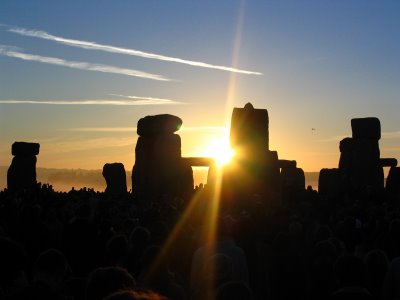
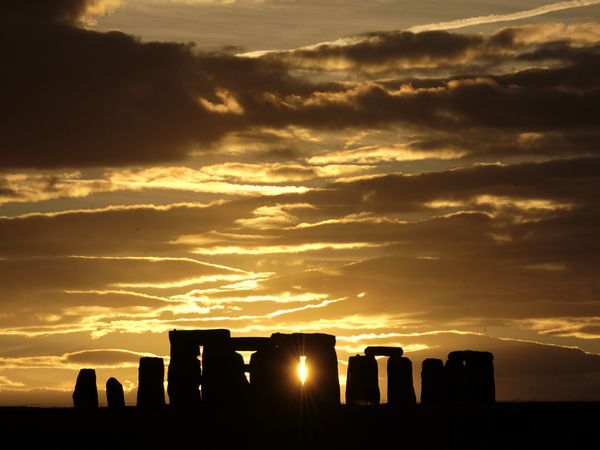
Stonehenge has confounded archaeologists and academics alike since its early beginnings

Einstein once declared that ‘the most beautiful thing we can experience is the mysterious’, and this statement is particularly fitting as regards Stonehenge. It was declared a World Heritage Site in 1986 and retains its intensely spiritual and otherworldly ambience, despite the number of tourists it attracts. If you choose to visit this extraordinary site, ensure you also spend some time delving into the captivating areas that surround Stonehenge. Explore picturesque Windsor and beguiling Bath.

Modern archaeological techniques and a number of recent digs have helped to form new theories about the stones that constitute Stonehenge. However, their definitive use stays as enigmatic as ever; it is suffused with a continuing sense of mystery. Stonehenge stands as an authoritative witness to the once extraordinary civilisations of the Stone and Bronze Ages of around 3,700 BC to 1,600 BC. Similarly, its surrounding areas stand as testament to these mighty cultures.

There is no place on earth quite like Stonehenge. Its brooding, pervasive mysticism, its intense spirituality and its endless aura of mystery all combine to make it an inimitable, idiosyncratic landmark. Take a Stonehenge tour and discover just why it continues to fascinate and perplex people from all over the world.

You may not know that Stonehenge is not the only ancient site in this region. Yet, in fact, a mere 25 miles north of Stonehenge is the impressive Avebury complex, which is a robust contender to be the most grandiose of all the residual prehistoric earthworks in Europe. The Avebury stone circle is actually much greater than that of Stonehenge – but the stones are smaller. A strong benefit that comes of visiting Avebury is that you can in fact touch its stones. Woodhenge, which consists of a circle of wooden posts, is an even more obscure and oft overlooked landmark.

Theories as to the use of Stonehenge range from the eminently believable to the absurd. In the twentieth century, both Fred Hoyle and Gerald Hawkins fascinatingly argued that not only was Stonehenge used as an observatory, but also to calculate future astronomical events such as eclipses. Yet it is probably von Däniken’s theory about Stonehenge that has led to the most furore, conflict and general disputation. Däniken claims that either extraterrestrials, or humans who were aided by extraterrestrials, built Stonehenge. He then goes on to argue that Stonehenge is an exact replica of our solar system, including the asteroid belt.

Why not merge a visit to Stonehenge with visits to its nearby districts, which hold their own captivating and idiosyncratic attractions? A combination Bath and Stonehenge tour from London is one of the most extraordinary tours you can do. Bath is, without a doubt, one of the most absorbing destinations to explore in the UK. An especially great number of visitors assemble to view the extraordinary sunrise at the summer solstice.

Link: http://pressitt.com/smnr/Stonehenge-A-Sacred-Burial-Site/10709/

The Stonehenge Tour Company
http://www.StonehengeTours.com

Residents of the Northern Hemisphere are downright giddy this time of year with the official arrival of spring. In honor of longer days, sunshine and the tantalizing prospect of summer on the horizon, Cheapflights.com has chosen its top 10 list of places around the world to see a magnificent sunrise.  Reuters has not endorsed this list:

1. Stonehenge, England

Equinox devotees will gather every year for the Vernal Equinox. A place of sun worship still, Stonehenge is a mysterious destination that holds deep spiritual value for many travelers. Some researchers suggest the formation was erected as early as 2200 BC, while others argue it was even earlier, in 3000 BC. No matter the date of creation, Stonehenge is a powerful landmark, and well worth the visit for a beautiful—and perhaps magical—sunrise.

Stonehenge Equinox Sunrise

Stonehenge Equinox Sunrise


2. Svalbard, Norway

The sun doesn’t set in Svalbard—at least not between mid-April and late August each year. It’s obvious, then, why the sun rising holds an almost magical appeal for visitors. Situated north of the Arctic Circle, the northernmost inhabited spot on the planet features the midnight sun, a phenomenon where the sun stays continuously in the sky for 24 hours a day. Glaciers and mountains clutter Svalbard’s horizon, painting a landscape that merely enhances the event.

3. Angkor Wat Siem Reap, Cambodia

Angkor Wat any time of day is powerful, but arriving early enough to watch the sunrise offers visitors an even greater spectacle. The preserved temple attracts travelers to Cambodia from around the world, providing them architectural insight into Khmer and Hindu mythology and history. We advise that visitors dedicate more than a day to exploring the sacred grounds (and that one of those days begins before dawn).

4. Fiji

Smack dab on the 180-degree longitude line, Fiji is one of the first spots in the world to see the sun rise every day. The South Pacific destination, a favorite among lovers of turquoise seas and white-sand beaches (and who isn’t), offers unrivaled scenery and inspirational landscapes. Itinerary tip: Follow an intoxicating sunrise up with a morning exploration; the “soft coral capital of the world” offers some of the best scuba diving in the world.

5. Mount Kilimanjaro, Tanzania

Climbing Mount Kilimanjaro is on practically every adventure traveler’s to-do list. With the enormous undertaking comes a chance to see one of the most enchanting sunrises in the world. From Kili’s summit—19,341 feet above sea level—dedicated souls can reflect on their ascent, a massive accomplishment, while soaking up an unparalleled sight to see.

6. Haleakala National Park, Hawaii, USA

Boarding a bus in the wee hours of morning is a pain, particularly on vacation when the greatest indulgence is sleeping in. But the alarm-clock acknowledgement is worth it if the payoff is watching a sunrise from above the clouds, on the top of a volcano. Various van tours offer the trip through Haleakala National Park in Maui, picking visitors up at 3 a.m. and dropping them off to see the event from the summit. Should you want to (and we highly recommend it), you can bike the 28 miles down the mountain, back to sea level.

7. Tres Cruces, Peru

A six-hour bus ride from Cuzco, the gateway to Machu Picchu, Tres Cruces is undeniably worth the long trek. The Incas held the mountain spot, situated on the Amazon basin, sacred. Nowadays, it’s visitors looking to experience a mind-blowing sunrise who sanctify the destination. The view famously boasts celestial hues and Polaroid moments from above the clouds.

8. Tulum, Mexico

The coastal oasis of Tulum draws spiritual travelers and yoga-types year-round to soak up exquisite culture, history and scenery all in a single spot. The destination’s think-green mentality and efforts toward sustainability set the tone for a raw form of vacationing, where visitors are up with the sun (and often in bed shortly after the sun goes down). No need to set an alarm in Tulum, where sun worshipers gather at the shoreline daily to watch the sunrise.

9. Grand Canyon, Arizona, USA

The most impressive sunrises in the continental United States occur every day across the Grand Canyon. Cool purples melt into shades bronze and orange against the awe-inspiring scenery, arguably America’s greatest natural wonder. There isn’t a best place to see the sunrise in the Grand Canyon, but Maricopa, Hopi, and Mather points, and along the South Rim are recommended highly by in-the-know travelers.

10. Mount Sinai, Egypt

First a history refresher: Jews, Christians and Muslims alike believe that Moses received the 10 Commandments at the biblical Mount Sinai, as mentioned in the Torah, Bible and Koran. Still an important religious destination, Mount Sinai today draws believers who scale the route by foot for religious purposes, and for the chance to see one of the most inspiring sunrises in the world.

Link: http://uk.reuters.com/article/2012/03/30/us-travel-picks-sunrise-idUKBRE82T13D20120330

The Stonehenge Tour Company 
http://www.StonehengeTours.com 

The Bluestones

Broadly speaking the monument is made up of two stone types. Sarsens and Bluestones. While the large Sarsen stones come from the Marlborough Downs, about twenty miles from Stonehenge, the bluestones are not local.

The Bluestones form two arrangements inside Stonehenge, a circle inside the outer sarsen circle and a horseshoe inside the trilithons.


Originally there may have  as many as eighty Bluestones, weighing up to five tons each. It’s difficult to be certain, some are missing, others are broken and the pattern of holes is confusing.

The Bluestones have tended to be overshadowed by their larger neighbours. Early texts and examination of the stones show that Stonehenge is not the first site where the bluestones stood as a circle. Robert Graves said this sacred circle was transported to Stonehenge for it’s religious significance; in the words of Professor Rhys ‘ the stones were regarded as divine or as seats of divine power’.

“The great dolmens of Stonehenge, all of local stone, look as thought they were erected to give importance to the smaller stones, which were placed in position shortly after they themselves were. It has been suggested that the smaller ones which are known to have been transported all the way from the Prescelly Mountains in Pembtokeshire, were originallt disposed in another order there and rearranged by the people who erected the larger ones.” – Robert Graves; The White Goddess, p282.

An existing sacred circle, whose stones originated in West Wales, was transported to Salisbury Plain, re-erected at Stonehenge and a mirror structure of local stone was erected around it.

Until the advent of the railways transport by water was the only way to effectively move large heavy objects over long distances. 


Thus it is likely that much of the transportation of the bluestones from the Preseli Mtns. to Stonehenge was by water. First by river, then along/across the Bristol Channel/Severn Estuary, then lastly by river to Stonehenge; and while we can’t be certain which rivers were used we can be certain that in their passage across the Bristol Channel/Severn Estuary the bluestones would have been carried past Lundy Island.

So, where did the bluestone circle first stand?

The Bluestones

Geoffrey of Monmouth describes the original home of the stones as ‘the Giant’s Dance, which is in Killaraus, a mountain in Ireland.’

The frequently maligned early historian Geoffrey of Monmouth, in his ‘History of the kings of Britain’ written around 1139AD, wrote


“If you are desirous,” said Merlin, “to honour the burying place of these men with an everlasting monument, send for the Giant’s Dance, which is in Killaraus, a mountain in Ireland. For there is a structure of stones there, which none of this age could raise, without a profound knowledge of the mechanical arts. They are stones of a vast magnitude and wonderful quality; and if they can be placed here, as they are there, round this spot of ground, they will stand forever.”

At these words of Merlin, Aurelius burst into laughter, and said, “How is it possible to remove such cast stones from so distant a country, as if Britain was not furnished with stones fit for the work?” Merlin replied, “I entreat your majesty to forbear vain laughter; for what I say is without vanity. They are mystical stones, and of a great medicinal virtue. The giants of old brought them from the farthest coast of Africa, and placed them in Ireland, while they inhabited that country. ….There is not a stone there which has not some healing virtue.” When the Britons heard this they resolved to send for the stones….A fleet therefore being got ready , they set sail, and with a fair wind arrived in Ireland. …they went to the mountain Killaraus, and arrived at the structure of stones, the sight of which filled them both with joy and admiration. Merlin. .began his own contrivances. When he had placed in order the engines that were necessary, ho took down the stones with an incredible facility, and gave directions for their carrying to the ships, and placing them therein. This done they set sail again, to return to Britain; where they arrived with a fair gale… Merlin set up the stones… in the same manner as they had been in the mountain Killaraus.”

Geoffrey of Monmouth, History of the Kings of Britain pp133+

Geoffrey claimed to have taken much of his information from an earlier British source, unknown to us today. Before Geoffrey the Scots lived in present day Ireland, the Irish were settled in areas of Cornwall, North Devon and the south-western part of present day Wales. Killaraus is unfortunately not identifiable.

Stonehenge bluestones, in their incarnation as ‘The Giants Dance’ had their home somewhere in those areas of southwest Britain settled at one time by the Irish.

Somewhere in Cornwall, North Devon Southwest Wales there’s a very sacred site without a stone circle.

A search for a lack of stones doesn’t seem likely to be very productive.

Where next?

“For a culture to whom the timing of seasonal events was particularly important, the culture which produced Stonehenge, for example, the observation of heavenly bodies was a central part of their religious ceremonies. Any place which possessed such alignments was holy. The movements of heavenly bodies is regular and can be calculated and thus predicted. Throughout time the coincidence of a sunrise or sunset with a natural feature such as a mountain or an island has always been, and indeed still is, awe inspiring. Any site which possessed such an alignment was a natural indicator of a heavenly event and thus sacred. Other markers could be erected, if necessary, at the site, stones , trees etc., to indicate other alignments from the site. However, A place with two or perhaps even three natural features all providing significant alignments would be very much rarer, and so more holy.” Henry Lincoln

Megalithic stone circles have one common quality. The stones which make up the circle are aligned on natural features.

If we take an imaginary stone circle monument. It possesses a number of stones standing in the landscape and certain stones line up with a distant natural feature, a mountain for instance. On midsummers day the solstice sun rises over that mountain. The stone alignment marks the midsummer solstice.

Midsummer day + stones + natural feature + sun = sacred site.

If you take away the stones and view from the same place, you still get

Midsummer day + natural feature +sunrise = Sacred site.

Remembering what Geoffrey of Monmouth said about the stones ‘They are stones of a vast magnitude and wonderful quality’ and ‘They are mystical stones, and of a great medicinal virtue.’and considering the physical effort involved in manhandling over 80 stones weighing up to five tons each to Stonehenge alone testifies to the fact that the previous home of the Bluestones must have been a very special place, a holy place, to contain such an illustrious circle. Never mind the work in constructing the Sarsen stones around them. It seems probable that their earlier home was a site with several significant natural alignments.

If this is so, it may be that by examining alignments from significant natural features in the areas of southwestern Britain known to have been settled by the Irish we may find a site where several intersect. We may find the original home of ‘the Giants Dance.’

Link Source:  http://www.lundyisleofavalon.co.uk/stonehenge/bluestones.htm

The Stonehenge Tour Company
Operating Tours since 1995
http://www.StonehengeTours.com


We go back in time to rediscover the true spirit of Druidism.

To most of us the Druids conjure up images of a mysterious, religious sect wearing strange robes and conducting archaic ceremonies out in the open air

Druids at Stonehenge
Stonehenge has special significance to DruiInside Out takes a look inside the secret world of the Druids. We go back in time to rediscover the true spirit of DruidismTo most of us the Druids conjure up images of a mysterious, religious sect wearing strange robes and conducting archaic ceremonies out in the open air.

The problem is that they’re a secretive bunch. They don’t write down their ideas nor do they have a Holy Book.

Inside Out met a family whose mum became a Druid and looks at how it changed her and her familiy’s lives.

A family story

Zoe Brice know better than anyone about having a Druid in the family. Zoe is 28 years old, and by day she works as a housing officer for a local council.

She and her half brother and sister were brought up by her dad after her mum walked out on the family and became a traveller.

Twenty years later her mum, Denny Price, is the archdruidess of the Glastonbury order of druids.

Glastonbury Tor
Glastonbury Tor and the nearby Zodiac are sacred sites

It’s taken Zoe a long time to understand her mum’s actions and learn about her beliefs.

Druid beliefs

To fully understand Druidism, you need to immerse yourself in ancient history, fantasy, myth and mystery.

The lineage of the Druid spiritual tradition can be traced back many thousands of years.

The origins of the Druids were as important religious figures among the Celts, who came to Britain in 1500 BC.

In this pre-Christian era, Druids acted as judges, doctors, diviners, sages, mystics, and clerical scholars. They were considered amongst the wisest and most respected members of Celtic society.

DRUIDS –
THE DRUID PATH
Druidry fosters the love of the land, earth, and the wild including:

* Love of Peace

* Love of Beauty – the bard and artists within

* Love of Justice – non punitive justice and law

* Love of Story and Myth – the power of mythology

* Love of History and Reverence for Ancestors

* Love of Trees – sacred groves and study of treelore

* Love of Stones – stone circles and crystals

* Love of Truth – wisdom

* Love of Animals – druidry sees animals as sacred

* Love of the Body

* Love of the Sun, Moon and Stars

* Love of Life

The name Druid itself is connected with the Celtic word for ‘oak tree’.

Modern Druids

There are around 10,000 practising Druids in Britain with Druid orders being spread around the country.

These Druid orders meet up regularly and continue the traditions of reading Celtic poetry, while dressed in robes and wearing ancient Celtic symbols.

There are three sets of people who Druids hold in exceptional honour – the bards, the ovates and the druids.

The bards are singers and poets, and the keepers of tradition.

The ovates are diviners and natural philosophers.

The Druids are learned in natural and moral philosophy.

Each of the three groups has specific tasks and jobs to perform.

In 1989 the Council of British Druid Orders was formed with two or three founding member orders.

There are now twelve major orders all over the United Kingdom.

The Glastonbury Order of Druids is thousands of years old with its roots in antiquity.

There is evidence of early Druid activity in the giant earthworks south of Glastonbury Tor – known as Glastonbury Zodiac – which date back to 2770 BC.

Spiritual rebirth

Druids are believers in reincarnation. They believe that the soul is immortal and after a person dies, they are transported to the ‘Otherworld’.

They also believe that that person will come back again in another human body.

Some put the growing interest in Druidism over the past decade down to the fact that spiritual concerns are once again coming to the fore in society.

Druid ceremony
Some historians claim Druids originated in Britain

There is also growing interest in the environment and the myths and legends of England.

This philosophy has proved attractive to a growing number of New Age travellers in the British countryside.

Stonehenge

The traditional meeting place of the Druids is Stonehenge which is pre-dates Druidism.

Druids claim that their religion has marked the summer solstice at Stonehenge for nearly 800 years.

Today’s Druids form their traditional circle around the stones every June, with the conch shell sounding to herald a new dawn and new season.

The Glastonbury Druids joined their colleagues in this celebration once again this year.

Source: http://www.bbc.co.uk/insideout/south/series3/druids.shtml
Links: Stonehenge and Amebury Druids http://www.stonehenge-druids.org/

The Stonehenge Tour Company
Daily guided tours of Stonehenge Stone Circle
http://www.StonehengeTour.com

A DEVELOPER has been ordered by a judge to demolish a Stonehenge-like structure on Achill Island, Co Mayo.

Mr Justice Brian McGovern, in the High Court, ordered Joe McNamara

Builder Joe McNamara, 'The Anglo Avenger', was ordered to tear down his Achill-henge structure by the High Court. The High Court ruled that the building, which is described as an ornamental garden, is in breach of planning laws

Builder Joe McNamara, 'The Anglo Avenger', was ordered to tear down his Achill-henge structure by the High Court. The High Court ruled that the building, which is described as an ornamental garden, is in breach of planning laws

(41), with addresses at Achill Island, Co Mayo and Salthill, Co Galway, to restore the site to its original state if An Bord Pleanala finds that it is not an exempted development.

The orders had been sought by Mayo County Council, which says the structure is an unauthorised development. It consists of a ring with 30 large columns, with tapping stones placed on top.

Mr McNamara had applied to An Bord Pleanala to have the structure deemed an exempted development.

The judge agreed toput a stay on his order until An Bord Pleanala has made its decision.

Mr McNamara was dubbed the ‘Anglo Avenger’ when he hit the headlines last year after driving a cement lorry emblazoned with the words “Anglo” and “toxic bank” to the gates of Leinster House.

Link: Irish Independent: http://www.independent.ie

The Stonehenge Tour Company
http://www.StonehengeTours.com
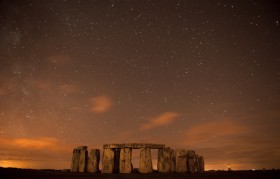
Stonehenge is one of the most mystifying and fascinating attractions you are likely to unearth in your lifetime. Solstice, or Litha is defined as a stopping or standing still of the sun. It is the longest day of the year and the time when the sun is at its highest elevation. This date has held sacred import for thousands of years as humans have unfailingly been astounded by the immense life-giving force of the sun.

Stonehenge Summer Solstice Sunrise

Stonehenge Summer Solstice Sunrise

The Celts commemorated it with bonfires that supplemented the sun’s energy, Christians celebrated the feast of St John the Baptist towards the end of June and the Chinese commemorated the Summer Solstice with the festival of Li, the Goddess of light. Celebrators characteristically congregate at Stonehenge, the archaic stone circle in Wiltshire, to see the sun rise. The Heel Stone and Slaughter Stone, positioned outside the main circle, align with the rising sun.

Intriguingly, Summer Solstice revelers used to number, incredibly enough, in the region of 70,000. In 1985 they conflicted with up to 500 police in the notorious ‘Battle of the Beanfield’. For many the wish to get to Stonehenge in time for the Solstice is analogous to a sacred experience. Take a Stonehenge tour and savour the most powerfully spiritual experience you are very likely to have.

Stonehenge was deemed a World Heritage Site in 1986 and still maintains its deeply sacred and unearthly feel, in spite of the great number of tourists who visit. If you decide to visit this remarkable site during the Summer Solstice, you are making an altogether very wise decision. However, you should also make certain you also spend some time exploring into the enchanting regions that are in close proximity to Stonehenge.
Indeed, if it is spirituality you are looking for, do not limit your tour to the Summer Solstice at Stonehenge. Stonehenge is not the only antique landmark in this area. Indeed, just 25 miles north of Stonehenge is the striking Avebury complex, which is a vigorous competitor to be the most impressive of all the remaining antediluvian earthworks in Europe. The Avebury stone circle is truly much better than that of Stonehenge – but the stones are slighter. Upon visiting Avebury, you can touch its stones, which you are not able to do at Stonehenge.

Windsor Castle is certainly well worth visiting. Indeed, it is not for naught that Samuel Pepys avowed the Castle to be ‘the most romantic castle that is in the world’. That was in 1666 – however, it is a true today as it ever was. In 43 AD the Romans began the creation of ‘Aquae Sulis’, the Roman Baths, as a refuge affording tranquillity and relaxation, distinct from other Roman defensive town settlements.
Take a Stonehenge and Windsor tour for an especially captivating experience that will leave you with lasting memories.

Source: http://www.travpr.com/pr-12594-experience-the-summer-solstice.html

Links:  Stonehenge Solstice News:  http://blog.stonehenge-stone-circle.co.uk/
LINKS: Stonehenge Summer Solstice Tour from London

The Stonehenge Tour company – http://www.StonehengeTours.com


Throughout history, time has been determined by using the reflection of the sun, the phases of the moon, and other calendars such as Stonehenge. Stonehenge, built over 4000 years ago in England, where used to tell ancient civilizations the time of the day and year. Ancient peoples used lunar eclipses, sun rays, the position of the sun, and other seasonal or celestial events to determine the time. People used these stones to tell the time of the day.


In 46 BC Julius Caesar decided that the calendar year should have 365 days, but every fourth year there should be an extra day, whichstonehenge_align would be a leap year. He adapted this basis because if the year was divisible by four then it was to be a leap year.


In 1582 Clauvius proposed the Gregorian Calendar to Pope Gregory with an average year of 365.2425 days and 97 leap years every 400 years. The year was not to be a leap year unless it were divisible by 100 and 400.


Today time can be easily determined by reading a clock, watch, or even easier by a digital clock.

Wikipedia tells that the winter solstice occurs when the axis of the earth is farthest from the Sun.  Because our calendar has most years of 365 days interrupted frequently by a year with an extra day, the date of the winter solstice varies between December 21 and 23.  (The actual formula for leap year is a little more complicated than every 4th year.  Years evenly divisible by 100 are not leap years unless they are divisible by 400.)  While it is true the winter solstice occurs on the shortest day of the year, it does not correspond to the date of the latest sunrise of the year.

Stonehenge Guided Tours – http://www.StonehengeTours.com 


Get Up Close To The Stones At Stonehenge Like Few Visitors Do

Stonehenge Sunset

Stonehenge Sunset Tour

Built nearly 5,000 years ago, Stonehenge is the most popular prehistoric monument in the world. Most visitors to the site are not allowed direct access to the stones.

On this tour you get that access, with a private viewing of the mysterious monoliths. We will enter the stone circle itself and stand beside the mighty Sarsen rocks towering above us.
Our guide will explain the history of this ancient site, pointing out the altar, slaughter and heel stones, above which the sun rises dramatically on the summer solstice. There will be time to enjoy the peace, away from the crowds, as we experience Stonehenge at its most mystical and atmospheric best. Not to be missed!

With special access you are allowed right inside Stonehenge, walking among the stones close up and with a maximum of 26 people on the whole site.

After collection from London in the morning we drive to Bath to visit the Roman Baths and Pump Room. In the late afternoon we visit Lacock for an early evening supper in a 13th century inn, before driving to Stonehenge.

As the sun begins to set, we enter the stone circle (which is normally roped off to the public) for a unique private viewing. The most dramatic and atmospheric way of visiting Stonehenge.

On selected days the tour operates in reverse, beginning with a private viewing of Stonehenge before it opens to the public in the morning, so we see the stones in the eerie morning light. This is followed by our visits to Lacock and Bath.

These tours sell out very quickly as the demand far outstrips supply of available places – be sure to reserve your place early.

The tour twins your special visit to Stonehenge with Bath and Lacock.

Lacock

Lacock is a very picturesque village dating back to the Saxon era. So pretty is the village that it has provided the setting for many movies and television dramas including Jane Austens Pride and Prejudice and more recently Harry Potter and the Philosophers Stone. Take a walk before enjoying an early evening supper* (breakfast for morning tours*) in The George, a vintage English pub built in 1361. (*food/drink not included).

Bath

Bath, a world heritage site, is a beautiful Georgian city with delightful crescents, terraces and architecture. There will be plenty of time to visit Bath Abbey, or to shop and explore. Your guide will also conduct an optional walking tour to show you where Charles Dickens lived and worked as a young man, and a give you a chance to sample some delicious cheeses fresh from the local dairy farms. Then we will enter the magnificent Roman Baths, where over one million litres of boiling water still burst free from the hot springs everyday.

Stonehenge Special Access Tours Dates 2012

MORNING Dates

January 2012
13,20,23,30

February 2012
3,13,17

March 2012
2,5,12,16

April 2012
5,9,12,19,23,26

May 2012
3,10,14,17,24,28,31

June 2012
4,7,11,14

July 2012
5,16,19,23,26

August 2012
2,9,13,16,23,27,30

September 2012
2,9,13,16,23,27,30

EVENING Dates

April 2012
1,4,8,15,18,22,29

May 2012
6,9,13,23,27

June 2012
3,6,10,13

July 2012
1,4,8,22,25,29

August 2012
5,8,12,19,22,26

September 2012
2,9,16

Link source

 Visit our website: http://www.StonehengeTours.com
The Stonhenge Tour Company

The world is full of the most mysterious and secret places. These are locations all around the world that we either don’t know anything or about or, quite simply, are afraid to venture any further!

Stonehenge is surely Britain's greatest national icon, symbolizing mystery, power and endurance. Its original purpose is unclear to us but some have speculated it was a temple made for the worship of ancient Earth (pagan?) deities. It has also been called an astronomical observatory for marking significant events on a prehistoric calendar. Others claim it was a sacred site for the burial of high-ranking citizens from societies of long ago. While we can't say with any degree of certainty what it was for, we can say it wasn't constructed for any casual purpose. Only something very important to the ancients would have been worth the effort and investment that it took to construct Stonehenge

There are so many unexplained phenomena… who built some buildings… who created those statues… why do planes and ships disappear here… why do radios not work in some places… the list goes on and on.

In addition, there has often been so much uncertainty about these places. It is understandable, of course. After all, who is really brave enough to fly into the Bermuda Triangle just on a dare?

As we said, there are several such places all around the world and we couldn’t possibly write about them all.

Nevertheless, click on “Slideshow” above, check out the following most mysterious places in the world… and tell us what you think…


Link: http://www.ibtimes.co.uk/articles/302886/20120222/mysteries-world-aliens-ufos-unexplained-phenomena.htm

The Stonehenge Tour Company

Don’t miss this opportunity to walk within the stones of Stonehenge before any visitors arrive, to venture into the religious landscapes of two of Britain’s most spectacular prehistoric sites and to have the latest ideas and archaeological discoveries described and put into the context of the monumental remains.  Based within the Cathedral Close in Salisbury
Stonehneg inner circle tour - close up

Day one

 Meet in the evening for an introductory lecture and dinner together in Sarum College in the beautiful Cathedral Close.

Day two

By coach to Avebury for a full exploration of the huge Neolithic henge, so large that part of the village lies within it. It is one of the largest and best preserved of 1300 stone circles known in the British Isles. Morning walk around the henge and along the ceremonial Avenue. We approach the stones of Avebury just as one would have done in prehistoric times.

Afternoon circular walk (2 hours) past Silbury Hill, the largest man-made mound in Europe. The most famous of its excavators crawled into an earlier excavation chamber and recorded later:

“the sides of the open chamber provided one of the most astonishing sights that I have ever seen…it was clear that this innermost mound had been covered by a series of conical shells or cappings…the effect was of finding oneself in an enormously complicated and highly coloured layer cake of gigantic size..”

The walk continues to the Long Barrow at West Kennet and a chance to explore the chambered tomb within. This kind of monument is the earliest known to have been built in Britain – in commemoration of the dead. Continue to the ‘Sanctuary’, a small, complex timber and stone circle on the top of Overton hill. Walking in our ancestors’ footsteps helps us try to understand their motives and methods. Disperse in Salisbury about 5.30pm.

Day three

Stonehenge for an early (7.30am) visit inside the stone circle before the public arrives. This will be followed by a walk (2 hours) through the wider religious landscape – the cursus, King Barrows and Stonehenge Avenue.

A short drive takes us to Woodhenge, where the remains of wooden post settings have been found – now marked by concrete. From here there is a good view over the huge henge at Durrington Walls, site of exciting recent excavations which revealed the settlement which may have housed the builders of Stonehenge.

Return to Salisbury Museum for a visit to the Stonehenge and Prehistory Galleries. We have arranged a private demonstration of flint-knapping in the gardens here, which is not only much enjoyed, but adds considerably to your understanding of the way in which our prehistoric forebears were able to fashion all manner of implements and tools from our good local flint supplies. In a world without metal technology this was a critical and highly sophisticated art. Disperse about 5pm.

Should you choose to arrive earlier or stay later, you might like to visit Old Sarum, the hillfort to the north of Salisbury which was later chosen as the site of our first cathedral, and of course our beautiful Gothic cathedral – straight in front of the College.

Fri 31st August – Sun 2nd September 2012
Link: http://www.barebonestours.co.uk/Europe/bare-bones-wessex-2011.html

More Stonehenge Tours: ‘The Stonehenge Tour Company
‘ – www.StonehengeTours.com