StonehengeNews's avatarStonehenge Stone Circle News and Information

The memory technique that unlocks the secrets of Stonehenge, Easter Island and ancient monuments the world over. Lynne Kelly has discovered that a powerful technique used by the ancients can unlock the secrets of the Neolithic stone circles of Britain and Europe

Without writing, indigenous elders memorised a vast amount of factual information onmemorycode which survival depended both physically and culturally: knowledge of thousands of animals and plants, astronomical charts, vast navigation networks, genealogies, geography and geology … the list goes on and on. How did they remember so much? And why does this explain the purpose of ancient monuments including Stonehenge, Easter Island and the Nasca Lines? Can we use these memory methods in contemporary life?

This lecture will focus on the transmission of scientific and practical knowledge among small-scale oral cultures across the world, drawing on Australian Aboriginal, Native American, African and Pacific cultures. Dr Kelly will…

View original post 540 more words

StonehengeNews's avatarStonehenge Stone Circle News and Information

Now might be a good time to invest in a telescope because come Friday you’re going to want one. 

On February 10th, we are not going to be treated to not just one celestial event on the same day but three.

stonehengemoon The lunar eclipse will take place in the early hours of Saturday morning

A lunar eclipse, snow moon and New Year comet should all be visible this Friday night into Saturday morning.

But unless you’re clued up on your astronomical happenings, it’s unlikely you’ll be familiar with them all, so here is a brief guide on how to spot them.

LUNAR ECLIPSE
The rare penumbral lunar eclipse occurs when the sun, earth and moon almost align behind one another.

The earth blocks the sun’s light from reaching the surface of the moon

It will first be visible at 10.30pm on February 10 as a subtle shadow and will be…

View original post 313 more words

Seeking highly motivated, talented, customer focused tour guides and driver/guides for our 2022 Stonehenge tour programme. Must have energy, enthusiasm and an overwhelming love for Stonehenge and the South West of England.  Our freelance tour guides are renowned for their exceptional ability to provide a truly memorable experience for our overseas customers. We offer an industry leading pay structure based on experience, full time/part time permanent or full time/part time seasonal contracts and welcome applications with or without a Blue Badge. We pay better rates than Viator, Tours by Locals and other online gateways.
20170106_081004

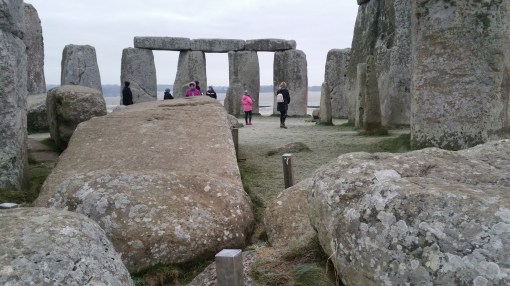
Many of our guided tours go inside the inner circle of Stonehenge so an intimate knowledge of the monument is vital.

What we require:

Good overview and knowledge of pre-history and British culture
Must have energy, enthusiasm and an overwhelming love for Stonehenge and the South West of England.
Passion for people, the areas we will be visiting, culture and traditions.
Flexibility, teamwork, leadership and organizational.
The ability to demonstrate the importance of high levels of customer service
Be adaptable and flexible to the ever changing needs of the tourism environment

Typical sightseeing itineraries:

Stonehenge and environs.
Avebury and environs.
Stonehenge, Bath, Lacock Village and Cotswold’s district
Stonehenge, Salisbury Cathedral and Windsor Castle
Stonehenge,  Glastonbury (Tor and Abbey) and Winchester
Stonehenge and Highclere Castle (Downton Abbey)
Stonehenge Inner Circle Access Tours

As part of our continues expansion programme we currently require Licensed MPV Driver / Guides based in London, Bath, Salisbury and Southampton. We also require transport only options from mayjor cities.
PCV Mini Bus Driver / Guides
‘Step on’ Tour Guides based in London, Salisbury, Southampton and Bath

If you are interested in working with Stonehenge Guided Tours, please contact us.
Email us here: experts@stonehengetours.com

The Stonehenge Tour Experts
Operating Stonehenge Guided Tours since 1995
http://www.StonehengeTours.com

This walking path links Britain’s two greatest prehistoric sites, Avebury and Stonehenge, and is as epic as the Inca Trail

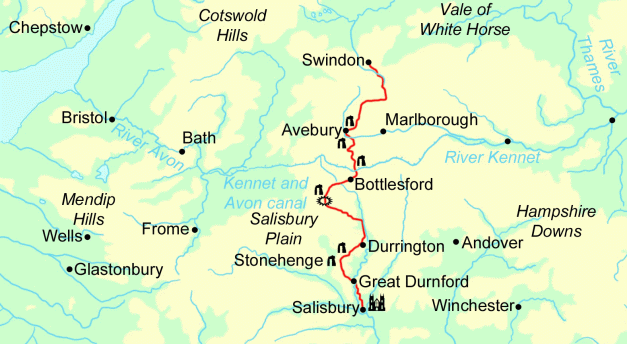
The Great Stones Way is one of those ideas so obvious it seems amazing that no one has thought of it before: a 38-mile walking trail to link England’s two greatest prehistoric sites, Avebury and Stonehenge, crossing a landscape covered with Neolithic monuments.

great-stones-way-map

The Great Stones Way is a route using existing paths through the Wiltshire Downs, starting just south of Swindon and ending up at Old Sarum, on the outskirts of Salisbury. As long-distance trails go, this one is quite short, making it perfect for an energetic long weekend, or for more leisurely exploration over a week.

What’s the attraction?
Walking the Great Stones Way takes you on a journey through a landscape steeped in history, allowing you to discover the extraordinary sights our ancestors have left us. These include Iron Age hill forts with commanding views such as Barbury Castle and Old Sarum, while optional loops take you past the Neolithic henges and stone circles at the combined UNESCO World Heritage Site of Avebury and Stonehenge. There is also the option to finish the walk at Salisbury’s majestic medieval cathedral. The first part of the trail heads south through the rolling open chalk downland landscape of the North Wessex Downs Area of Outstanding Natural Beauty.

“I can’t help thinking how much better it is to arrive at Stonehenge on foot. The comparison that comes to mind, and which I know well, is the Inca Trail to Machu Picchu. The experience of trekking to both sites is immeasurably richer, not just because you’ve “earned it”, but because both sets of ruins are only properly understood in the context of the sacred landscape that surrounds them.”

Stonehenge Guided Tours is proud to offer a Contours walking holiday following the ‘Great Stones Way’ Please visit our Stonehenge tour website for full details

We also offer  daily Stonehenge guided walking tours throughout the year.

Stonehenge Guided Tours
The Stonrhenge Tour Experts
http://www.StonehengeTours.com

StonehengeNews's avatarStonehenge Stone Circle News and Information

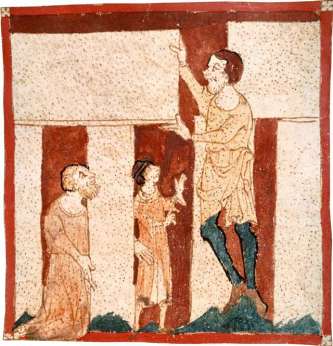
Merlin makes his first appearance in the Stonehenge story in Book 8, Chapter 10, of Geoffrey of Monmouth‘s epic work “Historia Regum Britanniae” (The History of the Kings of Britain, c. 1136AD) when Aurelius Ambrosius – recently annointed King of Britain and the brother of Uther Pendragon – seeks his advice for a lasting memorial to the British princes treacherously slain by the Saxons during a truce.

Merlin says:
“If you are desirous to honour the burying-place of these man with an everlasting monument, KIng Arthurs Merlin at Stonehengesend for the Giant’s Dance, which is in Killaraus, a mountain in Ireland. For there is a structure of stones there, which none of this age could raise without a profound knowledge of the mechanical arts. They are stones of a vast magnitude and wonderful quality; and if they can be placed here, as they are there, round this spot of ground, they will…
View original post 735 more words

StonehengeNews's avatarStonehenge Stone Circle News and Information

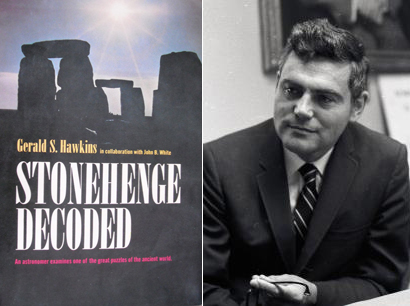
Astronomer Prof. Gerald Hawkins wrote two articles for “Nature” in 1963 and 1964 in which he pointed out several new Stonehenge alignments to the Sun and Moon and proposed that the 56 Aubrey Holes could be used to predict eclipses. His subsequent popular book “Stonehenge Decoded” gave the world the idea that the monument was a Neolithic computer.

stonehenge-decoded-and-gh

Archaeologists were horrified at the thought and the leading authority on Stonehenge at the time, one Richard Atkinson, wrote a rebuttal paper in 1966 called “Moonshine on Stonehenge” which heavily criticised Hawkins conclusions. Atkinson considered the builders of Stonehenge to be “howling barbarians” – a statement he later came to regret.

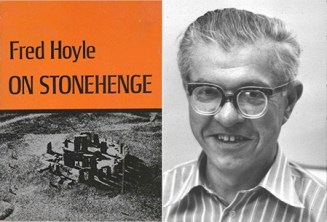
on-stonehenge-and-fhProf. Fred Hoyle followed up Hawkins’ work on the eclipse predictor idea and came up with a relatively simple recipe for moving markers around the 56 Aubrey Holes to keep track of the Sun, Moon and the two points in the…
View original post 1,023 more words

StonehengeNews's avatarStonehenge Stone Circle News and Information

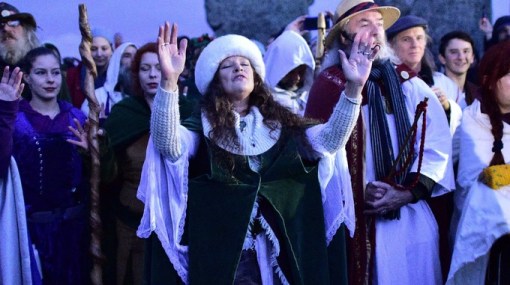
Thousands of people gathered at Stonehenge to celebrate the winter solstice.

solstice2016 Stonehenge was built over 5,000 thousands years ago and remains a place of spiritual significance for many. Credit: PA

Druids and pagans were among the crowd that watched the sun come up at 8.13am on the shortest day of the year.

People, some dressed in traditional pagan clothing, danced, played musical instruments and kissed the ancient stones.

One South African woman said she had made the trip to the UK “especially for the solstice”.

She said: “I am a Pagan, a witch and this is about the best place to be.”

Kate Davies from English Heritage, who manage the prehistoric monument in Wiltshire, said: “We were delighted to welcome approximately 5,000 people to Stonehenge to celebrate winter solstice this morning.

It was a very enjoyable and peaceful celebration and the ancient stone circle was filled with the sound of…

View original post 142 more words

StonehengeNews's avatarStonehenge Stone Circle News and Information

The prehistoric site holds spiritual significance for many Pagans and Druids.

While some are buying presents and trimming their tree for Christmas, a very different kind of spiritual celebration gets underway every year at Stonehenge. It’s the winter solstice, also known as Yule in some Pagan circles, and the occasion draws thousands of Pagans, Druids, spiritual seekers and tourists to the prehistoric site for a reverent and ecstatic ceremony.

solstice-inner The sun peeks through clouds during a winter solstice ceremony at the ancient neolithic monument of Stonehenge near on December, 2015. MATT CARDY VIA GETTY IMAGES
The December solstice marks the longest night and shortest day of the year in the Northern Hemisphere, and this year it falls on Wednesday, December 21 at 5:44 EST.

In ancient Pagan traditions, the winter solstice was a time to honor the cycles of life and death and celebrate the sun’s rebirth as the…

View original post 554 more words

StonehengeNews's avatarStonehenge Stone Circle News and Information

As you might expect for such an imposing stone monument, people have sometimes associated Stonehenge with Freemasonry.

Oddly there is actually not much in the way of direct evidence that the Brotherhood ever took much interest in it apart from the odd article in ACQ (“Ars Quatuor Coronatorum”) discussing various aspects of its construction and history.

Various attempts have been made down the years to find a link between Druidism and Freemasonry with some authors claiming that the Druids were the original basis for it – notably G.S. Faber (“Origins of Pagan Idolatry”, 1816), Winwood Reade (“The Veil of Isis”, 1861) and Dudley Cory-Wright (“Druidism – The Ancient Faith of Britain”, 1924).

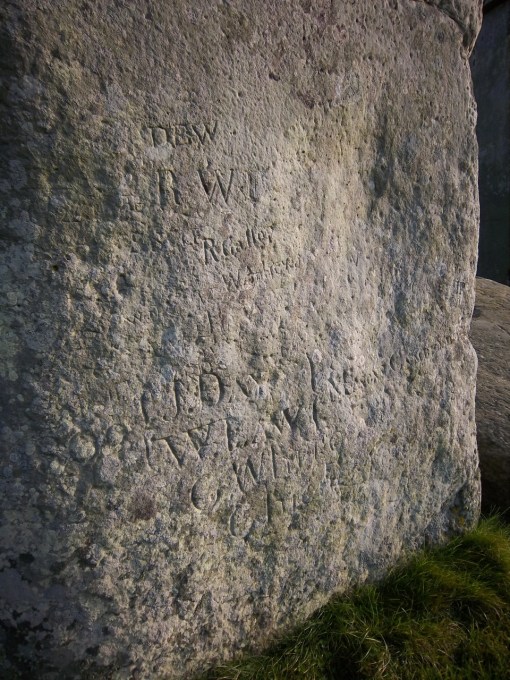
masons-camberwellThere’s even some graffiti that refers to masons – on the southwest side of the tallest stone still standing these lines appear:

           (J.DAY           )

1802    (                       ) MASONS CAMBERWELL

            (W.LAW         )

… although it’s not clear…

View original post 860 more words

StonehengeNews's avatarStonehenge Stone Circle News and Information

Ancient peoples had the benefit of dark skies and experienced the full spectacle of the starry heavens. The Moon gave light at night and would have been particularly useful in the two weeks centred on full Moon. The regular monthly cycle of lunar phases provided a convenient measure of time, upon which many ancient calendars were based.

moon-calendar

Was it a Neolithic calendar? A solar temple? A lunar observatory? A calculating device for predicting eclipses? Or perhaps a combination of more than one of these? In recent years
Stonehenge has become the very icon of ancient astronomy, featuring in nearly every discussion on the subject.
A more informed picture has been obtained in recent years by combining evidence from archaeology and astronomy within the new interdiscipline of archaeoastronomy – the
study of beliefs and practices concerning the sky in the past and the uses to which people’s knowledge…

View original post 396 more words