StonehengeNews's avatarStonehenge Stone Circle News and Information

As you might expect for such an imposing stone monument, people have sometimes associated Stonehenge with Freemasonry.

Oddly there is actually not much in the way of direct evidence that the Brotherhood ever took much interest in it apart from the odd article in ACQ (“Ars Quatuor Coronatorum”) discussing various aspects of its construction and history.

Various attempts have been made down the years to find a link between Druidism and Freemasonry with some authors claiming that the Druids were the original basis for it – notably G.S. Faber (“Origins of Pagan Idolatry”, 1816), Winwood Reade (“The Veil of Isis”, 1861) and Dudley Cory-Wright (“Druidism – The Ancient Faith of Britain”, 1924).

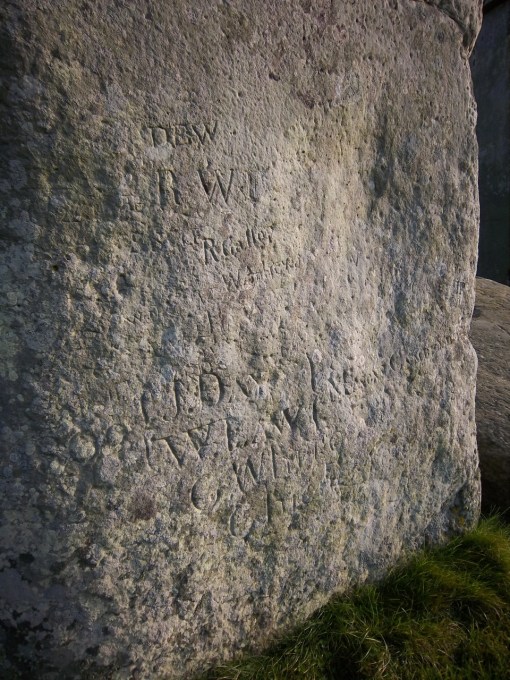
masons-camberwellThere’s even some graffiti that refers to masons – on the southwest side of the tallest stone still standing these lines appear:
           (J.DAY           )

1802    (                       ) MASONS CAMBERWELL

            (W.LAW         )

… although it’s not clear…

View original post 860 more words

StonehengeNews's avatarStonehenge Stone Circle News and Information

Ancient peoples had the benefit of dark skies and experienced the full spectacle of the starry heavens. The Moon gave light at night and would have been particularly useful in the two weeks centred on full Moon. The regular monthly cycle of lunar phases provided a convenient measure of time, upon which many ancient calendars were based.

moon-calendar

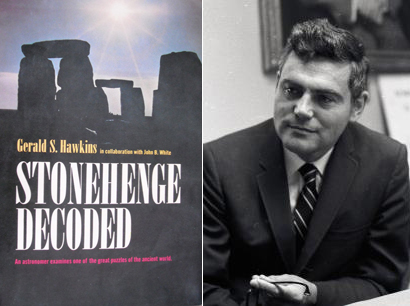
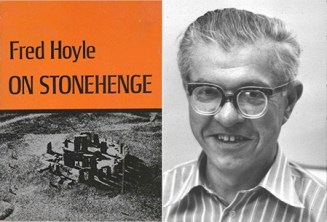
Was it a Neolithic calendar? A solar temple? A lunar observatory? A calculating device for predicting eclipses? Or perhaps a combination of more than one of these? In recent years
Stonehenge has become the very icon of ancient astronomy, featuring in nearly every discussion on the subject.
A more informed picture has been obtained in recent years by combining evidence from archaeology and astronomy within the new interdiscipline of archaeoastronomy – the
study of beliefs and practices concerning the sky in the past and the uses to which people’s knowledge…

View original post 396 more words

StonehengeNews's avatarStonehenge Stone Circle News and Information

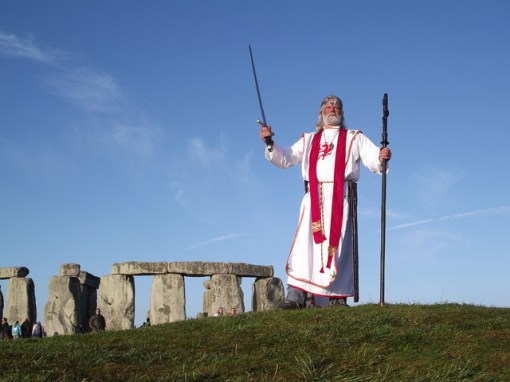
King Arthur Uther Pendragon is the Chosen Chief and titular Head of the Loyal Arthurian Warband, a highly political modern Druid order that campaigns on a variety of issues primarily to do with Stonehenge.

8012908913_1b46a670da_z

These issues include protesting against the inclusion of human remains in English Heritage’s visitor centre exhibition, championing the right of celebrants to freely attend Solstices and Equinoxes at Stonehenge without having to “pay to pray” and calling for the return of the cremated remains that have been excavated from the Aubrey Holes and removed from the site by archaeologists.

He’s also got a long history as an eco-warrior and civil rights activist, protesting against road developments (notably the Newbury Bypass and Twyford Down) and of standing as an independent Parliamentary candidate for the Salisbury constituency.

When the media are looking for a soundbite from the rapidly growing pagan community in the UK, they invariably call Arthur…

View original post 558 more words

It is the day with the least sunlight with the winter solstice having been celebrated for thousands of years.

arthur-solstice

A druid ceremony is held during the Winter Solstice at Stonehenge

THE winter solstice: the shortest day and longest night of the year.

So what is so important about this date? What about it possesses people to dress in unicorn masks and visit Stonehenge?

Here, we take a look at just what the winter solstice is – and why a day with so little sunlight is worth celebrating.

What is the Winter Solstice?

The winter solstice is a phenomenon that marks the shortest day of the year.

Often referred to as the official beginning of winter, the solstice generally only occurs for a moment.

The true solstice occurs when the Earth is tilted the furthest away from the Sun on its axis.

Despite it only lasting a moment, the full day is recognised.

When is the Winter Solstice?

The winter solstice generally falls between December 20 and 23.

winter-solstice-tour

Stonehenge Winter Solstice Tour

In 2016, it will fall on Wednesday, December 21.

This means, for the UK, the sun will rise at 8.04am and set at 3.54pm – meaning we will have just 7 hours and 49 minutes of daylight.

A winter solstice also occurs in the Southern Hemisphere, with the day occurring in late June.

How is it celebrated?

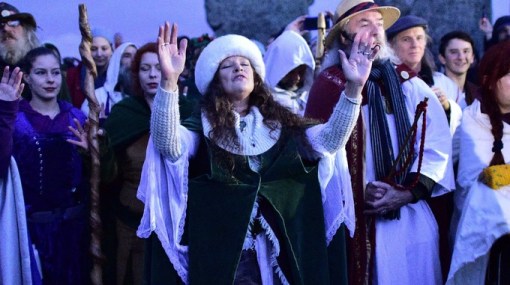
The day is one that is celebrated by pagans and druids, with rituals of rebirth performed throughout history on the day.

One of the biggest celebrations in the UK occurs at Stonehenge with crowds gathering to watch the sunrise on the morning of the winter solstice.

The crowds of devotees, often dressed for the occasion, regularly gather at the historic site.

It is just one of the many pagan festivals, which include midwinter, midsummer and inbolc – the day that traditionally marks the start of spring.

The importance placed on the day comes from how people were previously so ecoenomically dependent on the seasons with straveation common in the first months of winter.

Will the days start to get longer?

After the solstice, the days will start to get longer.

The process is gradual, with minutes added everyday.

The days will eventually lengthen until the summer solstice, which is expected on Wednesday June 21.
Article source: By BRITTANY VONOW The Sun Online

Join us on a guided tour from London or Bath and join the Pagan celebrations at sunrise on the Winter Solstice:
Stonehenge Winter Solstice Tour

The Stonehenge Experts
Stonehenge Guided Tours
http://www.StonehengeTours.com


StonehengeNews's avatarStonehenge Stone Circle News and Information

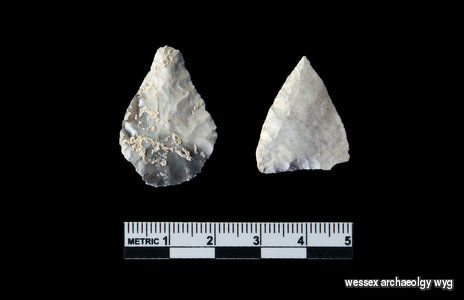
Archaeologists have found new evidence that rewrites the history of the Stonehenge landscape.  One of the newly-discovered sites even predates the construction of the world famous monument itself.

arrow-stones FASCINATING FINDS: Flint arrow heads give a secure early Neolithic date

The remains, found at LarkhillandBulford, were unearthed during excavations being carried out before the building of a series of brand new Army houses.

At Larkhill, the discovery of a Neolithic causewayed enclosure – a major ceremonial gathering place some 200 meters in diameter – dating from around 3650 BC radically changes our view of the Stonehenge landscape. About 70 enclosures of this type are known across the UK, although this is only the second discovery in the Stonehenge landscape, with the other further to the northwest at Robin Hood’s Ball on the Salisbury Plain Training Area. In the Wessex region they occur on hilltops and, along with long…

View original post 577 more words

A major new archaeological find of causewayed enclosures and artifacts near Britain’s famous Stonehenge site is about to “rewrite” the history of the area and of northwestern Europe’s early inhabited history.

newobserver

Built 5,650 years ago—more than 1,000 years before Stonehenge—one of the enclosures appears to have been a major ceremonial gathering place.

The major enclosure’s precise original function remains a mystery, but the scant available evidence suggests that it was used for a mixture of ceremonial, religious, political, and mortuary roles.

According to a press release issued by a construction consultancy company involved with an unrelated new building project at the site, archaeologists have “discovered important new sites that rewrite the Stonehenge landscape” and which “predate the construction of Stonehenge itself.”

The remains, found at Larkhill and Bulford, were unearthed during excavations ahead of the construction of new British Army family accommodation.

About 70 enclosures of the type found are known across England and Europe, the press release continued.

The structure is one of the “earliest built structures in the British landscape,” and was used “for temporary settlement, as ceremonial gathering places, to manage and exchange animals, including the first domesticated cattle and sheep and for ritual activity.”

The Larkhill enclosure has produced freshly broken pottery, dumps of worked flint and even a large stone saddle quern used to turn grain into flour. The Neolithic period saw the first use of domesticated crops and this find provides evidence of this.

The Greater Cursus, an earthwork nearly 1.8 miles in length, is the longest structure. It connects and divides parts of the landscape, and separates the Larkhill causewayed enclosure from the place that became Stonehenge.

“The people who built the causewayed enclosure are the ancestors of the builders of Stonehenge and were shaping the landscape into which the stone circle was placed,” the press release continued.

“Their work shows that this was a special landscape even before Stonehenge was constructed. People were already living and working within what we now call the Stonehenge landscape and they were building the structures that would culminate in the Stonehenge complex of stones and earthworks.

Read the full story in the New Observer Online

Stonehenge Guided Tours offer daily tours of Stonehenge and custom private guided tours including Stonehenge and the surrounding landscape.  Stonehenge private access tours allow you to go onside the inner circle before or after the site is officially open. Join the Stonehenge experts and here all the many new theories.

Stonehenge Guided Tours
Operating Stonehenge Tours Since 1990
www.StonehengeTours.com


StonehengeNews's avatarStonehenge Stone Circle News and Information

A huge, prehistoric religious and ceremonial complex has been discovered near Britain’s most famous prehistoric temple Stonehenge.

Its discovery is likely to transform our understanding of the early development of tumblrStonehenge’s ancient landscape.

Built about 5,650 years ago – more than 1,000 years before the great stones of Stonehenge were erected – the 200m-diameter complex is the first major early Neolithic monument to be discovered in the Stonehenge area for more than a century.

The newly discovered complex, just over a mile and a half north-east of Stonehenge, appears to have consisted of around 950m of segmented ditches – and potentially palisaded earthen banks – arranged in two great concentric circles.

So far, archaeologists have located and excavated around 100 metres worth of the outer ditch. It is not yet known how much, if any, of the rest of the monument has survived.

More

The Stonehenge News Blog

View original post

StonehengeNews's avatarStonehenge Stone Circle News and Information

Amongst all the various carvings on the stones at Stonehenge, from the modern graffiti of the 17th to the 20th century and the ancient axe heads and daggers from about 1700BC, there are three that are not often noticed.

These are the Ordnance Survey (OS) benchmarks.

The OS website says: “Bench marks are the visible manifestation of Ordnance Datum Newlyn (ODN), which is the national height system for mainland Great Britain and forms the reference frame for heights above mean sea level.”

The original reference datum levelling survey was begun in Liverpool in 1840 using a benchmark on St. John’s Church, and in 1844 it was changed to the tidal pole in Victoria Dock. The reference Mean Sea Level (MSL) for the datum was established over a nine day period of tidal observations.

A second levelling survey was carried out in 1912-21 and the datum was changed to…

View original post 464 more words

Staying in London, Bath or Salisbury and want to visit Stonehenge and experience the inner circle at sunrise or sunset?

stonehenge-home-photo01-1

There is an overwhelming choice of Stonehenge tours online, some better than others. We operate our own small group guided tours private access tours and specialise in arranging customised private guided tours for families and groups. We also deal with all the best U.K tour operators and our customer service team would be delighted to email your best options, we have made it simple for you by getting tours from the leading suppliers all in one place. You can just see Stonehenge, or you can also visit some of the leading Britain’s top tourist attractions on the same day as touring Stonehenge. Compare prices and tours and make the most informed choice.

Carefully consider your options before signing up and please give the experts an opportunity to send your best possible Stonehenge tour options and all current availability along with any special offers and discounts.

Let us Arrange a Stonehenge Special Access Visit for You
Simply contact us with your preferred date, the number of people travelling and if you prefer sunrise or sunset access inside the Stones.  We will email your best touring options.

Please follow us on Twitter and Facebook for the latest tour updates. View our Stonehenge tour pics and videos on Instagram and YouTube

The Stonehenge Experts
Email:
experts@StonehengeTours.com
Operating Stonehenge Guided Tours since 1995
http://www.StonehengeTours.com

Did you know the famous stone circle is surrounded by other prehistoric monuments, which are all part of the Stonehenge World Heritage Site?

Stonehenge ToursStonehenge needs little introduction. We all know it. But have you ever experienced it on foot? And do you know how those huge heavy rocks got there? Or what the ancient site was used for?

The best way to approach Stonehenge is on foot across the landscape, the same way that the ancient Neolithic and Bronze Age people did over 4000 years ago.

Our licensed guided walking tours provides you with spectacular views of the Stonehenge area rarely seen by the millions of people who visit the monument each year. This really is a wonderful walk with some tantalising glimpses of the Stone Circle as you approach.


World Heritage Guided Walking Tours

This Stonehenge World Heritage Trail explores the awe-inspiring monuments and landscapes of Neolithic and Bronze Age Britain. Your expert guide will lead you through ancient landscapes, monumental earthworks, megalithic circles and avenues.

Your tour guide for this experience is a local historian and astronomer who has spent the last 15 years researching Stonehenge and its surrounding area. He has an in-depth understanding of the solar and lunar alignment theories as well as a passion for the archaeology and history of the World Heritage Site.

STONEHENGE WALKING TOUR OPTIONS:

Daily Stonehenge Guided walking tours (meet at Stonehenge Visitor Centre)

Stonehenge Winter Solstice Walking Tour: Mid Winter December

Full Moon Stonehenge Walking Tours with Local Astronomer and Historian

“Join an organised regular group tour or book a private tour guide for a more bespoke experience.”

Stonehenge special access tours can also be arranged and combined with our walking tours for private groups. Transport can be arranged for departures from London, Bath and nearby Salisbury

Exclusive Group Walks! Book your Stonehenge Guided walk for just your group

Private guided tours can be organised on request. Email us: info@stonehengetours.com

We are licensed by National Trust to conduct tours across the Stonehenge Landscape.

Stonehenge Guided Tours
The Stonehenge Experts!
http://www.StonehengeTours.com