StonehengeNews's avatarStonehenge Stone Circle News and Information

Before 1978 you were free to walk around inside the stone circle at Stonehenge once you’d paid your admission fee. The lack of any guards overnight meant people also hopped the fence once the site had closed.

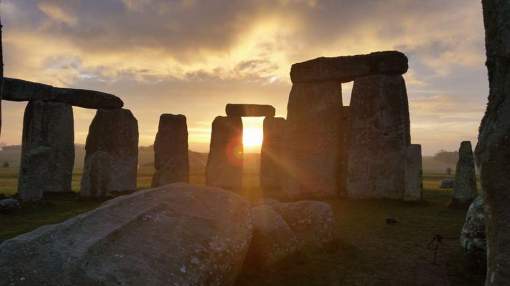
FB_IMG_1487489638840 Stonehenge at dawn.  A special access ‘inner circle’ visit at sunrise.

Finally, in response to the over 800,000 annual visitors, access was restricted. An article entitled “Heritage Under Siege” in New Scientist (Sept 27th, 1979) reports the Chief Inspector of Ancient Monuments and Historic Buildings as saying:

“The whole problem of Stonehenge is numbers … all through the year. What menaces Stonehenge are the millions of feet (and hands) of the ordinary visitors.”

… and continues:

“An archaeologist calculated that if each visitor walked around the central area just twice during his or her visit, the effect would be the same as having one man standing on each square foot inside the ring…

View original post 558 more words

evolutiontheorist's avatarevolutionistx

Seventeenth century depiction of Stonehenge from the Atlas van Loon

Stonehenge remains one of the world’s enduring mysteries. Who carved these enormous stones, moved them hundreds of miles, and erected them upon Salisbury plain–and why?

Archaeologists estimate that the first major construction began at Stonehenge around 3,100 BC, when workers dug a large, circular ditch around the site and piled up the resulting dirt in a round bank. But the interesting part of this phase of construction is the third circle inside the first two, consisting of 56 graves, atop which bluestones may have once stood. The bones of deer and oxen were also placed in the surrounding ditch.

Were these sacrifices, or was Stonehenge originally just a cemetery, perhaps for the community’s most important members?

The second stage in Stonehenge’s development, from about 3,000 BC to 2,600 BC, involved the building of wooden structures and further burials. Interestingly, Neolithic

View original post 2,783 more words

StonehengeNews's avatarStonehenge Stone Circle News and Information

In a new study, archeologists have proposed the claim that Stonehenge and other ancient stone monuments were probably used for special moonlit ceremonies which would have taken place deep in the night. These Neolithic structures have always been thought to have been used primarily in the daytime, as the rocks at various stone monuments are meant to align with the sun, one example of which would be Stonehenge lining up in perfect fashion for the yearly Summer Solstice. (Inquisitr)

  • An analysis of Hendraburnick Quoit in Cornwall revealed multiple carvings visible in moonlight or low sunlight – suggesting the stone was viewed at night
  • Archaeologists Dr Andy Jones of the Cornwall Archaeological Unit and Thomas Goskar found a total of 105 engravings on the axe-shaped stone
  • Dr Jones believes many more markings would be found at sites across the country if the monuments were looked at in a different…

View original post 685 more words

StonehengeNews's avatarStonehenge Stone Circle News and Information

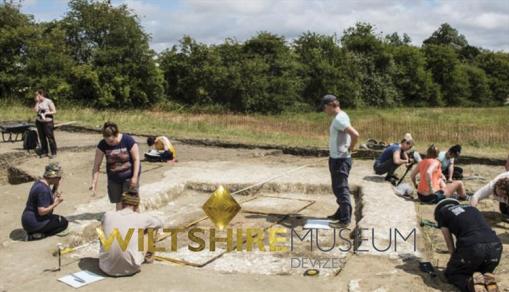
Marden Henge is the third ‘super-henge’ in Wiltshire, alongside Stonehenge and Avebury. In July 2017 there is a fantastic opportunity to find out more about prehistory and these enigmatic henges before a visit to see the site being excavated by archaeologists from the University of Reading.

mar

TOURS ON SATURDAY 8th JULY, TUESDAY 18th JULY & THURSDAY 20th JULY 2017
£30 (£20 WANHS members) – booking essential

A specialist Archaeology tour which starts by exploring the award-winning galleries of the Wiltshire Museum. The Museum will also have a special exhibition about the excavations at Marden Henge featuring some of the finds from previous seasons.

After lunch there will be a guided tour of the excavations (student guides) – with a chance to see archaeologists in action and to find out about the latest discoveries.

Tour Itinerary:

10.30 – Visit Wiltshire Museum, tea/coffee served on arrival. Museum specialist tour.
12pm…

View original post 105 more words

SomethingMarvelous's avatarSomething of the Marvelous

Stonehenge Ikea Well, the bad news is you put Sarsen A where Lintel B should go. The good news is that it should only take about 200 man-hours to fix it!

Stonehenge is one of prehistory’s engineering marvels. Many of us picture it as a ruined circle of stone, associated with druids, all kinds of astronomical observations, and maybe even magic. Unfortunately, most of that image is probably inaccurate. Fortunately, though, there is plenty of evidence that Stonehenge was both important and impressive.

One of the major things I found in my research (which I enjoyed so much that I decided to split it into two posts!) is that there’s relatively little that’s known for sure about Stonehenge. This makes sense once we remember that its building and all relevant activity at the site was prehistoric, with no written records to bear witness to details. Not only that, the earliest excavations were…

View original post 1,221 more words

It is now believed to be the first prehistoric “stone square” ever discovered – in Britain or continental Europesb-7-arch-tour

One of Britain’s most famous prehistoric monuments  – Avebury in Wiltshire – may be substantially more ancient than previously thought.

Investigations within the UNESCO World Heritage designated stone circle – the largest in Britain – have revealed a hitherto unknown, and probably very early, series of ancient standing stones, are arranged, not as a circle, but as a 30 metre by 30 metre square.

It is believed to be the first prehistoric “stone square” ever discovered – in Britain or continental Europe.  It is conceivable that the newly discovered monument, which would have originally consisted of around 17 standing stones, was built up to a thousand years before both Stonehenge’s  and Avebury’s surviving stone circles.

Read the full article in the Independent:  David Keys Archaeology Correspondent.

We operate daily guided tours of Stonehenge and Avebury Stone Circle.  Many going inside the inner circle.  Join us on guided tour with our expert guides and learn more about this amazing discovery.

Stonehenge Guided Tours
The Megalithic Experts
Est. 1995

StonehengeNews's avatarStonehenge Stone Circle News and Information

Although there was historically a Summer Fayre at Stonehenge held on traditional midsummer’s day of the 24th of June, it was only comparatively recently that the association between Stonehenge and the Summer Solstice Sunrise was realised.

Before Britain adopted the Gregorian calendar in 1752, the summer solstice had slipped out of sync with the old Julian calendar by 11 days. This meant that the Sun didn’t appear to rise from the Heelstone on 24th June. People somehow knew that they should be at Stonehenge on “midsummer’s day”, but the reason had long been forgotten.

Indeed, it was only in 1771 that the first link between the Heelstone and the Summer Solstice Sunrise was mentioned by Dr. John Smith, even though William Stukeley had identified that the Avenue lead off towards the solstice sunrise point some 30 years earlier. Smith churlishly didn’t even acknowledge Stukeley’s work in his…

View original post 949 more words

StonehengeNews's avatarStonehenge Stone Circle News and Information

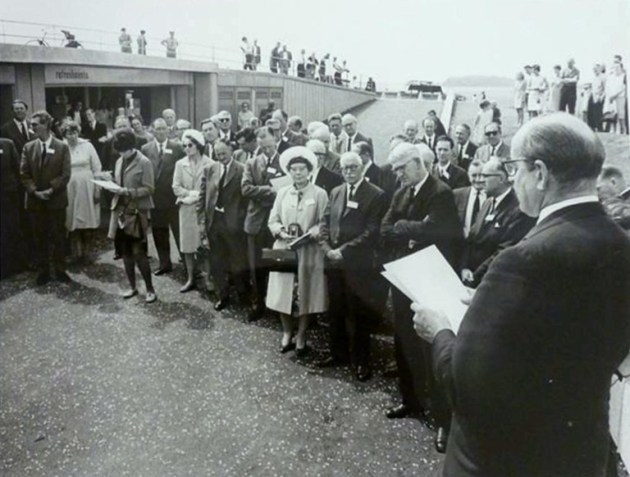
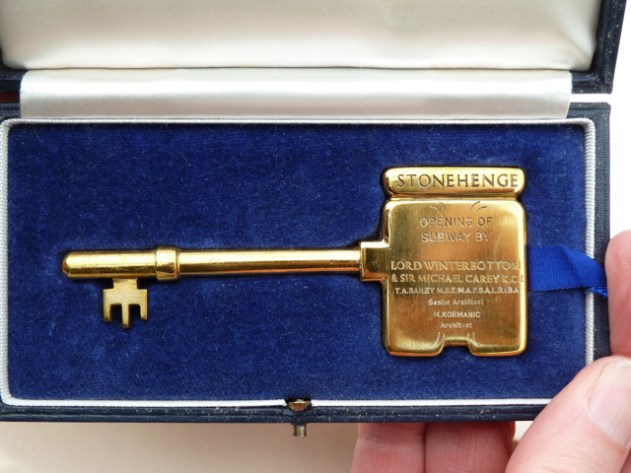
From 1968 until 2013, the visitor facilities at Stonehenge amounted to a collection of brutalist concrete bunkers,  and a small car park almost opposite the monument alongside the old A344 road, with a subway below the road so that visitors could safely reach the stones. The old visitor centre was opened with much fanfare, and a ceremonial gold key.

subway opening 1968

key

As visitor numbers increased year on year these facilities (latterly expanded by the addition of some portakabins) rapidly became overwhelmed, eventually being described as “a national disgrace” in Parliament.

old_visitor_centre

After endless consultations and arguments, with almost a dozen options being tabled and rejected, eventually a location was found over a mile and a half away to the west that was chosen for the new Visitor Centre. The A344 road past the monument was closed and grassed over, the old facilities and car park decommissioned and in December 2013 the new centre…

View original post 914 more words

SUN-seekers will be alarmed to know that the summer solstice is just around the corner. The pagan celebration falls in June every year. 

Even though the midsummer date is when we get the most daylight of the year, it also marks the time where the days start shortening ahead of winter.

summer-solstice-getty-sun

The summer solstice is considered to be the longest day of the year because it’s when we get the most daylight. Getty Images

Here’s everything you need to know about summer solstice 2021…

When is the summer solstice?

The midsummer date is set based on the planet’s rotational axis.

It’s decided based on the sun’s tilt towards the sun, which hits its maximum at 23° 26′ and falls between June 20 and June 22 in the northern hemisphere.

This year, the summer solstice will take place on Wednesday, June 21st
solstice-moon

The date is decided based on the angle of the Earth’s tilt. Getty Images

What is the summer solstice?

The ‘longest’ day of the year marks the middle of summer.

This is because the tilt of the Earth’s axis is most aligned with the sun, providing us with the most daylight of the year.

After June 21, the nights will began to close in as our planet rotates away from the sun.

The date where Earth is the furthest from the star is marked by the winter solstice.

What’s the summer solstice got to do with Stonehenge?

The day is celebrated by pagans and druids, with rituals of rebirth performed throughout history on the day.

One of the biggest celebrations in the UK occurs at Stonehenge with crowds gathering to watch the sunrise.

The tradition sees revellers waiting by the Wiltshire monument on midsummer, facing towards the north-easterly direction.

Crowds of devotees, often dressed for the occasion, regularly gather to watch the moment the sun rises above the Heel Stone.

It’s just one of the many pagan festivals, which include midwinter and imbolc – the day that traditionally marks the start of spring.

solstice-party

Revellers face the sun as they watch it rise up around the Wiltshire monument

How else is the summer solstice celebrated?Midsummer festivities are held across the world in many different cultures.

In many cases, the rituals are linked with themes of religion or fertility.

Wianki celebrations in Poland are similar to those held in Britain, as the day is largely considered a pagan religious event.

There are different traditions across Europe, with Estonia using the day to mark a shift in agricultural patterns.

In Russia and Ukraine, it’s tradition for revellers to jump over bonfires to test their courage and religious faith.

Article source: By Sophie Roberts The Sun News

Cross it off your bucket list this year and join our Stonehenge Summer Solstice Tour. Guided tours with luxury transport depart from Bath and London on 20th and 21st for sunset and sunrise.

Stonehenge Guided Tours
The Stonehenge Experts
Established 1995

StonehengeNews's avatarStonehenge Stone Circle News and Information

Stonehenge is an ancient prehistoric site which has been a place of worship and celebration at the time of Summer Solstice for thousands of years.

27200920884_85ee146a1f_z

This important site is seen by many as a sacred site – if you are planning to visit for summer solstice we ask that you please respect the stones and each other.

English Heritage is pleased to provide free Managed Open Access to Stonehenge for Summer Solstice 2017 and ask that if you are planning to join us for this peaceful and special occasion that you follow these Conditions of Entry. These are written to ensure enjoyment and safety for everyone attending summer solstice at Stonehenge.

Please note to reduce risk to those attending and to the monument itself, alcohol is not allowed in the monument field during summer solstice.

DATES AND TIMES

TUESDAY 20th JUNE 2017
ACCESS TO MONUMENT FIELD 19:00hrs
SUNSET 21:26hrs

View original post 210 more words