StonehengeNews's avatarStonehenge Stone Circle News and Information

English Heritage will once again welcome people to Stonehenge to celebrate the Winter Solstice. Sunrise is just after 8am on Wednesday 22nd December and visitors will be able to access the monument as soon as it is light enough to do so safely. Please read the information below before planning your visit

wsPRACTICAL INFORMATION:

DATE AND TIMINGS
FRIDAY 22nd DECEMBER 2017
MONUMENT FIELD OPENS: 07.45am (approximately, depending on light levels)
MONUMENT FIELD CLOSES: 10am

Please note, access to Stonehenge for Winter Solstice is free. Parking charges apply.

CONDITIONS OF ENTRY

Access to Stonehenge for solstice is subject to the Conditions of Entry – please read these before deciding whether to attend.  Please aslo read this article on respecting the Stones.

COME PREPARED

Stonehenge is in a field on Salisbury Plain and the weather in December will be cold and may be wet and windy. Even if it isn’t raining, the…

View original post 637 more words

The December solstice marks the longest night and shortest day of the year in the Northern Hemisphere, and this year it falls on 22nd December

winter-sols

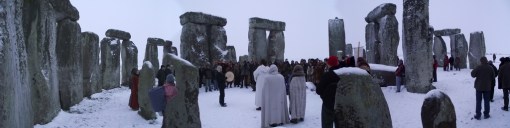
In ancient Pagan traditions, the winter solstice was a time to honor the cycles of life and death and celebrate the sun’s rebirth as the days would slowly begin to lengthen in the months leading into spring. Many modern practitioners of Pagan and earth-centered spiritual traditions observe the holiday, and at Stonehenge, the celebration is particularly special.


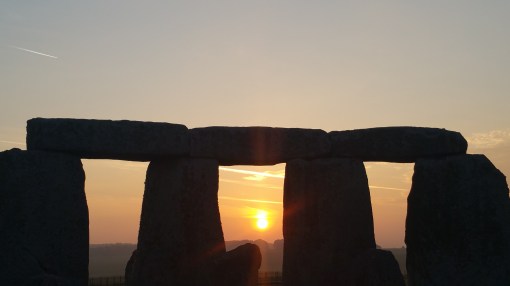
There is no access to the inner circle at Stonehenge on  between the 18th and 27th winter-solstice-tourDecember inclusive because of the winter solstice. There is, however, open access on the morning of the 22nd December to watch the winter solstice sunrise which happens about 8.09am.  We are are offering our usual exclusive guided Winter Solstice tour that departs from London or Bath, pleae visit our Stonehenge Tour website for full details.


THE winter solstice: the shortest day and longest night of the year.

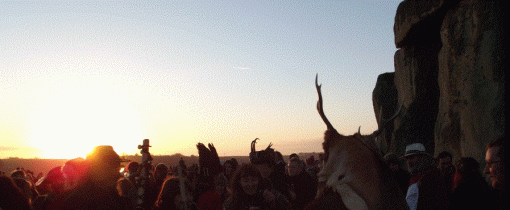
So what is so important about this date? What about it possesses people to dress in unicorn masks and visit Stonehenge?

Here, we take a look at just what the winter solstice is – and why a day with so little sunlight is worth celebrating.

What is the Winter Solstice?

The winter solstice is a phenomenon that marks the shortest day of the year. Often referred to as the official beginning of winter, the solstice generally only occurs for a moment.

The true solstice occurs when the Earth is tilted the furthest away from the Sun on its axis. Despite it only lasting a moment, the full day is recognised.

When is the Winter Solstice?

The winter solstice generally falls between December 20th and 23rd.  This means, for the UK, the sun will rise at 8.04am and set at 3.54pm – meaning we will have just 7 hours and 49 minutes of daylight.In 2017, it will fall on Wednesday, December 22nd.

A winter solstice also occurs in the Southern Hemisphere, with the day occurring in late June.

How is it celebrated?

The day is one that is celebrated by pagans and druids, with rituals of rebirth performed throughout history on the day.

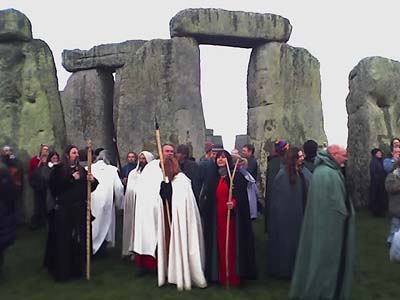
One of the biggest celebrations in the UK occurs at Stonehenge with crowds gathering to watch the sunrise on the morning of the winter solstice.

The crowds of devotees, often dressed for the occasion, regularly gather at the historic site.  It is just one of the many pagan festivals, which include midwinter, midsummer and inbolc – the day that traditionally marks the start of spring.

The importance placed on the day comes from how people were previously so ecoenomically dependent on the seasons with straveation common in the first months of winter.

Will the days start to get longer?

After the solstice, the days will start to get longer.  The process is gradual, with minutes added everyday.

Join us on a Stonehenge guided tour from London or Bath and join the Pagan celebrations at sunrise on the Winter Solstice. This is a popular tour and shoule be booked in advance:
Stonehenge Winter Solstice Tour

The Stonehenge Experts
Stonehenge Guided Tours
http://www.StonehengeTours.com

StonehengeNews's avatarStonehenge Stone Circle News and Information

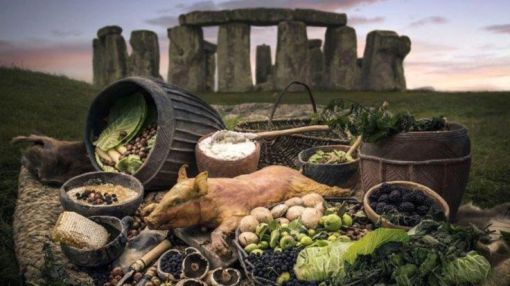
The “army of builders” of Stonehenge ate animals transported from as far away as the north east of Scotland, according to a new exhibition at the famous Neolithic site in Wiltshire. 

eh-feast

Analysis of pig and cattle teeth has revealed some of the animals were from as far as 500 miles away.

The “Feast! Food at Stonehenge” exhibition includes the skull of an aurochs, an extinct species of cattle.

It is aimed at allowing visitors to explore diet from 4,500 years ago.

English Heritage historian Susan Greany said: “Our exhibition explores the important role feasts and food played at Stonehenge.

“Raising the ancient stones was an incredible feat but so too was feeding the army of builders.

“Our exhibition reveals just how this was done.”

The displays reveal research and stories from a “feeding Stonehenge” project, which has been exploring the lives of the people who lived at the nearby settlement…

View original post 119 more words

Prehistoric Stonehenge. See the ancient monoliths at Stonehenge and make your Christmas or New Year a memorable one.

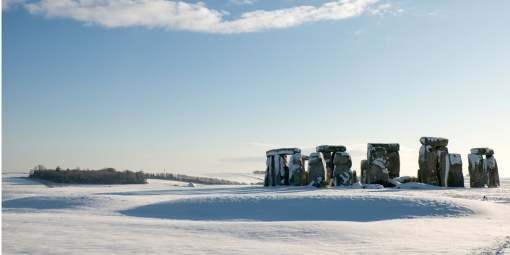
Stonehenge Winter Snow Scen

We have a number of scheduled guided Stonehenge Christmas and New Year tours deparing from London this year.  Our very popular Stonehenge Winter Solstice tour departs on the 21st December this year.  The festive season is already very busy so we highly recommend booking early to avoid dissapointment.

xmas20172

xmas20173

Stonehenge Christmas Tours


Stonehenge Solstice Sunset Viewing Tour – December 21st 2017
The Winter Solstice is the most important day of the year at Stonehenge and a truly magical time to be there. Exprience the new English Heritage visitor centre and witness the sun setting plus Avebury Stone Circle and Salisbury Cathedral / Christmas Market. Click here

“We hope we have all the ingredients for the perfect traditional Christmas.”

Read more about Christmas Day Tours

Stonehenge Guided Tours
The Stonehenge Experts.  Established 1994
http://www.StonehengeTours.com

StonehengeNews's avatarStonehenge Stone Circle News and Information

Hundreds of pagans and druids descended on Stonehenge on the 23rd September to celebrate the equinox as autumn began.

Visitors headed to the famous 5,000-year-old site in Wiltshire in the dark to ensure they got to see the sun rise.

And they made the most of one of only four public annual events that allows people to get so close to the stones.

Photographs showed attendees singing and wearing a variety of extravagant outfits as onlookers watched on.

Follow us on Twitter and like our Facebook page for updates and Stonehenge news
The Stonehenge News Blog

View original post

StonehengeNews's avatarStonehenge Stone Circle News and Information

English Heritage are expected to offer short period of access, from  first light or safe enough to enter the monument field (approximately 06.30am) until 08:30am on the 23rd September this year

The Autumn Equinox (Mabon)
The 2017 Autumn Equonox is September 22nd at 21:02 GMT
Sunrise will be 6.58am

equinox-druids

It is the time of the autumn equinox, and the harvest is winding down. The fields are nearly empty, because the crops have been plucked and stored for the coming winter. Mabon is the mid-harvest festival, and it is when we take a few moments to honor the changing seasons, and celebrate the second harvest. On or around September 21st, for many Pagan and Wiccan traditions it is a time of giving thanks for the things we have, whether it is abundant crops or other blessings. It’s a time of plenty, of gratitude, and of sharing our abundance with those less fortunate.

Mabon is…

View original post 86 more words

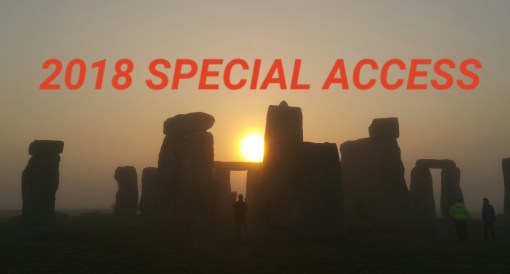
Book your 2018 sunset or sunrise tours in advance

Stonehenge Special Access visits are available most but not all months of the year, (no visits in October and November and are not available on and around the midsummer’s day). Evening Special Access is only available in the summer months.

2017-09-06 10.59.40

“Being able to walk amongst the stones at dawn without the crowds and without the rope barrier is a truly magical experience and wonderful phot opportunity”

Demand for Stonehenge access tours far exceeds supply, dates are often sold out months in advance. Do not expect to get tickets without ordering well in advance. Register your interest with us now and our booking experts will send you exclusive dates sent in advance before official publication. Also includes our ‘early bird’ booking offer.

EmailExperts@StonehengeTours.com

2018 Private Group Custom Tours
We specialise in arranging customised Stonehenge tours to suit your requirements. Our door to door service will take you wherever you want to go…….at the time and pace to suit you. Our personalised service gives you the ultimate freedom and flexibility without the worry of driving so you can all relax and enjoy the day.
Click here for private tours

EmailPrivateGuidedTours@StonehengeTours.com

Stonehenge Guided Tours
Est. 1995
Britains leading Stonehenge Experts
http://www.StonehengeTours.com

StonehengeNews's avatarStonehenge Stone Circle News and Information

EXCLUSIVE PREVIEW OF THE STONEHENGE FEAST

English Heritage will launch a new special exhibition at Stonehenge in October 2017 revealing the diet and lifestyle of the people who built Stonehenge. In the 4th special exhibition since the opening of the Stonehenge Visitor Centre, we reveal the fascinating results of the Stonehenge Riverside ‘Feeding Stonehenge’ project.

Drawing on recent archaeological discoveries and ground breaking science, the Feast! exhibition will tell the food stories of the people who built Stonehenge and how they lived. Find out more about this fascinating project and exhibition with an exclusive talk from our historian on the background of the project, followed by a talk from one of our collections conservators who was involved in overseeing the objects on display in the exhibition.

Following this, enjoy an exclusive tour of the exhibition, led by one of our experts and see some of these objects close-up. To finish…

View original post 89 more words

StonehengeNews's avatarStonehenge Stone Circle News and Information

Before 1978 you were free to walk around inside the stone circle at Stonehenge once you’d paid your admission fee. The lack of any guards overnight meant people also hopped the fence once the site had closed.

FB_IMG_1487489638840 Stonehenge at dawn.  A special access ‘inner circle’ visit at sunrise.

Finally, in response to the over 800,000 annual visitors, access was restricted. An article entitled “Heritage Under Siege” in New Scientist (Sept 27th, 1979) reports the Chief Inspector of Ancient Monuments and Historic Buildings as saying:

“The whole problem of Stonehenge is numbers … all through the year. What menaces Stonehenge are the millions of feet (and hands) of the ordinary visitors.”

… and continues:

“An archaeologist calculated that if each visitor walked around the central area just twice during his or her visit, the effect would be the same as having one man standing on each square foot inside the ring…

View original post 558 more words

evolutiontheorist's avatarevolutionistx

Seventeenth century depiction of Stonehenge from the Atlas van Loon

Stonehenge remains one of the world’s enduring mysteries. Who carved these enormous stones, moved them hundreds of miles, and erected them upon Salisbury plain–and why?

Archaeologists estimate that the first major construction began at Stonehenge around 3,100 BC, when workers dug a large, circular ditch around the site and piled up the resulting dirt in a round bank. But the interesting part of this phase of construction is the third circle inside the first two, consisting of 56 graves, atop which bluestones may have once stood. The bones of deer and oxen were also placed in the surrounding ditch.

Were these sacrifices, or was Stonehenge originally just a cemetery, perhaps for the community’s most important members?

The second stage in Stonehenge’s development, from about 3,000 BC to 2,600 BC, involved the building of wooden structures and further burials. Interestingly, Neolithic

View original post 2,783 more words