This full day tour from London starts when you’re picked up at your hotel by a London black taxi driver – the world’s finest!  Acclaimed the world over for having to complete the fiendishly difficult ‘Knowledge of London’ series of tests before they are awarded their coveted green badge, your London black taxi driver is required to know literally thousands of streets, landmarks and places of interest. Every single London black taxi driver has been rigorously vetted, so you know you’re in safe hands too.

Climb Glastonbury Tor

Your cabbie will drop you off at your starting point where your tour bus awaits you, offering you the kind of comfort you deserve: all coaches feature reclining leather seats, air conditioning, and panoramic windows so you can sit back and enjoy the stunning views of the English countryside.

The first stop of the day is the magnificent, enthralling Stonehenge. This iconic structureexcalibur has puzzled archaeologists and historians for centuries, and its true purpose remains a mystery to this day. How did the stones get transported thousands of years ago from so far away? What is the secret of its remarkable layout? We’ll be exploring this UNESCO World Heritage Site with your qualified tour guide, who will escort you into the cinema for a 360- degree experience of what it would be like to be in the centre of Stonehenge from its beginnings 5,000 years ago.

You’ll also be able to view the many artefacts recovered from the tombs dotted around the surrounding landscape of lush, rolling green hills, as well as a nearly complete skeleton of someone who lived in the area before Stonehenge was even begun.

Outside the monument there will be a chance to explore some of the huts recreated from findings at the nearby “Durrington Walls” 2 miles away. You’ll get the chance to step into the huts and see how the people who built Stonehenge lived. From here we hop on to the courtesy bus that takes us up to the site of Stonehenge itself.
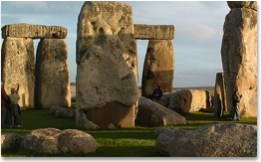
day-tour-image-24The remarkable thing about Stonehenge is its unique design and the craftsmanship involved in building this extraordinary site, and your guide is on hand to talk about some of the theories, and point out the site’s distinctive features.

From here we push deeper into what is often referred to as Arthur’s Britain. The countryside gradually becomes hillier and more remote as modern civilisation melts away behind us. We pass iron age fortresses, doll-like thatched cottages, ancient landmarks, villages with old gaols and a pub that was run by a notorious highwayman.

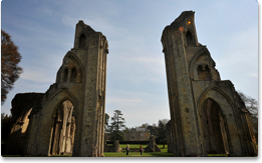
From here we approach Glastonbury and the much-photographed Tor (hill) that silently Glastonbury Abbeydominates the landscape for miles around. We’ll pull into the small nearby town for our fish and chip lunch at an award-winning restaurant that has been a family business for over a century. From here we’ll cross the road into Glastonbury Abbey to search for the final resting place of King Arthur himself. According to contemporary reports, the monks who lived at the Abbey discovered the tomb of Arthur following a fire. But to many people, Arthur is not dead at all – he sleeps nearby ready to awake when England is in peril. Stories of Arthur abound here in Glastonbury – the Isle of Apples – as do legends of fairy folk, saints and magic, all weaving through the landscape and remembering the deeds of long ago.
Our tour continues with a visit to the revered Chalice Well, where you can take for free the healing waters from the Lion’s head spring. Here too is an example of the Glastonbury thorn brought from the Holy Land by Joseph of Arimathea. The Chalice well itself has never been known to dry out – not even in the most severe droughts – and it was here that Joseph hid the Holy Grail. Since that time, people have travelled from far and wide to benefit from its healing properties.

Now for some serious hiking – but only if you want to! This is your chance to walk to the top of the town of Glastonbury and marvel at the magnificent views across to the city of Wells, Porlock, Dunster and even across the Bristol Channel to the principality of Wales – the land of the dragon. The tower of St. Michael stands as testimony to the medieval monks’ determination and engineering skills. But the tower holds a gruesome secret, and there’s an intriguing story of an encounter with the fairy kingdom too!
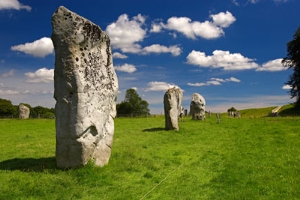
Avebury Stone CircleTime to leave now for our final stop of the day and the village of Avebury. On our way there we’ll see a striking white horse carved into the hillside to commemorate the triumph of an English King over the Vikings back in the 800s. We’ll also be driving past an old country mansion which became the subject of a notorious (and true!) murder mystery, a place that is in fact at the origin of the enthusiasm for detective novels going back to the 1800s that kick-started the popularity of the detective novel, captivating the imagination of readers and amateur sleuths on both sides of the Atlantic.

Then onto Avebury.

Measuring 400 metres across its diameter, the stone circle of Avebury is the largest in the world and – like Stonehenge – is a world heritage site. We’ll have time to explore the site together with your guide who tell you about the barber stone and the haunted pub, and will show you some great photo spots. We’ll also be doing some dowsing at the site to discover the power of the stones.  There’ll be time to pop in to the famous ‘henge’ shop and find out about crystals and crop circles, and you might even want to take home some dowsing rods of your own… From here we’ll get back on our coach that will take us past the mysterious pre-historic mound of Silbury Hill – the largest in Europe.

We drive back via the lovely market towns of Marlborough and Hungerford. We’ll see Marlborough College, the school attended by the Duchess of Cambridge Kate Middleton and Princesses Beatrice and Eugenie amongst others. Here, too, is another prehistoric mound which, according to legend, conceals the Round Table along with Merlin the Magician.

We’ll be joining the freeway back to London and drive past Windsor Castle, the venue for the wedding of Prince Harry and Meghan Markle in May 2018, and you’ll be dropped off at Gloucester Road. Should any passengers require onward transfers then please speak to the guide beforehand.

Whats Included

Fully Guided Lecture Standard Tour

Admission to Stonehenge

Admission to Glastonbury Abbey

Climb Glastonbury Tor

All Travel in Luxury Mini-Bus from Central London

View and book this magical day tour here

Stonehenge Guided Tours
The Stonehenge Experts!
www.StonehengeTours.com


StonehengeNews's avatarStonehenge Stone Circle News and Information

Stonehenge Opening Times and Entrance Prices.
English Heritage advise to expect a visit to last around two hours. Please see the table below for opening times for 2018, with some seasonal variability, and entrance prices for adults, children, families, seniors and groups.

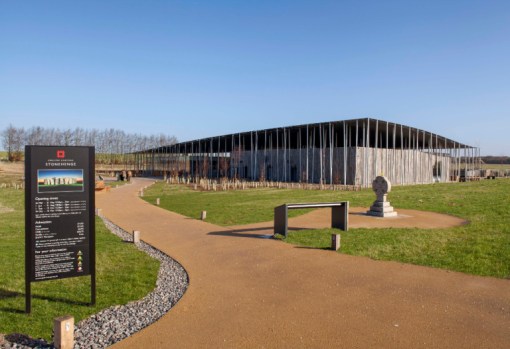
visitor-centre2 The English Heriatge Stonehenge Exhibition and Visitor Centre
The English Heritage Visitor Centre at Stonehenge is located 2 kilometers from the monument. This is your entry point to Stonehenge and the place where you pick up your tickets, souvenir guides and optional audio guides. The new Visitor Centre also offers a modern exhibition with prehistoric objects on display, and a spacious café and gift shop. A Stonehenge shuttle transports you between the Visitor Centre and Stonehenge (included in your ticket price).

If you come by car you will park in the car park outside the visitor centre. It is free for people purchasing tickets to enter Stonehenge, there is…

View original post 503 more words

StonehengeNews's avatarStonehenge Stone Circle News and Information

A series of English Heritage exhibitions and archaeology projects will be run from March to celebrate the centenary year of Stonehenge being donated to the nation.

2018 is an important anniversary for Stonehenge. A hundred years ago, in 1918, local barrister Cecil Chubb and his wife Mary gifted it to the nation. This public spirited decision marked a turning point in the history of Stonehenge and its fortunes.

A programme of restoration began almost immediately, starting a centenary of care and conservation at Stonehenge which continues to this day.

Once a supposed gift for a wife we, as the public, have now had access to one of the most famous prehistoric monuments for around 100 years.

Stonehenge was donated by Cecil Chubb and his wife Maryin 1918 so that they could be properly looked after and enjoyed by all.

Cecil bought the stones in an auction in 1915 and it’s been…

View original post 271 more words

StonehengeNews's avatarStonehenge Stone Circle News and Information

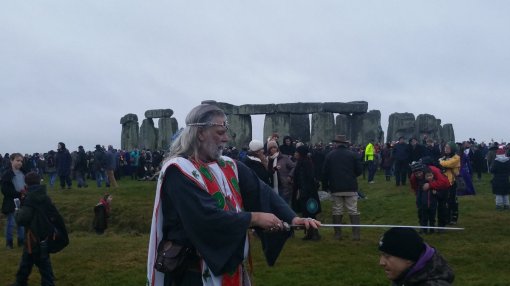
Thousands of people gathered at Stonehenge to witness the sunrise on the shortest day of the year in the northern hemisphere.

DRovTT0X0AArw1e

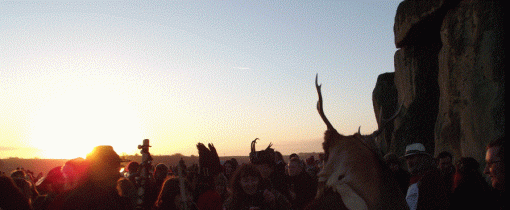
Crowds arrived at the Wiltshire landmark before dawn with many others travelling to the Avebury stone circle, which is also in the county.

The winter solstice marks the point when the North Pole is tilted 23.5 degrees away from the sun.

The solstice occurred at 04:49 GMT, with the sun rising at 08:04.

Pagans and druids dressed in traditional clothing joined families and a choir to mark the end of the longest night of the year.

Thick cloud at the prehistoric site in Wiltshire meant the sunrise, at 8.10am, was not visible.

Kate Davies, of English Heritage, said: “We were delighted to welcome approximately 5,000 people to Stonehenge to celebrate winter solstice this morning.

“It was an enjoyable and peaceful celebration despite the damp weather and it was…

View original post 30 more words

StonehengeNews's avatarStonehenge Stone Circle News and Information

Professor Terance Meade of said Wiltshire-based Stonehenge’s ancient builders create a ‘play without words’ in which one stone in particular cast a growing phallic-shaped shadow.

Stonehenge was built to cast phallic-shaped shadows during Midsummer and was part of a fertility cult, a new study claims.

Professor Terance Meade said Stonehege’s ancient builders create a ‘play without words’ in which one stone in particular cast a growing phallic-shaped shadow.

The shadow would penetrate the egg-shaped monument before hitting a central ‘female’ stone — symbolising fertility.

20170511_054301 Professor Terance Meade of said the Stonehege’s ancient builders create a ‘play without words’ in which one stone in particular cast a growing phallic-shaped shadow
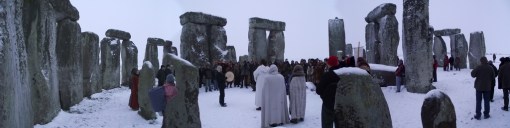
Professor Meaden examined nearly 20 stone circle across Britain – including one at Avebury – and filmed their changing silhouettes at sunrise on ritually important days throughout the year.

He said the shape of the monuments at Stonehenge allow the same ‘play…

View original post 125 more words

The striking British landmark was built in three stages – and some parts of it are 5,000 years old.

winter-sols

Stonehenge is one of the most recognisable and Instagrammed landmarks spots in Britain, but do you know its history?

But where are the famous standing stones and more importantly who put them there? Here’s what we know…

What is Stonehenge?

Instantly recognisable from the surrounding roads, Stonehenge is made up of a ring of standing stones – each of which are around 13ft (4.1 metres) high, 6ft 11in (2.1m) wide and weigh 25 tons.

The stones are set within a group of Neolithic and Bronze Age monuments, as well as several hundred burial mounds.

Stonehenge was added to UNESCO’s list of World Heritage Sites in 1986, and is one of the most Instagrammed tourist attractions in Britain.

In 1915, wealthy Shrewton resident Sir Cecil Chubb became Stonehenge’s last private owner when he bought the site for £6,600. It is now estimated to be worth a huge £51 million.

He formally handed it over to the state three years later, with a number of conditions.

The site is managed by English Heritage – and is the third best view in Britain, according to a recent poll.


What is the history of Stonehenge?

Stonehenge was built in three stages, with some parts being a huge 5,000 years old.

The outer bank of Stonehenge was made in around 3000 BC, while the stone settings were built in 2500 BC.

Hundreds of people helped to construct the landmark – transporting the stones from the nearby Marlborough Downs and Preseli Hills, in south-west Wales.

The stones were then worked into shape using sarsen and flint hammerstones.

Today, Stonehenge is linked to the druids – and many people wrongly think they built the structure.

However, archaeologists believe it was constructed by three groups – the Neolithics, the Beaker people and the Wessex Peoples – who are said to have finalised the site into what we see today.

What happens during the Winter Solstice Festival?

Every year, hundreds of people gather at Stonehenge for The Winter Solstice, which falls around December 21.

It is the day with the shortest period of daylight and the longest night of the year.

Every year people gather at Stonehenge in the early morning to mark the Winter solstice and see the sun rise over the stones.

People also gather at Stonehenge on the eve of Midsumer’s Day, to celebrate the Summer Solstice.

At dawn on the longest day of the summer – which normally falls between June 20 and 22 – pagans, druids and other spectators gather to celebrate and watch the sunrise.

Spring Equinox, which falls around March 20, is also marked at the historic site.

What’s going on with the plans for a tunnel near Stonehenge?

The plans for a 1.8-mile dual carriageway tunnel near Stonehenge, have got the go-ahead from Transport Secretary Chris Grayling.

Some experts warned it would compromise the “precious” archaeology of the World Heritage Site.

But government agency Historic England, and the National Trust and English Heritage who manage the stone circle, welcomed the ruling. The A303 is often gridlocked there.

Time Team presenter Tony Robinson has previously described the scheme as “old-fashioned” because it “assumes what needs to be protected is that little clump of stones”.

He said the stone circle was invaluable, but over the past 20 to 30 years, experts had begun to appreciate that the area around it was a complex network of henges, pathways, barrows and track-ways.

Article Source: By Josie Griffiths: The Sun Online

Join us on a Stonehenge guided tour from London or Bath and join the Pagan celebrations at sunrise on the Winter Solstice. This is a popular tour and should be booked in advance: Stonehenge Winter Solstice Tour

The Stonehenge Experts
Stonehenge Guided Tours
http://www.StonehengeTours.com

StonehengeNews's avatarStonehenge Stone Circle News and Information

English Heritage will once again welcome people to Stonehenge to celebrate the Winter Solstice. Sunrise is just after 8am on Wednesday 22nd December and visitors will be able to access the monument as soon as it is light enough to do so safely. Please read the information below before planning your visit

wsPRACTICAL INFORMATION:

DATE AND TIMINGS
FRIDAY 22nd DECEMBER 2017
MONUMENT FIELD OPENS: 07.45am (approximately, depending on light levels)
MONUMENT FIELD CLOSES: 10am

Please note, access to Stonehenge for Winter Solstice is free. Parking charges apply.

CONDITIONS OF ENTRY

Access to Stonehenge for solstice is subject to the Conditions of Entry – please read these before deciding whether to attend.  Please aslo read this article on respecting the Stones.

COME PREPARED

Stonehenge is in a field on Salisbury Plain and the weather in December will be cold and may be wet and windy. Even if it isn’t raining, the…

View original post 637 more words

The December solstice marks the longest night and shortest day of the year in the Northern Hemisphere, and this year it falls on 22nd December

winter-sols

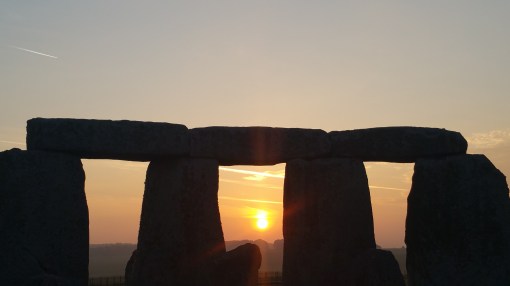
In ancient Pagan traditions, the winter solstice was a time to honor the cycles of life and death and celebrate the sun’s rebirth as the days would slowly begin to lengthen in the months leading into spring. Many modern practitioners of Pagan and earth-centered spiritual traditions observe the holiday, and at Stonehenge, the celebration is particularly special.


There is no access to the inner circle at Stonehenge on  between the 18th and 27th winter-solstice-tourDecember inclusive because of the winter solstice. There is, however, open access on the morning of the 22nd December to watch the winter solstice sunrise which happens about 8.09am.  We are are offering our usual exclusive guided Winter Solstice tour that departs from London or Bath, pleae visit our Stonehenge Tour website for full details.


THE winter solstice: the shortest day and longest night of the year.

So what is so important about this date? What about it possesses people to dress in unicorn masks and visit Stonehenge?

Here, we take a look at just what the winter solstice is – and why a day with so little sunlight is worth celebrating.

What is the Winter Solstice?

The winter solstice is a phenomenon that marks the shortest day of the year. Often referred to as the official beginning of winter, the solstice generally only occurs for a moment.

The true solstice occurs when the Earth is tilted the furthest away from the Sun on its axis. Despite it only lasting a moment, the full day is recognised.

When is the Winter Solstice?

The winter solstice generally falls between December 20th and 23rd.  This means, for the UK, the sun will rise at 8.04am and set at 3.54pm – meaning we will have just 7 hours and 49 minutes of daylight.In 2017, it will fall on Wednesday, December 22nd.

A winter solstice also occurs in the Southern Hemisphere, with the day occurring in late June.

How is it celebrated?

The day is one that is celebrated by pagans and druids, with rituals of rebirth performed throughout history on the day.

One of the biggest celebrations in the UK occurs at Stonehenge with crowds gathering to watch the sunrise on the morning of the winter solstice.

The crowds of devotees, often dressed for the occasion, regularly gather at the historic site.  It is just one of the many pagan festivals, which include midwinter, midsummer and inbolc – the day that traditionally marks the start of spring.

The importance placed on the day comes from how people were previously so ecoenomically dependent on the seasons with straveation common in the first months of winter.

Will the days start to get longer?

After the solstice, the days will start to get longer.  The process is gradual, with minutes added everyday.

Join us on a Stonehenge guided tour from London or Bath and join the Pagan celebrations at sunrise on the Winter Solstice. This is a popular tour and shoule be booked in advance:
Stonehenge Winter Solstice Tour

The Stonehenge Experts
Stonehenge Guided Tours
http://www.StonehengeTours.com

StonehengeNews's avatarStonehenge Stone Circle News and Information

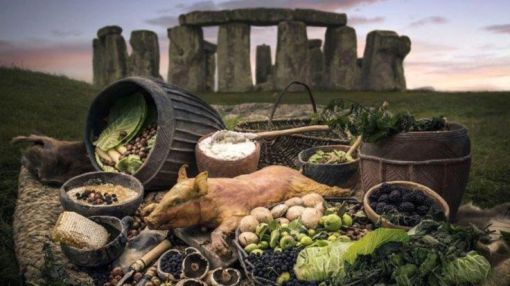
The “army of builders” of Stonehenge ate animals transported from as far away as the north east of Scotland, according to a new exhibition at the famous Neolithic site in Wiltshire. 

eh-feast

Analysis of pig and cattle teeth has revealed some of the animals were from as far as 500 miles away.

The “Feast! Food at Stonehenge” exhibition includes the skull of an aurochs, an extinct species of cattle.

It is aimed at allowing visitors to explore diet from 4,500 years ago.

English Heritage historian Susan Greany said: “Our exhibition explores the important role feasts and food played at Stonehenge.

“Raising the ancient stones was an incredible feat but so too was feeding the army of builders.

“Our exhibition reveals just how this was done.”

The displays reveal research and stories from a “feeding Stonehenge” project, which has been exploring the lives of the people who lived at the nearby settlement…

View original post 119 more words

Prehistoric Stonehenge. See the ancient monoliths at Stonehenge and make your Christmas or New Year a memorable one.

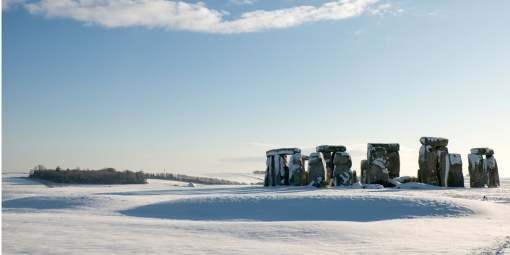
Stonehenge Winter Snow Scen

We have a number of scheduled guided Stonehenge Christmas and New Year tours deparing from London this year.  Our very popular Stonehenge Winter Solstice tour departs on the 21st December this year.  The festive season is already very busy so we highly recommend booking early to avoid dissapointment.

xmas20172

xmas20173

Stonehenge Christmas Tours


Stonehenge Solstice Sunset Viewing Tour – December 21st 2017
The Winter Solstice is the most important day of the year at Stonehenge and a truly magical time to be there. Exprience the new English Heritage visitor centre and witness the sun setting plus Avebury Stone Circle and Salisbury Cathedral / Christmas Market. Click here

“We hope we have all the ingredients for the perfect traditional Christmas.”

Read more about Christmas Day Tours

Stonehenge Guided Tours
The Stonehenge Experts.  Established 1994
http://www.StonehengeTours.com