Uncategorized


>

Britain is littered with the remains of past lives, civilisations and cultures, many of which remain a source of mystery and conjecture. We may never know the exact reasons why these circles, standing stones, henges, hill-figures and monuments were erected or the peoples and belief systems that led them to complete some of these sometimes massive structures such as Silbury Hill and Stonehenge. These pages are an ongoing investigation into some of these ancient sites and landscapes with a view to gaining an understanding of the lives of the people who inhabited these islands more than 2000 years ago..
Obviously it is beyond the scope of this blog to hope to document every British prehistoric monument – there are estimated to be well over 1000 stone circles alone and the number of identified round barrows currently stands at over 10000. The sites I have included (currently about 350) are simply those that I have visited in England and Wales and cover a fair cross section of the pre-Roman sites in these countries, although the odd Roman remain is featured – I have yet to visit any sites in Scotland or Ireland. There are also several sites which have been included either because their age and purpose is unknown, or they may just be local curiosities. The areas of Lincolnshire, Humberside, Derbyshire and Yorkshire feature more pages than other regions, not because there are necessarily more ancient sites here but simply because they the closest to where I am based and therefore have received more frequent investigation than sites further afield.
England

AvonStanton Drew Neolithic Stone Circles and Cove. Stanton Drew
Stoney Littleton Neolithic Chambered Long Barrow. Wellow

CambridgeshireFlag Fen Bronze Age Visitor Centre. East of Peterborough
Robin Hood and Little John Standing Stones? West of Peterborough
CornwallBoscawen-un Bronze Age Stone Circle. St. Buryan
Boskednan Circle Bronze Age Stone Circle. Northwest of Penzance
Chun Quoit Neolithic Chambered Tomb. Morvah
Hurlers Bronze Age Stone Circles and Standing Stones. Minions
King Doniert Stone Celtic Inscribed Crosses. North of St. Cleer
Lanyon Quoit Neolithic Chambered Long Barrow. Madron
Longstone / Long Tom Christianised Standing Stone? Minions
Men an tol Neolithic Standing Stones. Northwest of Penzance
Merry Maidens Bronze Age Stone Circle and Standing Stones. St. Buryan
Rillaton Barrow Bronze Age Round Cairn. Minions
Stannon Circle Bronze Age Stone Circle. Bodmin Moor
Tintagel Ruined Castle. Southwest of Boscastle
Trethevy Quoit Neolithic Chambered Tomb. St. Cleer
Trippet Circle Stone Circle. Bodmin Moor
Zennor Quoit Neolithic Chambered Tomb. Zennor

CumbriaBlakeley Raise Bronze Age Stone Circle. Southwest of Ennerdale Bridge
Broadfell Cairn Bronze Age Round Cairn. North of Orton
Castlehowe Scar Bronze Age Stone Circle. East of Shap
Castlerigg Circle Neolithic/Bronze Age Stone Circle. Keswick
Copt Howe Bronze Age ? Rock Carvings. Northwest of Chapel Stile
Druid’s Circle Bronze Age Stone Circle. South of Ulverston
Gamelands Circle Bronze Age Stone Circle. Orton
Giant’s Grave Bronze Age Standing Stones. Kirksanton
Glassonby Round Cairn and Rock Carving. Northwest of Glassonby
Greycroft Circle Bronze Age Stone Circle. North of Seascale
Hardknott Roman Fort Roman Fort. Hardknott Pass
Hill of Skulls Bronze Age Round Barrow. Shap
King Arthurs Round Table Neolithic Henge. South of Penrith
Little Meg Circle Bronze Age Round Cairn. South of Glassonby
Long Meg and Her Daughters Bronze Age Stone Circle. Northeast of Little Saltkeld
Low Moor Barrow Long Cairn. East of Askham
Moor Divock Southeast of Pooley Bridge
Moor Divock Cairns Bronze Age Burial Mounds.
The Cockpit Bronze Age Ring Cairn.
The Cop Stone Natural Rock Feature/Alignment.
White Raise Barrow Bronze Age Round Cairn & Cist
Mayburgh Henge Neolithic Henge. South of Penrith
Mossthorn Neolithic Long Cairns. West of Penrith
Pike of Stickle Neolithic Axe Mine. Langdale
Raise Howe Bronze Age Round Cairn. Crosby Ravensworth
Sewborrans Bronze Age Standing Stone. West of Penrith
Shap Circles (including Kemp Howe) Bronze Age Stone Circles. Shap
Shap Stone Row (including Goggleby Stone) Bronze Age Stone Alignment. Shap
Skirsgill Bronze Age Standing Stone. Southwest of Penrith
Sunkenkirk Bronze Age Stone Circle. North of Hallthwaites.
Temple Sowerby Roman Milestone. Southeast of Temple Sowerby

DerbyshireArbor Low Henge Neolithic/Bronze Age Henge and Circle. Bakewell
Bamford Moor Circle Bronze Age Stone Circle. North East of Bamford
Brown Edge / Totley Circle
Bronze Age Ring Cairn or Stone Circle. Totley Moor
Bull Ring Neolithic Henge. Dove Holes
Creswell Crags Old Stone Age Cave Dwelling. East of Creswell
Crook Hill Bronze Age Stone Circle. West of Ashopton
Curbar Edge Cairn Bronze Age Round Cairn. Curbar Edge
Five Wells Neolithic Chambered Cairn. West of Taddington
Froggatt Edge Circle Bronze Age Stone Circle. North of Chatsworth
Harland Edge Bronze Age Cairn. South East of Chatsworth
Holy Moor Bronze Age Carved Rock. West of Holymoorside
Hordron Edge Circle Bronze Age Stone Circle. East of Ashopton
Ladybower Tor Bronze Age Carved Rock. North East of Ashopton
Mam Tor Late Bronze Age/Iron Age Hillfort. West of Castleton
Minninglow (Page 1) Neolithic Chambered Tomb. North East of Roystone Grange
Minninglow (Page 2) Neolithic Chambered Tomb. North East of Roystone Grange
Moscar Moor Bronze Age Kerbed Cairn. South East of Ashopton
Nine Stones Close Bronze Age Stone Circle. West of Stanton Moor
Old Woman Stone Bronze Age Standing Stone. North East of Bamford
Park Gate Circle Bronze Age Stone Circle. South of Chatsworth
Raven Tor Bronze Age Triple Cairn and Cist. South of Chatsworth
Rowtor Rocks Bronze Age Rock Carvings. Birchover
Smelting Hill Bronze Age Stone Circle. North East of Abney
Strawberry Lea Bronze Age Stone Circle or Kerb Cairn. Totley Moor
Big Moor North of Chatsworth
Barbrook I Circle Bronze Age Stone Circle
Barbrook II Circle Bronze Age Stone Circle
Barbrook III Circle Bronze Age Stone Circle

Barbrook IV Bronze Age Ring Cairn
Barbrook V Bronze Age Ring Cairn

Swine Sty Bronze Age Settlement Site
Eyam Moor
Northwest of Grindleford
Eyam Moor II Bronze Age Stone Circle
Eyam Moor III Bronze Age Stone Circle
Eyam Moor Cairn Bronze Age Cairn
Stanage Cairn Bronze Age Round Cairn and Cup Marked Stone
Wet Withens (Eyam Moor I) Bronze Age Stone Circle
Gardom’s Edge East of Baslow
Gardom’s Edge Carved Rock Bronze Age Carved Stone
Gardom’s Edge Enclosure (Meg’s Wall) Neolithic Enclosure Walls
Gardom’s Edge Ring Cairn Bronze Age Ring Cairn
Gardom’s Edge Standing Stone Bronze Age Standing Stone
Gardom’s Edge Pit Alignment Iron Age Pit Alignment
Gardom’s Edge Round House Bronze Age / Iron Age House
Three Men of Gardom’s Bronze Age Barrow/Cairn
Gibbet Moor East of Chatsworth
Alignment Bronze Age Standing Stone Alignment
Four Poster Bronze Age Four Poster Stone Circle and nearby Cist
Hob Hurst’s House Bronze Age Cairn

Standing Stones Bronze Age Standing Stones
Stanton Moor Northeast of Birchover
Stanton Moor Introduction
Doll Tor Circle Bronze Age Stone Circle
Nine Ladies Circle Bronze Age Circle
Stanton Moor North Bronze Age Stone Circle
Stanton Moor Central Bronze Age Ring Cairn
Stanton Moor South Bronze Age Stone Circle

Devon
Black Tor Row (East) Bronze Age Stone Rows / Cairns. Dartmoor (Images only so far)
Black Tor Row (Southwest) Bronze Age Stone Row. Dartmoor (Images only so far)
Brisworthy Circle Bronze Age Stone Circle. Dartmoor (Images only – text to be added)
Drizzlecombe Rows Bronze Age Stone Rows. Dartmoor (Images only – text to be added)
Drizzlecombe Settlement Bronze Age Settlement. Dartmoor (Images only – no text yet)
Fernworthy Circle Bronze Age Stone Circle. Dartmoor
Fernworthy Row North Bronze Age Stone Row. Dartmoor
Grey Wethers Circle Bronze Age Double Stone Circle. Dartmoor
Grimspound Bronze Age Settlement Site, Dartmoor
Kes Tor Round Pound Bronze Age / Iron Age Settlement Site, Dartmoor
Merrivale Dartmoor
Merrivale Circle Bronze Age Circle / Standing Stone. (Images only – text to be added)
Merrivale Ring Cairn Bronze Age Ring Cairn. (Images only – text to be added)
Merrivale Rows Bronze Age Stone Rows. (Images only – text to be added)
Merrivale Settlement Bronze Age Settlement. (Images only – text to be added)
Ringmoor Cairn Bronze Age Cairn. Dartmoor (Images only – text to be added)
Ringmoor Row Bronze Age Row / Cairn Circle. Dartmoor (Images only – text to be added)
Scorhill Circle Bronze Age Stone Circle. Dartmoor
Sharpitor Row Bronze Age Row / Cairns / Cist. Dartmoor (Images only – text to be added)
Sharpitor Settlement Bronze Age Huts. (Images only – text to be added)
Shovel Down Bronze Age Stone Rows, Standing Stone, Circle and Cairns. Dartmoor
Spinster’s Rock Neolithic Chambered Tomb. Northeast of Dartmoor
Yellowmead Bronze Age Multiple Cairn Circle. (Images only – text to be added)

DorsetCerne Abbas Giant Hill Figure. Cerne Abbas
Grey Mare and her Colts Neolithic Chambered Long Barrow. Abbotsbury
Jordan Hill Roman Temple
Roman Temple. Weymouth
Lanceborough King Barrow Bronze Age Round Barrow. East of Dorchester
Maiden Castle Neolithic/Iron Age/Roman Hillfort. Southwest of Dorchester
Winterbourne Abbas Circle Bronze Age Stone Circle. Winterbourne Abbas

Durham
Barningham / How Tallon Circle Bronze Age Stone Circle. South of Barnard Castle
Barningham Moor (Central) Bronze Age Carved Rocks. South of Barnard Castle
Barningham Moor (Northwest) Bronze Age Carved Rocks. South of Barnard Castle
Barningham Moor (South) Bronze Age Carved Rocks. South of Barnard Castle
Barningham Moor (Southwest) Bronze Age Carved Rocks. South of Barnard Castle

GloucestershireBelas Knap Neolithic Chambered Long Barrow. Winchcombe
Hetty Peggler’s Tump Neolithic Chambered Long Barrow. Uley
Notgrove Neolithic Chambered Long Barrow. Bourton-on-the-Water
Nympsfield Neolithic Chambered Long Barrow. Frocester

Lincolnshire
Dragonby Natural Rock Formation. North of Scunthorpe
Drake Stones Natural Rock Formation? Anwick
Honington Camp Iron Age Camp/Settlement. Southwest of Ancaster
Julian’s Bower Maze Turf-cut Maze. Alkborough
Lincoln Roman Town
Lincoln
Shearman’s Wath Neolithic Henge. North of Horncastle
The Lincolnshire Long Barrows
Map and Introduction
Ash Hill Neolithic Long Barrow. Binbrook
Ash Holt Neolithic Long Barrow. Cuxwold
Beacon Plantation Neolithic Long Barrow. Swaby
Burgh on Bain Neolithic Long Barrow. Burgh on Bain
Deadmen’s Graves I, II Neolithic Long Barrows. Claxby
Giant’s Hills I, II Neolithic Long Barrows. Skendleby
Hills Brough Farm Neolithic Long Barrow(?). South of Caistor
Hoe Hill I,II Neolithic Long Barrows. Binbrook
Spellows Hill Neolithic Long Barrow. Partney
Tathwell Neolithic Long Barrow. Tathwell
Lincolnshire Round Barrows
Beacon Hill Bronze Age Round Barrow, Cleethorpes
Bully Hill Bronze Age Round Barrow, Northeast of Tealby
Bully Hills Bronze Age Round Barrow Cemetery. Tathwell
Burgh on Bain Bronze Age Barrows. Burgh on Bain
Buslingthorpe Bronze Age Round Barrow. Buslingthorpe
Butterbumps Bronze Age Barrow Cemetery. Willoughby
Cleatham Barrow Bronze Age Round Barrow. Manton
Donnington-on-Bain Bronze Age Barrow. Donington on Bain
Folk Moot & Butt Mound Bronze Age Round Barrows. Silk Willoughby
Fordington Barrows Bronze Age Round Barrows(?). Ulceby
Grim’s Mound Bronze Age Round Barrow. Burgh on Bain
Hagworthingham Bronze age Round Barrow. Hagworthingham
Hatcliffe Barrow Bronze Age Round Barrow. Hatcliffe
Howe Hill Bronze Age Round Barrow. Ulceby
King’s Hill Barrow/Mound. Bardney
Ludford Barrow Bronze Age Round Barrow. Ludford
Mill Hill Bronze Age Round Barrow. Claxby
Revesby Barrows Bronze Age/Roman Round Barrows(?). Revesby
Ring Holt Bronze Age Round Barrow. Dalby

NorfolkHolme-Next-the-Sea (Seahenge) Bronze Age Wooden Circle. Hunstanton

NorthumberlandChatton 1a Bronze Age Carved Rock. Chatton
Chatton 2, 4 & 5 Bronze Age Carved Rocks. Chatton
Goatstones Bronze Age Four-Poster Stone Circle. Broadpool Common (Images only)
Ketley Crag Rock Shelter Bronze Age Carved Rocks. Chatton
Lordenshaw Area 3 & 4 Bronze Age Carved Rocks. South of Rothbury
Lordenshaw Cairns Bronze Age Cairns. South of Rothbury (Images only)
Lordenshaw (Horseshoe Rock) Bronze Age Carved Rock. South of Rothbury
Lordenshaw (Main Panel) Bronze Age Carved Rock. South of Rothbury
Lordenshaw Hillfort Iron Age Hillfort and Settlement. South of Rothbury (Images only)
Matfen Stone Bronze Age Standing Stone. South of Matfen (Images only)

OxfordshireHoar Stone Neolithic Chambered Tomb. Enstone
Rollright Circle Neolithic / Bronze Age Circle and Tomb. Little Rollright
Uffington White Horse Iron Age(?) Hill Figure. Uffington
Wayland’s Smithy Neolithic Chambered Long Barrow. Ashbury

RutlandBraunston Goddess Carved Churchyard Figure. Braunston
Wing Maze Turf-cut Maze. Wing

SomersetGlastonbury Abbey, Tor and Holy Well. Glastonbury

WiltshireAvebury AreaAvebury Henge Neolithic Henge and Circle Complex. Avebury
Seorfon Barrows Bronze Age Round Barrows. Southeast of Avebury
Silbury Hill Neolithic Mound. South of Avebury
The Sanctuary Neolithic Stone & Timber Circle. Southeast of Avebury
West Kennet Avenue Neolithic Avenue. Southeast of Avebury
West Kennet Barrow Neolithic Chambered Long Barrow. South of Avebury
Stonehenge Area
Stonehenge Neolithic / Bronze Age Complex. Amesbury
Stonehenge Page 2
The Stonehenge Stone Circle Website
Carpark Post Holes
Mesolithic Timber Post Holes. Stonehenge Carpark
Durrington Walls Bronze Age Henge, Durrington
New King Barrows Bronze Age Barrows, Amesbury
Normanton Down Neolithic / Bronze Age Barrow Cemetery. South of Stonehenge
The Avenue Neolithic / Bronze Age Earthwork. Northeast of Stonehenge
The Cursus Neolithic / Bronze Age Earthwork. North of Stonehenge
The Cursus Group Bronze Age Round Barrows. North of Stonehenge
Winterbourne Stoke Group Neolithic / Bronze Age Barrow Cemetery
Woodhenge Bronze Age Henge & Timber Structure. North of Amesbury
Histouries UK – Tour operator based in Salisbury offering tours to Stonehenge and Avebury
Stonehenge Tour Company – London tour opeartor specialises in Stone Circle Tours

York
York Museum Stone Bronze Age Carved Rock. York Museum Gardens

Yorkshire (East Riding – formerly North Humberside)Arras Barrow Cemetery Iron Age Barrow Cemetery. Market Weighton
Callis Wold Bronze Age Barrow Cemetery. North of Pocklington
Dane’s Dyke Bronze Age Bank and Ditch. West of Flamborough Head
Hall Ings Barrow Bronze Age Round Barrow. North of Hull
High Gardham Bronze Age Barrow Cemetery. Northwest of Hull
Littlewood Bronze Age Barrow Cemetery. Northwest of Hull
Newbald Lodge Southeast Bronze Age Barrow Cemetery. Northwest of Hull
Towthorpe Plantation Bronze Age Barrow Cemetery. East of Wharram Percy
Westwood Common Barrow Cemetery. West of Beverley
Rudston Cult Centre
Overview Map
Ba’l Hill Neolithic Round Barrow. Wold Newton
Little Argham Henge Neolithic Henge. North of Rudston
Rudston Beacon Sacred Hill. South of Rudston
Rudston Cursus Neolithic Cursus. South and East of Rudston
Rudston Monolith Neolithic Standing Stone. Rudston
Southside Mount Barrow Neolithic(?) Barrow. South of Rudston
Willie Howe Neolithic Round Barrow. West of Burton Fleming
See also Folkton, Sharp Howe, Spell Howe, Willerby Wold under North Yorkshire

Yorkshire (North)Acklam Wold Bronze Age Barrow Cemetery. West of Acklam Village
Ann Howe Bronze Age Round Barrow. Southeast of Grosmont
Appletreewick Bronze Age Stone Circle. East of Hebden.
Beacon Howes Bronze Age Round Barrows. West of Ravenscar
Blakey Topping Sacred Hill ? and Stone Alignment. Northeast of Pickering
Breckon Howe Bronze Age Round Barrow. East of Grosmont
Broxa Bronze Age/Iron Age Barrow Cemetery. Broxa Forest
Commondale Bronze Age Stone Circle. East of Great Ayton
Danes Hills Iron Age Barrow Cemetery. East of Riccall
Dargate Dikes Bronze Age Earthwork. Langdale Foerst
Devils Arrows Bronze Age Standing Stones. Boroughbridge
Duggleby Howe Neolithic Round Barrow. West of Kirby Grindalythe
Flass Brow Bronze Age Round Barrow. Southeast of Grosmont
Flat Howe Bronze Age Round Barrows. East of Grosmont
Folkton Barrow Bronze Age Round Barrow. South of Folkton
Foster Howes Bronze Age Round Barrows. Southeast of Grosmont
Fox Howe Bronze Age Round Barrow. Langdale Forest
Hanging Grimston Barrow Cemetery. North of Uncleby Wold
Harwood Dale Bronze Age Stone Circle. Harwood Dale Forest
High Bridestones Bronze Age Stone Circles. East of Grosmont
High Woof Howe Bronze Age Round Barrow. Southeast of Grosmont
Hole of Horcum Dikes/Settlement Area. Northeast of Pickering
Howden Hill Sacred Hill ? Langdale End
Lilla Howe Bronze Age Round Barrow. Southeast of Grosmont
Louven Howe Bronze Age Round Barrow. Southeast of Grosmont
Low Bridestones Bronze Age Stone Row ? East of Grosmont
Low Woof Howe Bronze Age Round Barrow. Southeast of Grosmont
Old Wife’s Neck Bronze Age Standing Stone. Fylingdales Moor (Images only)
Pen Howe Bronze Age Round Barrows. East of Grosmont
Ramsdale Stones Bronze Age Stone Circle. Fylingdales Moor (Images only)
Ravenscar Bronze Age Rock Carving. Ravenscar
Robbed Howe Bronze Age Round Barrow. Southeast of Grosmont
Sharp Howe Bronze Age Round Barrow. South of Folkton
Sil Howe Bronze Age Round Barrow. Southeast of Grosmont
Simon Howe Bronze Age Round Cairn and Alignment. South of Goathland
Spell Howe Bronze Age Round Barrow. Southeast of Folkton
Thieves Dikes Bronze Age Earthworks. Northeast of Silpho
Thimbleby Nine Stones Bronze Age Stone Circle or Setting. SE of Osmotherley
Thornborough Henges Neolithic Henges, Northwest of Tanfield
Three Howes Bronze Age Round Cairns. South of Grosmont
Tripsdale Bride Stones Bronze Age Round Barrow/Kerb Circle. SE of Chop Gate
Wain Stones Bronze Age Carved Rocks. South of Great Broughton
Wharram Percy Bronze Age Barrow Cemetery. West of Wharram Percy
Willerby Wold Neolithic Long Barrow. North of Foxholes
Yarnbury Neolithic Henge. North of Grassington
Yockenthwaite Bronze Age Stone Circle. Northwest of Kettlewell
Allan ToftsNorth of Goathland
Page 1 (North) Bronze Age Carved Rocks.
Page 2 (North) Bronze Age Carved Rocks.
Page 3 (Centre) Bronze Age Carved Rocks.
Page 4 (West and East) Bronze Age Carved Rocks.
Fylingdales Moor – Eastern Area
Brow Moor
Robin Hood’s Butts Bronze Age Round Barrows. (Images only)
Brow Moor Area 5 Page 1 Bronze Age Round Barrows.
Brow Moor Area 5 Page 2 Bronze Age Round Barrows.
Brow Moor Area 5 Page 3 Bronze Age Round Barrows.
Brow Moor Area 5 Page 4 Bronze Age Round Barrows.
Brow Moor Area 6 Bronze Age Carved Rocks.
Brow Moor Area 7 Bronze Age Carved Rocks.
Jugger Howe Moor
Jugger Howe Bronze Age Round Barrow. (Images only)
Jugger Howes Bronze Age Round Barrows. (Images only)
Stony Marl Moor
Grey Horse Stone Bronze Age Standing Stone? (Images only)
Stony Marl Howes Bronze Age Round Barrows. (Images only)
Stony Marl Carved Rocks Bronze Age Carved Rocks.
Wragby Barrow Bronze Age Round Barrow. (Images only)
See also –
Askwith Moor
, Tree of Life, Snowden Carr, Death’s Head Rock under West Yorkshire

Yorkshire (South)
Ash Cabin Flat Bronze Age Stone Circle. West of Sheffield
Bar Dyke Cross Dyke. Southwest of Stocksbridge
Bar Dyke RIng Bronze Age Ring Cairn. Southwest of Stocksbridge
Carl Wark Iron Age Hillfort. Southwest of Sheffield
Ecclesall Wood Bronze Age Rock Carving. Southwest Sheffield
Ewden Beck Bronze Age Ring Cairn. Southwest of Stocksbridge
Yorkshire (West)
Adel Churchyard Stones
(PRAWR 207, 208) Bronze Age Carved Rocks. Adel
Knotties Stone (PRAWR 396) Bronze Age Carved Rock. Otley Chevin
The Bull Stone Bronze Age Standing Stone. Otley Chevin
Baildon Moor
Introduction
Baildon 1 (Dobrudden) (PRAWR 147) Bronze Age Carved Stone
Baildon 2 (PRAWR 154) Bronze Age Carved Stone
Baildon 3 (PRAWR 151) Bronze Age Cup Marked Stone
Baildon 4 (PRAWR 146) Bronze Age Carved Stone
Rombald’s Moor (including Ilkley, Burley, Morton and Addingham Moors)
Introduction
Anvil Rock (PRAWR 215) Bronze Age Cup Marked Rock
Backstone Beck Neolithic/Bronze Age/Iron Age Huts & Enclosure
Backstone Beck Stones 1 (PRAWR 285, 287) Bronze Age Carved Rocks
Backstone Beck Stones 2 (PRAWR 282, 283) Bronze Age Carved Rocks
Backstone Circle Stone Circle ?
Badger Stone (PRAWR 250) Bronze Age Carved Rock
Barmishaw Stone (PRAWR 253) Bronze Age Carved Rock
Bradup Circle Bronze Age Stone Circle.
Doubler Stones (PRAWR 41, 42) Bronze Age Carved Rocks
Great Skirtful of Stones Bronze Age Round Cairn.
Green Crag Slack (PRAWR 325) Bronze Age Cairns and Carved Rocks
Green Gates (PRAWR 255, 256, 257) Bronze Age Carved Rocks
Grooved Stone (PRAWR 390) Bronze Age Rock Carving
Grubstones Circle Bronze Age Stone Circle
Hanging Stones (PRAWR 284) Bronze Age Rock Carvings
Haystack (PRAWR 302) Bronze Age Carved Rock
Horncliff Circle Bronze Age Enclosure
Idol Stone (PRAWR 322) Bronze Age Carved Rock
Little Skirtful of Stones Bronze Age Round Cairn.
Neb Stone (PRAWR 237) Bronze Age Cup Marked Rock
Pancake Rock (PRAWR 332) Bronze Age Cup Marked Rock
Panorama Stone (PRAWR 227, 228, 229) Bronze Age Carved Stones
Pepperpot (PRAWR 261) Bronze Age Cup Marked Rock
Piper’s Crag Stone (PRAWR 212) Bronze Age Carved Rock
Planets (PRAWR 295) Bronze Age Carved Rock
Second Idol Stone (PRAWR 288) Bronze Age Carved Rock
Sepulchre Stone (PRAWR 214) Bronze Age Cup Marked Rock
Swastika Stone (PRAWR 217) Bronze Age/Iron Age(?) Carved Stone
Silver Well (PRAWR 238) Bronze Age Cup Marked Rocks
Twelve Apostles Circle Bronze Age Stone Circle.
Weary Hill Stone (PRAWR 244) Bronze Age Carved Rock
Willy Hall’s Wood Stone (PRAWR 258) Bronze Age Carved Rock
Woofa Enclosure (PRAWR 372) Enclosure and Bronze Age Carved Rocks
Sites in the former West Riding that are now part of North Yorkshire
Askwith Moor Bronze Age Carved Rocks
Snowden Carr Bronze Age Carved Rocks
The Death’s Head Rock (PRAWR 577) Bronze Age Carved Rock, Snowden Carr
The Tree of Life Rock (PRAWR 598)
Bronze Age Carved Rock, Snowden Carr
PRAWR = Prehistoric Rock Art of the West Riding (Boughey and Vickerman 2003)

Wales

Anglesey
Barclodiad y Gawres Neolithic Passage Grave. Llangwyfan
Bodowyr Neolithic Passage Grave. Brynsiencyn
Bryn Celli Ddu Neolithic Passage Grave. Llanddaniel Fab
Caer Leb Settlement Romano-British Settlement. Brynsiencyn
Din Lligwy Romano-British Walled Settlement. Moelfre
Lligwy Barrow Neolithic Chambered Barrow. Moelfre
Penrhos Feilw Standing Stones. SW of Holyhead
Plas Newydd Neolithic Chambered Barrow. Plas Newydd Park
Presaddfed Neolithic Barrows. Bodedern
Trefignath Neolithic Chambered Long Barrow. South of Holyhead
Ty Newydd Neolithic Burial Chamber. Llanfaelog

ClwydCefn Meiriadog Chambered Cairn. South of Prestatyn
Gop y Goleuni Neolithic Barrow(?). South of Prestatyn
Gwytherin Four Stones Stone Alignment. Gwytherin Church Yard
Maen Achwyfaen Bronze Age Monolith/Christian Cross. South of Prestatyn
DyfedCarreg Coetan Arthur Neolithic Chambered Tomb. Newport
Carreg Samson Neolithic Chambered Tomb. Northwest of Mathry
Devil’s Quoit Neolithic Burial Chamber. West of Pembroke
Gors Fawr Circle Bronze Age Stone Circle. Mynachlogddu
King’s Quoit Neolithic Burial Chamber. West of Tenby
Llech Y Tripedd Neolithic Chambered Tomb. Moelgrove
Parc Y Meirw Stone Row. East of Fishguard
Pentre Ifan Neolithic Chambered Long Barrow. South of Nevern

GlamorganCarn Llechart Stone Circle(?) and Cairn. West of Pontardawe
Maen Cetty (Arthur’s Stone) Neolithic Chambered Tomb. Southwest of Llanrhidian
Parc Le Breos Cwm Neolithic Chambered Cairn. Penmaen
St. Lythans Neolithic Chambered Tomb. West of Cardiff
Tinkinswood Neolithic Chambered Tomb. West of Cardiff

Gwent
Harold’s Stones Bronze Age Stone Row/Alignment. Trellech

PowysGrowing Stone Neolithic Monolith. Cwrt-y-Gollen
Gwernvale Neolithic Chambered Long Barrow. Crickhowell
Maen Llia Standing Stone. South of Sennybridge


360 Degree Panoramas (uses Java)
Main page with thumbnails
See also individual monument pages above.

Arthur’s Stone (Maen Cetty) Chambered Tomb. Glamorgan
Bamford Moor Circle Stone Circle. Derbyshire
Barbrook I Stone Circle. Derbyshire
Barbrook II Stone Circle. Derbyshire
Barbrook III Stone Circle. Derbyshire
Barningham / Eel Hill Carved Rock. Durham
Barningham / How Tallon Stone Circle. Durham
Carl Wark and Higger Tor Hillfort. South Yorkshire
Castlerigg Stone Circle. Cumbria
Commondale Stone Circle. North Yorkshire
Fernworthy Stone Circle. Dartmoor. Devon
Froggatt Edge Stone Circle. Derbyshire
Gamelands Stone Circle. Cumbria
Gardom’s Edge Carved Rock Rock Art. Derbyshire
Goatstones Stone Circle. Northumberland
Grey Horse Stone Standing Stone. North Yorkshire
Grey Wethers Stone Circle. Dartmoor. Devon
Grey Wethers South Stone Circle. Dartmoor. Devon
Grim’s Mound Round Barrow. Lincolnshire
Hagworthingham Round Barrow. Lincolnshire
High Bridestones Standing Stones/Circles. North Yorkshire
Hordron Edge Circle Stone Circle. Derbyshire
Kes Tor Round Pound Settlement Site. Dartmoor. Devon
Long Meg & Her Daughters Stone Circle. Cumbria
Lordenshaw Carved Rocks and Hillfort. Northumberland
Mayburgh Henge Neolithic Henge. Cumbria
Merrivale Stone Rows. Dartmoor. Devon
Parkgate Stone Circle. Derbyshire
Smelting Hill Stone Circle. Derbyshire
St. Lythans Chambered Tomb. Glamorgam
Tinkinswood Chambered Tomb. Glamorgam
Twelve Apostles Stone Circle. Yorkshire
Wet Withens Stone Circle. Derbyshire
Yellowmead Multiple Cairn Circle. Dartmoor. Devon


180 Degree Partial Panoramas
(uses HTML)
See also individual monument pages above.

Deadmen’s Graves Long Barrows. Lincolnshire
Hole of Horcum Natural Feature and Earthworks. North Yorkshire
Honington Camp Iron Age Settlement. Lincolnshire
Ketley Crag Carved Rock. Northumberland
Pancake Rock Carved Rock. West Yorkshire
Swastika Stone Carved Rock. West Yorkshire

Timelapse Videos

Barbrook I Sunset Stone Circle. Derbyshire
Hordron Edge Clouds Stone Circle. Derbyshire
Hordron Edge Moonrise Stone Circle. Derbyshire
Hordron Edge Sunset Stone Circle. Derbyshire
Parkgate Clouds Stone Circle. Derbyshire

British Stone Circle Tour Guide

>The new visitor centre planned for Stonehenge in Wiltshire could open its doors by 2013 if funding can be found, according to a report in the Salisbury Journal.

It was announced earlier this year that the coalition government would not be providing the £10m funding promised by the former Labour administration towards the centre’s £27m price tag.
Operators English Heritage (EH) nevertheless decided to proceed with the project, which has already received planning permission.

At a meeting of Wiltshire Council’s Amesbury Area Board on 2 September, EH project development manager Martin Harvey said: “We believe the project remains absolutely achievable.
“If all goes well with the remainder of this year, we believe we can still start work on the site in 2012 and open for business the following year.”
He added that EH have put in an application to the Heritage Lottery Fund, and is completing current plans in the meantime using money from previous sources.

Needless to say we will be keepng a very close eye on this and will advise as and when we reciev news.

Stonehenge Tour Guide

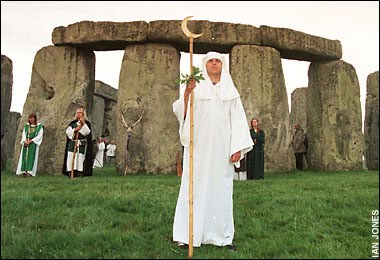
>Druids gather at Stonehenge for sunrise on the summer solstice. A new book suggests the gathering should take place in December
Stonehenge was the Lourdes of its day, to which diseased and injured ancient Britons flocked seeking cures for their ailments, according to a new theory.

For most of the 20th century archaeologists have debated what motivated primitive humans to go to the immense effort of transporting giant stones 240 miles from south Wales to erect Britain’s most significant prehistoric monument.

IMAGE: Druids gather at Stonehenge for sunrise on the summer solstice. A new book suggests the gathering should take place in December

Stonehenge was the Lourdes of its day, to which diseased and injured ancient Britons flocked seeking cures for their ailments, according to a new theory.

For most of the 20th century archaeologists have debated what motivated primitive humans to go to the immense effort of transporting giant stones 240 miles from south Wales to erect Britain’s most significant prehistoric monument.

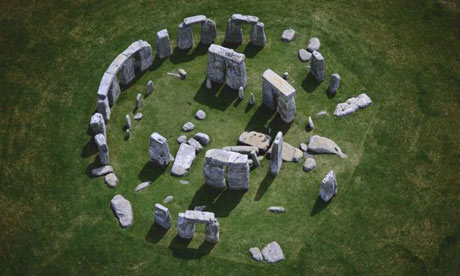
Stonehenge was built in different stages between 3000BC and 1600BC and theories about their meaning and purpose have ranged from the serious to the wacky. The most widely accepted view is that it was to honour their ancestors.

Now Timothy Darvill, professor of archaeology at Bournemouth University, has breathed new life into the controversy with the publication of a book which proposes that the monument was in fact a centre of healing. Prof Darvill also backs the recent view that modern-day druids and hippies who celebrate the summer solstice at the site in the belief that they are continuing an ancient tradition should in fact carry out their rituals in December.

In his book Stonehenge: The Biography of a Landscape, Prof Darvill points to evidence that many of the human remains excavated from burial mounds around Stonehenge, dating from around 2300BC, show signs of the individuals having been unwell prior to their death.

Chemical analysis of their teeth has shown that a good proportion of those buried near the monument were not locals, but in fact came from as far away as Wales, Ireland and the Lake District. A grave uncovered in 2002 three miles from Stonehenge revealed the remains of a man who became known as the Amesbury Archer. He was found to have originated in what is now Switzerland.

Prof Darvill also points to 14th century folklore in the form of written accounts referring to a magician bringing the stones from the west of the British Isles.

“It was believed that these particular stones had many healing properties because in Preseli there are many sacred springs that are considered to have health-giving qualities,” said Prof Darvill.

“The water comes out of the rocks used to build Stonehenge and it’s well established that as recently as the late 18th century, people went to Stonehenge to break off bits of rock as talismans.

“In the case of Stonehenge, I suggest that the presiding deity was a prehistoric equivalent of the Greek and Roman god of healing, Apollo.

“Although his main sanctuary was at Delphi in Greece, it is widely believed that he left Greece in the winter months to reside in the land of the Hyborians — usually taken to be Britain.

“With the incorporation of the stones from Wales, Stonehenge is a very powerful and positive place of pilgrimage.”

Prof Darvill believes those seeking to tap into the monument’s powers should do so in December during the winter solstice when our ancestors believed it was occupied by Apollo.

Stonehenge Tour Guide

>Though there was much in the recent series of Doctor Who that niggled me, the sight of our heroes galloping towards Stonehenge couldn’t fail to squeeze out a gasp of delight. While I know nature is remarkable without exception, certainly not only cordoned off by a gorsedd of standing stones, there’s something dizzying about the presence of stone marshals in formation.

Summer news from Salisbury Plain suggests Stonehenge is no longer the only megalithic player in town. Pricking the arrogance of singularity, archeologists have found confirmation of a woodhenge buried beneath ground level within chanting distance of the stone circle. Professor Vince Gaffney calls the finding “remarkable”, suggesting it will “completely change the way we think about the landscape around Stonehenge”.

Is that so? Presumably this is the same landscape that was so dramatically unaltered in October 2009 when another bluestone circle was discovered a mile away to the left. The same landscape that counts chalk horses, wood henges, barrows, tumps and stone avenues among its closest neighbours.

And while it is almost beyond excitement to witness archeologists using clever machines, allowing them to see the subterranean landscape and map it digitally, the sun’s unhurried arc across the sky seems to make more progress than the body of scientists exploring what these sites were for and how they were assembled.

Those old stones sing to us still, that much is evident from the thousands of visitors who daily pay their fare to shuffle round them. Such is their popularity that the many have to be herded round them widdershins (anti-clockwise, hence decreasing the power of the stones) and reminded at regular intervals not to touch them. But what is it about them that keeps drawing us back, distracted from asking what we want to know by the multi-lingual audio-guides babbling away in our ears?

I am lucky enough to live way out west, about as far as you can get before reaching the Irish Sea. The landscape of Pembrokeshire has more than a tangential link with that of Stonehenge. The bluestones, which form such an integral though subtle part of the stone circle, have their origins in the wild rock-crested ridges of the Preseli mountains. The link between West Wales and mysticism is as intact as the one between Wimbledon and strawberries. Out on the fringes of the land you don’t have to walk far before passing a lonely dolmen or recumbent burial chamber. Indeed, much like armoured police vans in central London, sacred sites out west seem to be becoming more frequent by the day.

So confident was the modern world in claiming to have the number of our stone-moving ancestors, Coca-Cola mounted a challenge in 1999 to show how easy it would be to move a bluestone from Pembrokeshire to Wiltshire, using only the technology assumed to be available 4000 years ago. They jolted the stone downhill to Milford Haven using tree trunks as rollers and once at the estuary, attached it to a simple boat, with the intention of sailing it across the Bristol Channel. No sooner was it off shore than it sank, taking the Coca-Cola challenge with it. But the legacy of this millennial endeavour was to suggest that whatever energy helped form Stonehenge it was more than brute force and grunting.

There are many different ways of gaining information from the natural world and the established scientific method presents one of them. The more intuitive and spiritual methods of consulting with the spirits of place, element, plant and animal might seem hilarious to those who would consider Glade Air Wick the acme of rational achievement, but they have as much a place in our relationship with the world. More, sometimes, in that they offer the individual conducting the questions a sense of humility instead of hubris, and don’t see the need to kill or smash the object of enquiry. Or drop it into Milford Haven.

Stonehenge attracts some because it’s a riddle. For others, it is the most obvious situation in the world. A circle is a place to gather, to dance and drum or sit in silence and meditate. It’s a place to heal and whisper and tell the time. For those who want to know how the stones got there and what they may mean, I’d advise putting down the audio guides and asking them; providing that the impossible is permitted to be an answer. Alternativly take a tour with the Stonehenge Tour Company or Histouries UK for a far better experience

There is a field not far from me where a stone has just risen, as if being born from the earth. Where there was recently nothing but tussocks of grass and clusters of Poppets-shaped sheep poo, there now stands a megalith. As compelling, even reassuring, as the rational method is, it is never the whole story. I can’t help thinking the originators of sites like Stonehenge, however they constructed it, had a better understanding of this than us. For all our machines.

Stonehenge and Avebury Stone Circle Tour Guide

>Archaeologists unearth Neolithic henge at Stonehenge

Archaeologists say the find is “exceptional”

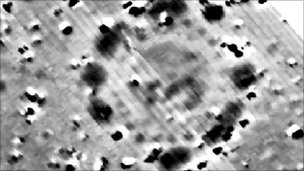
Archaeologists have discovered a second henge at Stonehenge, described as the most exciting find there in 50 years.

The circular ditch surrounding a smaller circle of deep pits about a metre (3ft) wide has been unearthed at the world-famous site in Wiltshire.

Archaeologists conducting a multi-million pound study believe timber posts were in the pits.

Project leader Professor Vince Gaffney, from the University of Birmingham, said the discovery was “exceptional”.

The new “henge” – which means a circular monument dating to Neolithic and Bronze Ages – is situated about 900m (2,950ft) from the giant stones on Salisbury Plain.

It’s a timber equivalent to Stonehenge”

End Quote Professor Vince Gaffney University of Birmingham

Images show it has two entrances on the north-east and south-west sides and inside the circle is a burial mound on top which appeared much later, Professor Gaffney said.

”You seem to have a large-ditched feature, but it seems to be made of individual scoops rather than just a straight trench,” he said.

”When we looked a bit more closely, we then realised there was a ring of pits about a metre wide going all the way around the edge.

”When you see that as an archaeologist, you just looked at it and thought, ‘that’s a henge monument’ – it’s a timber equivalent to Stonehenge.

”From the general shape, we would guess it dates backs to about the time when Stonehenge was emerging at its most complex.
”This is probably the first major ceremonial monument that has been found in the past 50 years or so.
’Terra incognita’

“This is really quite interesting and exceptional, it starts to give us a different perspective of the landscape.”

Data from the site is being collected as part of a virtual excavation to see what the area looked like when Stonehenge was built.

Speculation as to why the 4,500-year-old landmark was built will continue for years to come, but various experts believe it was a cemetery for 500 years, from the point of its inception.

In 2008, the first excavation in nearly half a century was carried out at the iconic site on Salisbury Plain.

This latest project is being funded by the Ludwig Boltzmann Institute for Archaeological Prospection and Virtual Archaeology, in Vienna, and the University of Birmingham, and is assisted by the National Trust and English Heritage.

Professor Gaffney said he was “certain” they would make further discoveries as 90% of the landscape around the giant stones was “terra incognita” – an unexplored region.

”The presumption was this was just an empty field – now you’ve got a major ceremonial monument looking at Stonehenge,” he said.

Reccommended Tours of Stonehenge Stone Circle:
The Stonehenge Tour Company
HisTOURies UK – Salisbury, Bath and London
Salisbury Guided Tours

>Move over Stonehenge, there’s a bigger stone circle in town.

Archaeologists are busy excavating Marden Henge, a giant stone circle and earthwork ten times larger than its more famous cousin. It’s not nearly as well-known, however, because all of its stones have been lost or buried. Traces of a giant earthwork and ditch that encircled the monument do survive, and archaeologists hope they’ll reveal secrets of England’s prehistoric past.
While everyone knows about Stonehenge, many people don’t realize there are nearly a thousand stone circles in the British Isles, from massive ones like Avebury (shown here) to smaller ones like the Rollright Stones. Marden Henge is in Wiltshire, close to Stonehenge and Avebury, and could provide clues to how and why they were constructed. The giant circle encloses about 15 hectares (37 acres) and has a mound at its center. Archaeologists plan to investigate both the central mound and the earthwork and ditch. The Neolithic farmers who built these monuments often put sacrifices in the surrounding ditches.
While there are no current plans for a visitor’s center at Marden Henge, there are plenty of other stone circles open to the public. Some of the more famous cater to visitors with interpretive signs and parking lots, while others simply stand in open fields, an enduring part of Europe’s ancient landscape. An excellent website to help you plan a visit is The Megalithic Portal, which includes information on stone circles and other megaliths such as barrows (tombs) and menhirs (individual standing stones) in the UK and all around the world.

Wessex Tour Guide

>

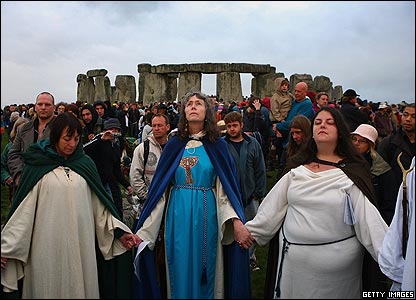
Thousands of Summer Solstice revellers gathered at Stonehenge today to watch dawn break on the longest day of the year.

Thousands flocked to Stonehenge this morning to celebrate the solstice, with the sun visible for the first time in recent years.

The solstice annually attracts an eclectic mix – Druids, hippies, sun worshippers and those who are curious to experience the ancient festival.
Nearly 20,000 people attended the event, with 15 arrests overnight for minor public disorder, a Wiltshire Police spokesman said.

As the sun rose at 0452, a cheer went up from those gathered overnight at the stone circle on Salisbury Plain in Wiltshire.

The crowds were treated to clear views of the sunrise – previous years have seen the spectacle obscured by mist and cloud.
Last year a record 36,500 revellers attended, causing traffic chaos and road closures.

It was announced last week that £10 million of funding for a proposed visitor centre at the prehistoric site has been axed, putting the plans on hold indefinitely.

Stonehenge Tour Guide

>A chance to catch the sunrise in a most magical place…………..

The Summer Solstice at Stonehenge is a truly magical time to be there. It’s an ad hoc celebration that brings together England’s New Age Tribes (neo-druids, neo-pagans, Wiccans) with ordinary families, travelers and party people.

Solstice nowadays is a peaceful and moving experience, but that wasn’t always the case. For years, Wiltshire police fought pitched battles with the people who were drawn to see the sunrise on the longest day of the year at Stonehenge. Every year the news carried the numbers arrested. In 1985, in a notorious event named “The Battle of the Beanfield”, Wiltshire police were accused by participants journalists and other witnesses, of brutality against a convoy of New Age travelers heading for the site. The event resulted in law suits against the police that went on for years.

At last the authorities saw the light

In more recent times, everyone has seen sense.

For many the impulse to arrive at Stonehenge in time for the Solstice is a little like all those people drawn to the strange rock in Close Encounters of the Third Kind. It’s akin to a spiritual experience. Anyone who has witnessed the crowd become silent as the sky begins to brighten can attest to that.

English Heritage, who manage Stonehenge, have establish a set of ground rules and now allow visitors to spend all night – From sundown to sun-up. By contrast to the wild and wooly 1980s, the atmosphere is peaceful and happy. There is usually impromptu music, sharing of picnics and the like and if you are in the UK for the Summer Solstice it is a fabulous way to see Stonehenge.

The Summer Solstice at Stonehenge 2010

When: Sunday evening, June 20 to Monday morning, June 21

Parking:

Parking is free.

The parking lot opens at 7 p.m. Sunday evening. Cars will not be admitted before then.

Last admission is 6 a.m. Monday morning, June 21.

The car park must be vacated by noon on June 21.

Access to the monument: 7:00 p.m. Sunday evening to 8 a.m. Monday morning.

The shortest night: Sunset on Sunday 20th June 2010 is at 9:26p.m. Sunrise occurs at 4:52 a.m. on Monday 21st June 2010.

Visit the English Heritage Website
Visit Stonehenge Web Site
Private Stonehenge Tours – HisTOURies UK
Salisbury Guided Tours

David – Stonehenge Tour Guide (see you there!)

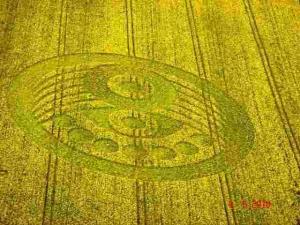
>THE first crop circles of the year in Wiltshire have appeared at Old Sarum and Stonehenge.

The one at Old Sarum was discovered in a field that is part of Little Durnford Farm last Tuesday.

Estate manager Philip Simmonds said it had been created overnight, but people living in former farmworkers’ cottages nearby did not see or hear anything unusual.

Since then enthusiasts from across Europe have been travelling to Salisbury to see the intricate design, photographed by Old Sarum flying instructor Mark McClelland.

“People have come from Holland, and this morning two ladies arrived from Austria,” Mr Simmonds said on Saturday. “On Thursday evening we had a Dutch film crew, and we’ve had an approach from a Californian film crew to film here next week. It’s all over the internet.”

The circle is in a 110-acre field of oil seed rape, owned by Lord and Lady Chichester.

“I’ve not seen one in a rape field before,” said Mr Simmonds, “although we did have a simple circle in the adjoining field, in a crop of barley, about five years ago.”

Unfortunately for Mr Simmonds the circle has caused £1,000 worth of damage to his crop, so to recoup his loss he is charging visitors to view it close up.

Excitement grew with the discovery of the second circle – or rather three swirling interlinked circles – across the A303 from Stonehenge at 9am on Monday.

Wiltshire Crop Circle Study Group sent up photographer Olivier Morel to take aerial pictures of the design, estimated at 350ft long.
According to the group’s website http://www.wccsg.com, another circle appeared in the same field in 1996.

Salisbury crop circle researcher and lecturer John Bannister, who has been fascinated by the phenomenon ever since seeing his first circle in a 1950s newspaper article, said: “The geometry of these things is inch-perfect. And no two are ever the same. We send soil samples from the circles away for analysis and they show significant changes.
“We usually get between 60 and 70 in Wiltshire each year because we have got so many ancient sites and ley lines.”

HisTOURies UK, a tour operator based in Salisbury have already started taking private tours to the circles.  The manager, Tim quoted “this is great for tourism in Wilsthire” and looks forward to a bumper year of mysterious crop circles.

David
Stonehenge Tour Guide

>

A Histouries UK tour guide has just sent this information through.  The very first crop circle in Britain for 2010, see image below.  We have also been sent an aeriel image of a crop circle next to Old Sarum hillfort – 8 miles southj of Stonehenge, we will add more details as we get them.  A big thank you to Histouries UK for keeping us up to date, keep up the good work!

David – Stonehenge Tour Guide Private Stonehenge and Crop Circle Tours
Crop Circle Tours and private guided tours of Salisbury and Stonehenge – click here (Histouries UK)

« Previous PageNext Page »