>
Many of you have been eagerly awaiting the release of Stonehenge ‘special access’ tours for 2010
I have been contacted by some of the London Tour operators who have just published their dates for March – September this year.
I can highly recommend the following tour operators;

The Sightseeing Tour Company
www.BestValueTours.co.uk

OR

Gr8xpectations (AllstarLeisure Ltd)
www.Welcome2Britain.com

These companies have been operating tours for over a decade and I have recieved excellent feedback about their tours and customer service.

It is important to book these tours early as they are extremely popular!

There will be some more dates published soon with different itineraries – watch this space………….. I hope this has helped – good luck !

Their itinerary is as follows:

STONEHENGE INNER CIRCLE TOURS:

Highlights: Private viewing of Stonehenge at sunset * Enter the stone circle and touch the stones * Visit Lacock, a delightful Saxon village * See where Harry Potter and Pride and Prejudice were filmed * Meal stop in a 13th century inn (food/drinks not included) * Visit Bath – free time to shop and explore * Entrance to the Roman Baths and Pump Room included

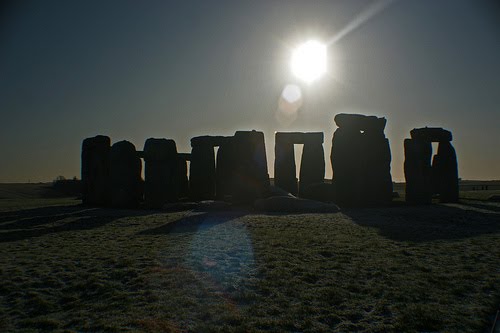
After your pick-up directly from or near to your hotel, we drive to Bath to visit the Roman Baths and Pump Room. In the late afternoon we visit Lacock for an early evening supper in a 13th century inn, before driving to Stonehenge. As the sun begins to set, we enter the stone circle (which is normally roped off to the public) for a unique private viewing. The most dramatic and atmospheric way of visiting Stonehenge.
Stonehenge – Private Viewing at Sunset and tourch the Stones
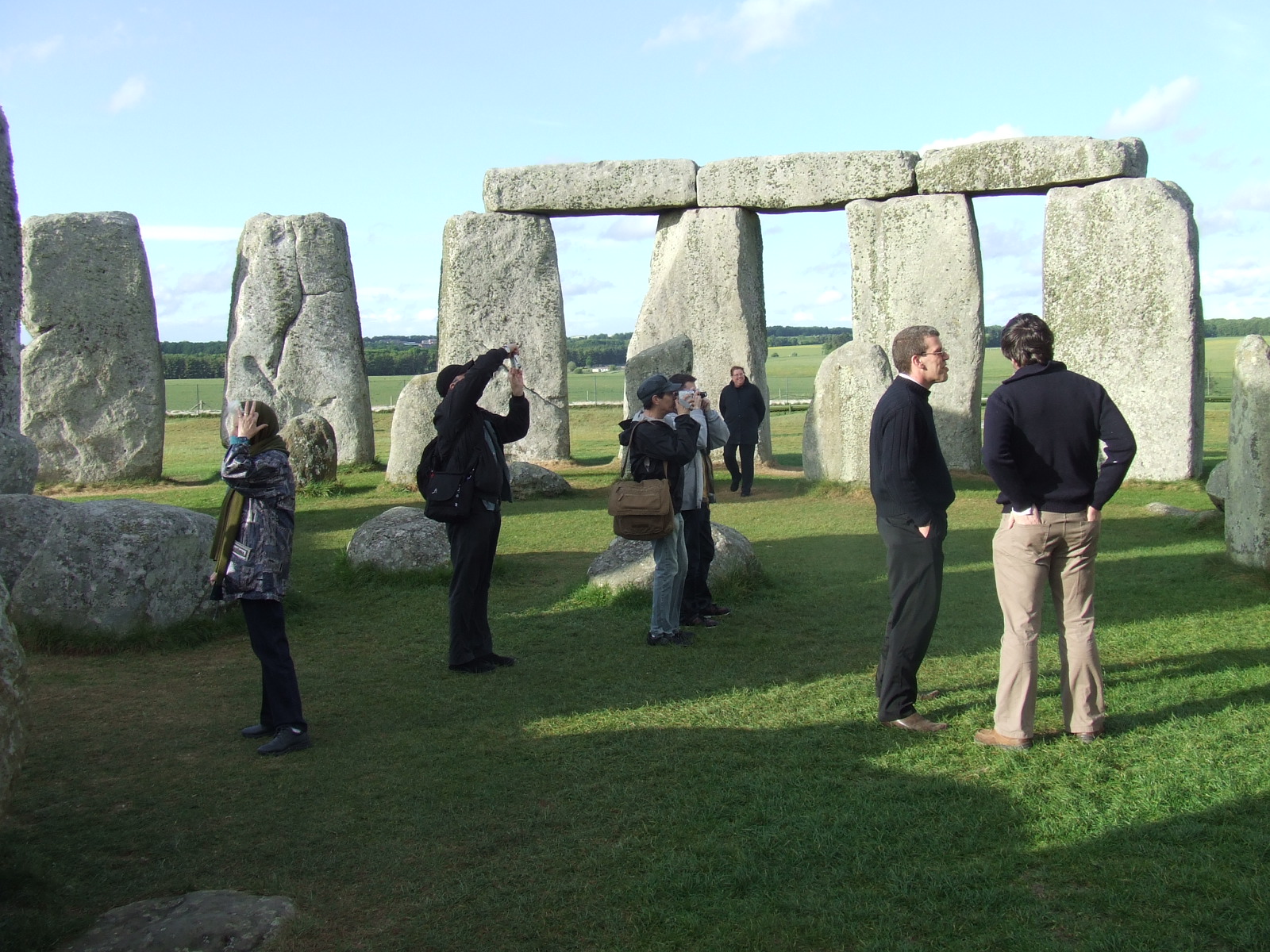
Built nearly 5,000 years ago, Stonehenge is the most popular prehistoric monument in the world. Most visitors to the site are not allowed direct access to the stones. With Premium Tours you get that access, with a private viewing of the mysterious monoliths. We will enter the stone circle itself and stand beside the mighty Sarsen rocks towering above us. Our guide will explain the history of this ancient site, pointing out the altar, slaughter and heel stones, above which the sun rises dramatically on the summer solstice. There will be time to enjoy the peace, away from the crowds, as we experience Stonehenge at its most mystical and atmospheric best. Not to be missed!

Lacock
Lacock is a little known, picturesque village dating back to the Saxon era. Many of the beautiful buildings originally formed part of an extensive monastic complex and are now owned by The National Trust. So pretty is the village that it has provided the setting for many movies and television dramas including Jane Austens Pride and Prejudice and more recently Harry Potter and the Philosophers Stone. We will take a delightful walk before we enjoy an early evening supper* (or breakfast for morning tours*) in The George, a vintage English pub built in 1361.
*food/drink not included

Bath
Bath, a world heritage site, is a beautiful Georgian city with delightful crescents, terraces and architecture. There will be plenty of time to visit Bath Abbey, or to shop and explore. Your guide will also conduct an optional walking tour to show you where Charles Dickens lived and worked as a young man, and a give you a chance to sample some delicious cheeses fresh from the local dairy farms. Then we will enter the magnificent Roman Baths, where over one million litres of boiling water still burst free from the hot springs everyday.

We are please to offer this tour on the following dates:

2010 OPERATING DATES
Month Date

January 2010 2nd, 15th, 25th

February 2010 1st, 5th, 8th, 15th, 22nd, 26th

March 2010 1st 4th, 8th, 11th, 15th, 26th

April 2010 1st, 4th,7th, 8th, 11th, 12th, 15th, 17th, 18th, 21st, 22nd, 25th, 26th, 29th

May 2010 5th, 6th, 9th, 10th, 13th, 16th, 19th, 23rd, 24th, 27th, 30th
June 2010 3rd, 6th, 7th, 10th, 13th, 16th
July 2010 1st, 4th, 7th, 8th, 11th, 12th, 15th, 18th, 22nd, 25th, 26th, 29th
August 2010 5th, 9th, 12th, 15th, 18th, 19th, 23rd, 26th, 29th
September 2010 2nd, 5th, 6th, 9th, 12th, 16th, 19th, 30th

>
Professor Mike Parker Pearson and his team have been awarded a further £800,000 grant to discover exactly how the people who built Stonehenge lived, what they ate and where they came from.

The research team from the Department of Archaeology at the University of Sheffield will study how at the time of the Winter Solstice, Stone Age people would have needed to have brought livestock with them to Stonehenge to feed on. Initial research suggests the animals were brought considerable distances to this ceremonial site at this time of year.

Funded by the Arts and Humanities Research Council (AHRC) as part of their annual large grants research scheme, this new project, entitled `Feeding Stonehenge´, will allow the team to answer some key questions about Stonehenge over the next three years.

The team will develop their research further by analysing the bones of the cows slaughtered in the area 4,500 years ago to calculate where the cattle had been moved from to give a better guide of where the people had travelled from to visit the site. In addition, the archaeologists will aim to gain a better understanding of the dressing of the sarsen stones, study how the public and private spaces at Durrington Walls differ from each other and establish in which season animals were culled at Stonehenge and Durrington Walls.

The grant forms one of 34 major research grants made by the AHRC in 2009 to projects that will help further our understanding of human culture and creativity. It was awarded following the already revolutionary Stonehenge Riverside project, also led by Professor Mike Parker Pearson, which strengthened the idea that nearby Durrington Walls was part of the Stonehenge complex. The large collection of cattle jaws collected during the last few years of excavations will now undergo strontium and sulphur isotope analysis to establish where they came from.

The newest project will now see the archaeologists study the material resources required for building Stonehenge and the other henge complexes of Wessex. In addition, the team will try and ascertain whether Britain´s Copper Age started 50 years earlier than first thought. Circumstantial evidence points to copper tools being in use at Durrington Walls earlier than previously calculated. Cut-marks on animal bones should reveal whether they were made by copper daggers as opposed to flint tools.

Professor Mike Parker Pearson from the Department of Archaeology at the University of Sheffied, said: “The Stonehenge Riverside Project’s results were well beyond anyone’s expectations – archaeologists and general public alike. It has allowed us to completely re-write the story of Stonehenge. One of the unforseen outcomes is the vast quantity of new material – flint tools, animal bones, pottery, plant remains, survey data, and chemical samples – which now needs analysing.

“The new grant from the AHRC for the ‘Feeding Stonehenge’ project allows us to get the maximum information out of this unexpected wealth of remains. We are going to know so much about the lives of the people who built Stonehenge – how they lived, what they ate, where they came from. The AHRC’s grants have been crucial for helping us find out more about one of the world’s most important prehistoric monuments. They have enabled the project to develop in directions which could not possibly be predicted when we started digging.”

In early September the AHRC spent a day visiting the 2009 excavation near Stonehenge and interviewing the research team. A short video podcast is now online that offers viewers an insight in to the scale of the excavations undertaken during 2009.

>

AROUND 300 pagan worshippers braved freezing temperatures to celebrate the winter solstice at Stonehenge, but turned up on the wrong day.

Dressed in traditional robes, they met at the stone circle on Monday to mark the rising of the sun on the shortest day of the year, but got their calculations wrong.

The winter solstice occurs when the tilt of the Earth’s axis is at its furthest from the Sun, resulting in the fewest hours of sunlight of the year.

Although it normally falls on December 21, the exact time of the solstice varies each year and this year the solstice was 5.47pm on Monday so, because the sun had already set, the official celebrations took place at sunrise on Tuesday.

But the hundreds of enthusiastic worshippers who turned up a day early went ahead and celebrated anyway.

English Heritage, which manages the site, decided to open the gates and welcome them even though it was the wrong day.

Hundreds more pagans and druids turned up on Tuesday morning for the official winter solstice celebrations.

>
Winter Solstice is today, Dec. 21, 2009, the day when the Earth tilts farthest away from the sun. It’s the shortest day of the year and the official start of winter. The word “solstice” comes from the Latin “sun stands still” and celebrations of the solstice pre-date Christmas. Stonehenge in England is the site of solstice festivals, apparently dating back some 4,500 years ago, when the site was in its proper cultural context. Some experts now believe that Stonehenge was the site of an ancient barbecue and midwinter celebration that culminated on the Winter Solstice, which also marks the beginning of longer days. From today’s Guardian: “Recent analysis of the cattle and pig bones from the era found in the area suggests the cattle used were walked hundreds of miles to be slaughtered for the solstice celebrations – from the west country or west Wales.”

And from English Heritage: “The monument we see today still inspires awe and admiration. Stonehenge attracts some 800,000 visitors a year and on the summer Solstice, thousands of people gather to watch the sunrise. Although thousands of years older than the Druids, the stone circle witnessed many druidic ceremonies, especially during the 19th century.”

>
Sheffield University archaeologists believe enigmatic prehistoric monument was used for ritual banquets on special occasions.

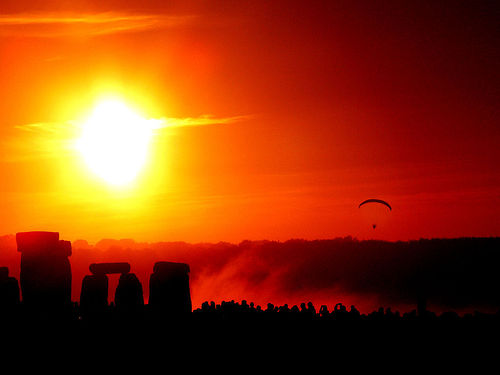
Some 4,500 years ago, as the solstice sun rose on Stonehenge, it is very likely that a midwinter feast would already have been roasting on the cooking fires.

Experts believe that huge midwinter feasts were held in that period at the site and a startling picture is now emerging of just how far cattle were moved for the banquet. Recent analysis of the cattle and pig bones from the era found in the area suggests the cattle used were walked hundreds of miles to be slaughtered for the solstice celebrations – from the west country or west Wales.

Professor Mike Parker Pearson of the University of Sheffield and his team have just won a grant of £800,000 from the Arts and Humanities Research Council, to answer some of the riddles about the enigmatic prehistoric monument.

The grant is to fund Feeding Stonehenge, his follow-up research on the wealth of material, including animal bones, pottery and plant remains, which they found in recent excavations at Durrington Walls, a few miles from the stone circle – a site which Parker Pearson believes key to understanding why Stonehenge was built and how it was used.

His team fully excavated some huts but located the foundations of scores more, the largest neolothic settlement in Britain. To his joy it was a prehistoric tip, “the filthiest site known in Britain”, as he dubbed it.

“I’ve always thought when we admire monuments like Stonehenge, not enough attention has been given to who made the sandwiches and the cups of tea for the builders,” said Parker Pearson.

“The logistics of the operation were extraordinary. Not just food for hundreds of people but antler picks, hide ropes, all the infrastructure needed to supply the materials and supplies needed. Where did they get all this food from? This is what we hope to discover.”

Stonehenge was begun almost 5,000 years ago with a ditch and earth bank, and developed over 1,000 years, with the circle of bluestones brought from the Preseli hills in west Wales, and the double decker bus sized sarsen stones.

It was too early for the Phoenicians, the Romans or the largely mythical Celtic druids. The Anglo Saxons believed Stonehenge was the work of a race of lost giants, and a 12th-century historian explained that Merlin flew the huge stones from Ireland.

It has been explained as a place of druidic sacrifice, a stone computer, a place of witchcraft and magic, a tomb, a temple or a solar calendar. It is aligned on both the summer and winter solstice, crucial dates which told prehistoric farmers that the time of harvest was coming, or the shortest day of winter past.

Although not all archaeologists agree – Geoff Wainwright and Tim Darvill have dubbed Stonehenge the stone age Lourdes, a place of healing by the magic bluestones – Parker Pearson believes it was a place of the dead, while Durrington Walls, with its wooden henge, was the place of its living builders, and the generations who came to feast, and carry out rituals for their dead, moving from Durrington to the nearby river and on by the great processional avenue to Stonehenge.

He found no evidence that Durrington was permanently inhabited or farmed, and the first tests on the pig and cattle bones support his theory that it was a place where people gathered for short periods on special occasions.

The pigs were evidently slaughtered at mid-winter, and he expects the cattle bones to back this. What the sample already tested shows is that they were slaughtered immediately after arrival, after travelling immense distances.

“We are going to know so much about the lives of the people who built Stonehenge,” Parker Pearson said, “how they lived, what they ate, where they came from.”

>
“A Unique Experience!”

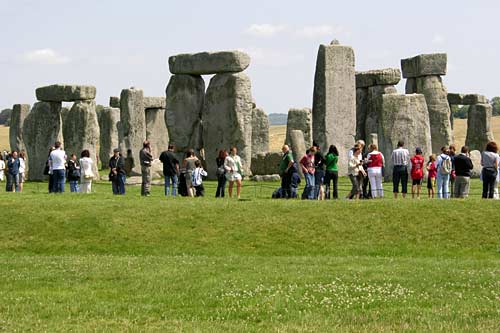
For those of you who have not visited this sacred site, I should mention that the complex is roped off. Visitors observe the stones from a distance and are not permitted within the temple complex……….special access tours allow you to be amongst the stones and to actually touch them. A guide will bring to life its many myths, legends and rich and fascinating history. All tours depart from central London and Salisbury. This truly is the best way to experience Stonehenge!

There are a number of companies offering this service (some better than others) and I will post their available dates and contact details on this blog first. Remember some tour operators only take small groups and demand is high, many filling up months before – you have been warned, book early!

Simply bookmark this page or ‘follow’ this blog and I will post all Stonehenge ‘inner circle’ tour dates in advance with details on how to book and get a discount………….

>
Simon Calder from the Independant newspaper took a Stonehenge ‘inner circle’ tour recently – here are his comments:

You know Stonehenge, of course: a haunting silhouette from the past that stands gaunt and defiant on the chalky grassland of Wiltshire, just where the busy A303 and A344 meet. This inspirational stone circle, a triumph of the human spirit, was bequeathed millennia ago. It is now protected by English Heritage and forms part of a Unesco World Heritage Site.

Last year, almost 900,000 visitors stepped from their cars and coaches to get closer to the neolithic wonder. An enriching experience, set to become better still when a new visitor centre opens next year. It is tantalising, though, to be so close to the stones, yet unable to wander through them and wonder at the forces that brought them here. Since 1978, they have been off-limits because of worries about vandalism and erosion caused by rising visitor numbers.

How much more rewarding it would be to be able to walk unfettered beyond the “velvet rope” that keeps visitors at bay. Well, an average of 1,000 people a month are lucky enough to get up close for a personal experience of the stone circle. On a range of days throughout the year, people who book ahead can get access to the heart of the site, in groups no larger than 26.

I signed up for the last such tour in September – which is why at dawn on Monday, I could be seen cycling north from Salisbury station in order to make the appointment of 8am sharp.

A brief history of Stonehenge, I mused as I huffed and puffed, is an impossible task. Suffice it to say that around 5,000 years ago, a circular ditch and mound was created. The site’s initial purpose seems to have been as a cremation cemetery. Perhaps half a millennium later, around 2500BC, standing stones were introduced – including the massive slabs topped by lintels that give Stonehenge its popular profile.

By the time the Romans arrived, the site had long lost its ceremonial significance – and spent most of the Christian era being regarded as about as much use as a pile of old stones. Yet in a remarkable early 20th-century conservation effort, a campaign succeeded in preserving the site, removing latter-day buildings and saving the signature site for the nation.

The 21st-century explorer needs the Ordnance Survey Landranger map 184, “Salisbury & The Plain”. The place names provide a mix of excitement (Old Sarum, Druid’s Lodge, Longbarrow Cross Roads) and foreboding (Breakheart Bottom). A gothic font pops up a lot, highlighting a remarkable density of earthworks created by ancient Britons as gifts from the living to the dead.

Stonehenge is just one element in an elaborate network of ceremonial sites scattered across Wiltshire, but it is by far the most prominent. When first they appear on the horizon, the raw reality of the stones makes you gasp – especially if you happen to be on a bike: Stonehenge is about 300 feet above sea level.

Everyone else on my tour had the good sense to arrive by coach: a company called Premium Tours has a regular day-trip schedule from London, which also includes Laycock and Bath. With a moment of trepidation, I stepped past the “No admittance” sign and on to the soft, springy grass, unwittingly triggering a faint mist of dew.

Like latter-day pilgrims, we followed the tour leader, Jason Ridgley, to the “altar stone” at the centre of the circle. Up close, you are overwhelmed by the scale of the construction: blocks of hard sandstone from 25 to 50 tons, quarried from the Marlborough Downs and dragged by weight of numbers and sheer determination around 4,000 years ago, to form a circle of 30 massive stones. They were topped, thanks to primitive but effective inventiveness, with huge lintels. Many of them have fallen, but here in the centre of the circle you can easily envisage its completeness.

The brute physical achievement is matched by remarkable sophistication about the workings of the cosmos. The stones appear to have been aligned so that at dawn on the summer solstice, the sun rises directly in the line from the “heel stone”, set beyond the circle close to the road, and the altar stone.

“It’s my favourite tour,” says Jason, who conducts a wide range of trips. “Everyone has planned their visit months in advance, and is psyched up for something they have waited their whole lives to see.”

The noise from the traffic seems to evaporate with the dew, with the silence broken only by the staccato of shutters. You feel strangely awed, reverential even, at being in the heart of such a profoundly mystical monument. Some places in Mayan Mexico and Guatemala feel like this, but they are tougher to reach, and much younger.

Time to take in the detail: the lichen in the tones of autumn that clings to the stone, bestowing texture and colour on sandstone worn pale by the elements. Early tourists painstakingly and shamefully carved their initials on one of the tallest stones, which – just below the waist-high messages – also bears ancient carvings of axe-heads.

The smaller slabs of bluestone within the circle are remarkable more for their provenance than their scale: the Preseli Hills in Wales, about 200 miles away – or, possibly, brought closer by glaciers. The more we know about Stonehenge, the more there is to know.

“It’s exactly as I thought it would be,” said David Gray from Manitoba in Canada, as we reluctantly walked back to the 21st century. Is that that a good thing, I wondered?

“Yes, it’s a very good thing,” he replied.

>
Beware……….
Many London ‘unscrupulous’ coach tour operators are offfering tours to Stonehenge on Christmas Day. English Heritage CLOSE the site during the festive period and you will NOT be able to enter the site. The visitor centre is closed and you will be forced to view Stonehenge from a distance beyond the fences – dont go on Christmas day, you will be dissapointed! You have been warned……………

>
To mark the end of the International Year of Astronomy, Stonehenge, with its 5,000 year long astronomical connection, is hosting a series of celebrations in December. The attractions include a free public astronomy exhibition, as well as the opportunity for Stonehenge visitors to ask the experts on the relationship between the sky and the ancient stone circle.

From 16th December to 3rd January 2010 visitors can enjoy a stunning exhibition – ‘From the Earth to the Universe’, which features incredible images of objects across the Universe- from stars to planets to nebulae and galaxies, all created using telescopes.

In the run up to the Winter Solstice, from 16th to 19th December leading specialists – both archaeologists and professional astronomers will be on hand to answer any questions you might have.

For further information on the International Year of Astronomy, Royal Astronomical Society and celebratory events at Stonehenge visit the event’s website.

Free talks and tours by leading archaeologists and astronomers

An opportunity to view the sunset itself

See the night sky from the stones (advance bookings only)

“From Earth to the Universe” exhibition

It is well known that there is a connection between Stonehenge and sunrise and sunset on the longest and shortest days of the year. To celebrate this connection between the stones and the sky, in the International Year of Astronomy 2009, a special event has been organised by the Royal Astronomical Society together with English Heritage.

Visit the website – Click here

>
I frequently get requests from tourists wishing to visit Stonehenge requesting who to travel with – here we go…………..

The best way to visit Stonehenge is on a guided sightseeing tour. The majority of visitors are from overseas and do not have their own transport, therfore the best way to see Stonehenge is on a scheduled tour. Most tours depart from central London and usually include other destinations i.e Windsor Castle, Bath, Salisbury, The Cotswolds – not all in the same day I hasten to add. This is because Stoneheneg is almost 2 hours from London and the tour operators tend to do a circular tour taking in other tourist attractions. I have listed the options below:

1.Stonehenge, Salisbury and Bath Day Trip from London
2.Stonehenge, Windsor Castle and Bath Day Trip from London
3.Small Group Stonehenge, Windsor Castle and Bath Day Trip from London
4.London to Stonehenge Shuttle Bus & Independent Day Trip
5.Late-morning Departure to Stonehenge and Roman Baths
6.Private Viewing of Stonehenge including Bath and Lacock
7.Two-Day Trip: Stonehenge and Bath Overnight

Sadly not all operators offer a great experience. I am familiar with the good and the bad and have provided a link to a Stonehenge tour website that has managed to negotiate special discounts and only use the best companies and approved guides. The advantage of booking through them is that you get ‘real time’ availability and instant booking confirmation.
Stonehenge is the most visited attraction in Britain and by far the most popular tour so booking well in advance is essential, especialy if you are tring to join a ‘Stonehenge special access’ tour where there are very limited dates.

Click here to view all the Stonehenege Tours avaialble – enjoy and good luck!

Should you prefer a more personal experience and would like to visit Avebury Stone circle, Old Sarum, buriel mounds, Silbury Hill and even some crop circles please contact me for a private tour – I’m not greedy and a garantee a truly memorable day.