Regardless of background, age, nationality or any other individual feature, it’s up to every one of us to do our part in limiting mankind’s carbon footprint and subsequent impact on the environment. This means really thinking about how we use energy and which companies we give our business to; typically, these slight changes of lifestyle begin at home – but they should also be considered when you’re planning your holiday.

A visit to Stonehenge fits in well in conjunction with an eco-holiday. After all, although the details of how and why Stonehenge was built remain largely a mystery, the site seems to somehow be in tune with the earth, as if the monument speaks to an age when mankind lived in harmony with the natural world rather than actively harming it to irretrievable levels. This is why the recent Stonehenge includes using the site as a place for Pagan worshippers to celebrate the natural world. Since the 1870’s, the site has been visited by Neo-Druids who revere the earth as the giver of life. If you visit Stonehenge during the summer solstice you’ll see followers of all faiths who worship nature; Stonehenge, it seems, is one of the best places in Europe to really feel the power of the natural world.

With that in mind, we thought we’d put together some information that will enable you to make your trip to Stonehenge as ecologically conscience as possible.

Getting Here 

A welcome fact about eco-holidays is that they’re rarely as expensive as you might think; they just need to be researched a little more thoroughly than a traditional vacation. To begin with, it’s worth noting that travelling by cruise is actually more damaging to the environment than flying (though cruise ships are trying to improve). Flying is also damaging, but improvements to aircrafts and less travel time means the impact is reduced, at least.

If you’re travelling to the UK specifically to see Stonehenge, then the most logical way to reduce your carbon footprint is to fly into one of the airports and prevent any need to a long drive to the site. Southampton Airport is only 26 miles, whilst the larger Bristol Airport is 53 miles away. The closest airport in London is Heathrow, which is 73 miles away.

If possible, reduce your carbon footprint by traveling to Stonehenge on our tours that depart from London. This way, there’s no need to rent multiple vehicles, which could be both expensive and unnecessarily damaging to the environment, especially if there is more than 5 of you on the tour.

Where to Stay

The hotel industry has made a big effort in recent years to implement strategies that would reduce environmental damage. The result is a whole host of modern hotels that feature innovative designs that don’t compromise on comfort but do protect the environment. When booking your accommodation, have a look at hotel’s environmental policy; if they don’t have one, consider giving your busy to one that does – hotels that lag behind will soon catch up if their lack of policy negatively affects business.

There are a number of hotels near Stonehenge that are considered “green”. The Holiday Inn Salisbury, for instance, holds a Silver Award from Green Tourism, while the Fairlawn Hotel is just 10 minutes from Stonehenge and has worked out to make sure their as eco-friendly as they can be, by implementing policies such as using local suppliers, recycling and reducing paper, and using compost in the garden.

Alternatively, those visitors who love the outdoors might find that camping is the best accommodation for them. Staying at Stonehenge Campsite means you’re just 5 miles from Stonehenge and as in tune with the natural environment as you can be prior to visiting the monument.

Respect the Environment

Not all tour operators treat Stonehenge with considered respect. With Stonehenge tours, you can rest assured that you’re travelling with a company that respects the values of Stonehenge and the environment at large.

But that doesn’t mean you don’t have a role to play. The best way to protect the environment – whilst in it – is to be vigilant about your interaction with it. This means taking your litter with you, being mindful of the delicacy of the infrastructure, and making sure that Stonehenge remains a sacred place. Generally, the best policy to adopt is: ‘take nothing but photographs, leave nothing but footprints’.

Be at Home

The most basic method of being ecologically minded when visiting Stonehenge – and elsewhere, for that matter – is to follow the same fundamental rules that you’d follow at home. This means switching off lights and other electrical items in your hotel room when not in use, timing your showers to limit water use, and using the air-conditioning/heating responsibly.

Stonehenge Guided Tours
http://www.StonehengeTours.com

From Neolithic stone circles to gothic cathedrals, history is all around us. So hit the road and get up close to the ancestors

Stonehenge
Stonehenge is an important stop on any tour of historic sites. Photograph: Getty Images

Early civilisation
Next year marks the 800th anniversary of the signing of Magna Carta at Runnymede in 1215, the basis of our modern democracy. Only four copies remain of the Great Charter, one of which is in Salisbury cathedral. Start your journey here and climb the country’s tallest spire. Walk out into the Meadows to gaze back at the cathedral as John Constable did when he painted Salisbury Cathedral from the Meadows in 1831.

It’s a short drive out into the Wiltshire countryside to Stonehenge. The ancient stone circle has a new visitor centre, which explores the many theories surrounding its mysterious creation, possibly as long ago as 2500BC. Don’t miss the nearby village of Avebury, which is surrounded by three circles of standing stones, and the Neolithic chambered tomb of West Kennet Long Barrow, which dates from about 3650BC.

Drive on to Bath, your final stop, to see the Roman Baths and experience the healing geothermal waters for yourself at the fabulous Thermae Spa. Here you’ll find an open-air rooftop pool to contemplate it all from.

Hadrian's Wall

Visit the longest continuous section of Hadrian’s Wall still standing. Photograph: Getty Images

Along the wall
Carlisle has long been strategically important, close to the border with Scotland, and was once on the very outermost edge of the Roman Empire. As a result there is plenty of history here. See the city’s timber-framed Guildhall and visit the 12th century cathedral, one of England’s smallest, before taking a walk around Carlisle Castle, which has 1,000 years of military heritage and is also where Elizabeth I kept Mary, Queen of Scots, as her “guest” in 1568.

Drive out of the city on the A69, which hugs Hadrian’s Wall all the way to Newcastle upon Tyne. Stop first at Birdoswald Roman Fort, where you can see a model of the wall as it appeared when complete, as well as the longest continuous section of it still standing today. Next up is Vindolanda, home to the Vindolanda tablets, the oldest surviving handwritten documents in Britain, and a world-class museum of Roman objects.

From here, it’s just 45 minutes to Newcastle upon Tyne, with its 12th century castle keep and ancient cathedral. It is better known, though, for its vibrant cultural scene, so don’t miss Baltic, a contemporary art gallery housed in a converted flour mill.

Skara Brae

The ancient village of Skara Brae on Orkney. Photograph: Getty Images

Ancient treasures
History doesn’t get more potent than on Orkney, where a cluster of hugely important Neolithic sites stand against a dramatically beautiful landscape.

Pick up a car in Kirkwall and make the short drive out to Maeshowe, the most impressive Neolithic burial chamber in a landscape dotted with them. The guided tour is fascinating, with tales of 12th-century Viking raids (and graffiti) and the jaw-dropping explanation of how at the winter solstice the tomb is aligned perfectly to the rays of the sun.

The nearby lochs of Stenness and Harray are separated by promontories that once formed the heart of Orkney’s Neolithic ceremonial complex. Today the standing stones of Stenness remain, along with the Ring of Brodgar – originally 60 stones, now 27.

Drive on west to the Bay of Skaill and the amazingly well-preserved village of Skara Brae. This 5,000 year-old settlement was buried until a fierce storm uncovered it in 1850, revealing dwellings with everything from beds to fireplaces, cupboards to tables. Add a roof and you could happily live here.

Oxford's dreaming spires

Oxford is home to some of England’s finest architecture. Photograph: Getty Images

Spires and spies
Oxford is known for its “dreaming spires” and the university city is home to some of England’s finest architecture. Top pick is Christ Church College, where Christopher Wren’s imposing Tom Tower lords it over the city’s largest quad, surrounded by honey-hued stone buildings that are photogenic from any angle. Don’t miss seeing the Radcliffe Camera, an 18th-century rotunda that forms part of the Bodleian Library, the country’s largest after the British Library.

From Oxford, it’s an easy drive to Bletchley Park, once Britain’s best-kept secret and today home to the world’s largest collection of Enigma code-breaking machines. Explore the Second World War code-breaking huts and discover the life and work of pioneering computer scientist Alan Turing in the exhibition.

Drive on to Cambridge, where yet more spires and college quads await. The most imposing is King’s College, where the chapel represents the zenith of gothic architectural design, with four spiky turrets and copious stained-glass windows.

Article source: The Guardian – http://www.theguardian.com/enterprise-open-road/2014/nov/21/the-uk-top-historic-sites-itineraries-drive-history

Stonehenge Guided Tours
http://www.StonehengeTours.com

Stonehenge Winter Solstice Tour:
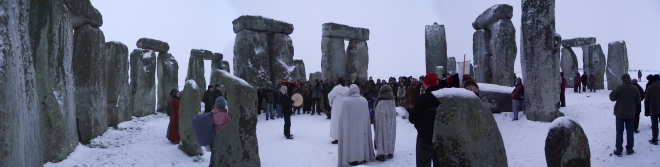
Each year in December visitors from around the world gather at Stonehenge early in the morning to mark the Winter solstice and to see the sunrise above the stones. The sunrise on the 22nd of December at 8.04am. We will be there for sunrise!
The Winter Solstice is the most important day of the year at Stonehenge and a truly magical time to be there. It’s an ad hoc celebration that brings together England’s New Age Tribes (neo-druids, neo-pagans, Wiccans) with ordinary families, tourists, travellers and party people – 100’s of them!
http://stonehengetours.com/stonehenge-winter-solstice-tour.htm

StonehengeNews's avatarStonehenge Stone Circle News and Information

English Heritage will once again welcome people to Stonehenge to celebrate the Winter Solstice. Sunrise is just after 8am on Monday 22nd December and visitors will be able to access the monument as soon as it is light enough to do so safely. Conditions of entry will be posted shortly.

Stonehenge Winter Solstice

Please be aware that parking is very limited and there is a thirty minute walk, in low light, from the parking areas to the monument.

Why 22nd December?

Many people – not least diary manufacturers – believe that the Winter Solstice always falls on 21st December. But the celebration of the winter solstice at Stonehenge is not fixed to a specific calendar date – this is because of a mismatch between the calendar year and solar year. (The actual time of the Winter Solstice this year is on December 21st at 23:03 GMT)

The solstice is traditionally celebrated at the…

View original post 213 more words

Our customers really enjoy the exhibitions at the Stonehenge Visitor Centre and we allow extra time to enjoy events

StonehengeNews's avatarStonehenge Stone Circle News and Information

Visitors to Stonehenge are being invited to step through the doorways of its Neolithic houses and into prehistory this winter as expert-led events and demonstrations are offered for the first time.#

Full programme of events and demonstrations:

Making Musical instruments

Sat 15 – Sun 16 Nov & Sat 24 – Sun 25 Jan, 10am–4pm

See Corwen Broch as he creates instruments from natural materials and demonstrates the sounds

of the Neolithic period.

Prehistoric Pottery

Sat 22 – Sun 23 Nov and Sat 20 – Sun 21 Dec, 10am–4pm

Using a handling collection of replica pots, tools and artefacts, Graham Taylor will show you how to make your own pottery tool kit, decorate replica pots as well as how to fire them using authentic prehistoric methods.

Fire & Life

Sat 6 – Sun 7 Dec, Sat 10 – Sun 11 Jan and Sat 14 – Sun 15 Feb, 10am–4pm

Guy Hagg demonstrates all things essential…

View original post 955 more words

The Heritage Trust's avatarThe Heritage Trust

Mother Goose and Grimm
©
 

A reminder to our American friends.

Don’t forget that your daylight saving time ends tomorrow, 2nd November, at 2am local time. Here in Britain the clocks went back last Sunday. Sad to say our Druid and Megalithic Clock Adjusters are still rearranging some of our larger stone circles. Meanwhile, the debate intensifies as to whether or not to stay on British Summer Time all year-round or to continue being plunged into darkness at around 5pm for the next few months.


View original post

Now You Can Explore the Sights and Sounds of Stonehenge on Your iPhone 

Stonehenge has been mystifying people for quite a long time, but getting to the massive circle of standing stones could pose a problem for many. Happily, the Stonehenge Experience app for iOS tackles this problem with gusto, aiming to bring you the sights and even the sounds of Stonehenge regardless of where you may be.

The app was released earlier this month for iPad, iPhone, and iPod touch by Ribui Ltd. Once activated, the app goes through several interactive vignettes explaining the arrangement of the stones, when they were erected, how we think the pillars were constructed, and so on. It’s sort of like a virtual tour of the site, being narrated by an unseen woman with a fabulous British accent.

Though the idea of a tour-in-your-pocket might sound disappointing, each “section” of the tour is interactive in some way. You can pinch and slide your view around all of the presentations, and scrub the slider back and forth to advance. In some cases, this moves time backward and forward on screen, causing stones to rise up out of the ground or the sun to move across the sky. You can also jump straight to a menu that allows you to access each segment at your leisure.

In addition to the stones themselves, the app also encompasses several nearby sites, including burials and earthworks. These are presented, Google Maps fashion, from the menu page. While light on information, the app lets you “excavate” some of these sites by swiping your finger across the screen. This is kind of silly, but does introduce the user to some of the region’s permanent residents.

By far, the most impressive feature of the app is a 360º view of the stones from within the circle. It’s designed to deliver an alternate-reality experience, where moving your phone or iPad around changes the view. That’s pretty neat, but the Stonehenge Experience goes a step further and uses your device’s built-in microphone to deliver what the app’s creators claim is the sensation of hearing what it’s like within the stones. One of the apps designers explains:

This is by far the most fun part of the app, which seems kind of silly since it’s just an audio filter. However, it adds a level of interaction that’s surprisingly fun

Having never been to Stonehenge, I can’t say if the app lives up to its claims of faithfully recreating the entire experience. However, I can say that I had an enjoyable time playing around with it. The actual educational content of the app seemed pretty on-mark, although I am far from an expert. That said, the $2.99 price point might seem a bit steep for a little toy like this, with limited re-use value.

If you’re looking to experience Stonehenge on a phone, I am not sure you can do much better.

(The Stonehenge Experience via New Scientist)
Mary Sue:  http://www.themarysue.com/stonehenge-app/

Stonehenge Guided Tours offer a free download of this app for all their customers.

Stonehenge Tour Guide

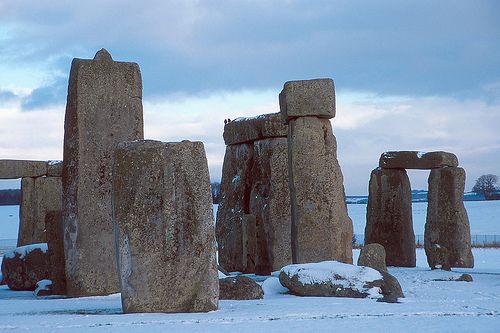
We are now taking bookings for December 2014.  We have our regular classic Christmas sightseeing coach tours and some new exclusive trips on offer this festive season. Some day tours are now including the fabulous Salisbury Christmas market and carols in Salisbury Cathedral this year.  Other tours include Bath, Windsor, The Cotswold’s and some include traditional pub lunches.  While the weather may be getting Snowhengecooler, London’s Christmas season is just warming up. England acquires a special sparkle around Christmas time. The weather is frosty and the Christmas lights are twinkling. England is a truly magical place to explore at Christmas

Stonehenge Sunrise Access Viewing Tour – December 19th 2014

We have arranged with English Heritage for you to experience a unique guided visit to this ancient sacred site – beyond the fences and after the crowds have gone home. Walk amongst the stones and experience the magical atmosphere within the inner circle. Include’s Bath and Lacock. Click here

Stonehenge Solstice Sunset Viewing Tour – December 21st 2014
The Winter Solstice is the most important day of the year at Stonehenge and a truly magical time to be there. Exprience the new English Heritage visitor centre and witness the sun setting plus Avebury Stone Circle and Salisbury Catthedral / Christmas Market. Click here

Stonehenge Winter Solstice Sunrise Access Tour – December 22nd 2014
The Winter Solstice is the most important day of the year at Stonehenge and a truly magical time to be there. Witness the sun rising from within the inner circle of Stonehenge at dawn. Click here

Stonehenge, Windsor Castle and the Roman Baths – Christmas Eve (24th)
See the ancient monoliths at Stonehenge, visit the magnificent Windsor Castle and the Georgian City of Bath, where we visit the Roman Baths. Click here

Stonehenge, Windsor and Bath with traditional pub lunch – Christmas Day
Luxury coach tour with professional guide
Explore the heart of England on Christmas day & see Royal Windsor, historic Stonehenge and Georgian Bath. Plus enjoy a festive lunch in a classic British country pub with Roast Turkey and all the trimmings! Includes festive pub lunch – Click here

Stonehenge and Bath with fish and chips pub lunch – Boxing day (26th) December 2014
With Champagne reception and lunch included
See Windsor, Stonehenge, Salisbury and Bath all in a day. Includes Champagne reception at Windsor, fast track entrance at Stonehenge and a classic country pub lunch. Fast track entrance at Stonehenge –Click here

Stonehenge, Windsor and Bath – NEW YEARS DAY (1st January 2015)
All entrance fees included
Prehistoric Stonehenge, Elegant Bath and Royal Windsor all lined up for a fabulous New Year! Includes Festive Lunch – Click here

27th – 31st December Tours

During this festive period between the 27th and 31st of December, we are pleased to provide our full range of tours whether its a London sightseeing tour or a visit to Stonehenge

Stonehenge Guided Tours
The Stonehenge Experts
www.StonehengeTours.com

All of our Stonehenge guided tours include a visit to the new Stonehenge visitor centre. We look forward to showing our customers the new ‘First World War’ exhibition this winter.

StonehengeNews's avatarStonehenge Stone Circle News and Information

Salisbury Plain and the journey to the First World War.

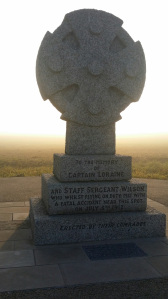
A new special exhibition is being launched at the Stonehenge visitor centre in November to tell the story of the Stonehenge War memorial at Stonehengelandscape, its neighbouring communities and how they were dramatically altered by the Great War.  During the First World War, the World Heritage Site was at the heart of Salisbury Plain’s military training ground and the Wiltshire landscape was dramatically transformed.  A 25 mile area around Stonehenge became home to the largest complex of military training camps in the world, as soldiers dug intricate networks of trenches in an attempt to replicate conditions on the Western Front.

This exhibition will open in November 2014. It tells the story of the Stonehenge landscape, its neighbouring communities, and how they were changed by the First World War.

Visit the English Heritage Website and see ten of the exhibition objects and images in…

View original post 59 more words

We specialise in guided tours of Stonehenge and its landscape. Tours depart from London, Salisbury and Bath. Here all the latest theories with one of our local Stonehenge experts: http://www.StonehengeTours.com

StonehengeNews's avatarStonehenge Stone Circle News and Information

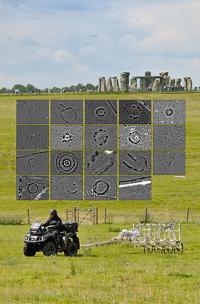
Bradford archaeologists are part of an international research team that has uncovered a host of previously unknown archaeological monuments around Stonehenge in a project that will transform our knowledge of this iconic site.

Operation Stonehenge: What Lies Beneath, can be seen on BBC iPlaver here: http://www.bbc.co.uk/iplayer/episode/b04hc5v7/operation-stonehenge-what-lies-beneath-episode-1

Results from the Stonehenge Hidden Landscapes Project are unveiled today at the Stonehenge_new_monumentsBritish Science Festival in Birmingham. They show how, using new remote sensing techniques and geophysical surveys, the team has uncovered 17 previously unknown ritual monuments around the site, along with dozens of burial mounds – all of which have been mapped in minute detail.

Researchers at the University of Bradford are partners in the project, which is led by the University of Birmingham and the Ludwig Boltzmann Institute for Archaeological Prospection and Virtual Archaeology, in Austria.

Alongside previously unknown features, the team has also uncovered new information on other monuments, including…

View original post 364 more words

Grand, centuries-old cathedrals distinguish Great Britain’s cities and towns, providing spiritual nourishment to those who visit. These places of worship seem ancient almost beyond imagination. But long before Gothic cathedrals … long before recorded history even, Britain’s stone circles were this land’s sacred spots.Stonehenge Sunrise Tour

Stonehenge is the most famous of these – and has a new visitors center to serve nearly 1 million annual sightseers. As old as the pyramids, this site amazed medieval Europeans, who figured it was built by a race of giants. Archaeologists think some of these stones came from South Wales – 150 miles away – probably rafted then rolled on logs by Bronze Age people.

Most believe stone circles functioned as celestial calendars, and even after 5,000 years Stonehenge still works as one. As the sun rises on the summer solstice (June 21), the “heel stone” – the one set apart from the rest – lines up with the sun and the altar at the circle’s center. With the summer solstice sun appearing in just the right slot, prehistoric locals could tell when to plant and when to party.

Despite the tourist hordes, Stonehenge retains an air of mystery and majesty (partly because smartly designed barriers, which keep visitors from trampling all over it, foster the illusion that it stands alone in a field).

While Stonehenge is viewable only from a distance, Britain is dotted with roughly 800 lesser-known stone circles. A favorite is Avebury. Just 19 miles north of Stonehenge, it’s 16 times as big. And Avebury is a megalithic playground, welcoming kids, sheep and anyone interested in a more hands-on experience. Visitors are free to wander among its 100 stones, ditches, mounds, and curious patterns from the past, as well as stroll in the village of Avebury, which grew up around and even within this fascinating 1,400-foot-wide Neolithic circle.

In the 14th century, in a frenzy of religious paranoia, Avebury villagers buried many of these mysterious pagan stones. Their 18th century descendants hosted social events in which they broke up the remaining stones. In modern times, the buried stones were dug up and re-erected. On a recent visit, enjoying the half-mile walk along the perimeter path, I tried to make sense of the earthen ditch and bank, grateful for the concrete markers showing where the missing broken-up stones once stood.

In the moorlands of southwest England, smaller stone circles composed of weathered craggy rocks are even more evocative. (Good local maps mark them.) Windswept and desolate, Dartmoor National Park has more of these than any other chunk in the country. On one visit, I trekked from the hamlet of Gidleigh through a foggy world of scrub brush and scraggy-haired goats on a mission to find a 4,000-year-old circle of stone. Venturing in the pristine vastness of Dartmoor, I sank into the powerful, mystical moorland – a world of greenery, eerie wind, white rocks and birds singing but unseen. Climbing over a hill, surrounded by sleeping towers of ragged, moss-fringed granite, I was swallowed up. Hills followed hills followed hills – green growing gray in the murk.

Then the stones appeared, frozen in a forever game of statue maker. For endless centuries they waited patiently, still and silent, as if for me to come. I sat on a fallen stone, observing blackbirds and wild horses. My imagination ran wild, pondering the people who roamed England so long before written history, feeling the echoes of druids worshipping and then reveling right here.

The Castlerigg Stone Circle is a highlight in England’s Cumbrian Lake District. While just off the main road near the town of Keswick, it feels a world away. With each visit I marvel at how the stones line up with the surrounding mountain peaks. Sitting alone (except for the sheep) in the middle of this circle of stones, drenched in lush and pristine Lake District beauty, I imagined dancing druids, and dancing flames, and the fear that winter would snuff out spring forever.

Scotland has its own breed of stone circles. At Clava Cairns, set in a peaceful grove of trees just a few minutes’ drive from Inverness, are the remains of three thought-provoking stone igloos, each cleverly constructed with a passageway that the sun illuminates, as if by magic, with each winter solstice.

Nobody knows for sure what these stone circles meant to the people who built them. But their misty, mossy settings provide curious travelers with an intimate and accessible glimpse of the mysterious people who lived in prehistoric Britain.

When in Britain, strive to find your own private circle – an obscure, weathered bit of 4,000-year-old mounds and ditches with a couple of surviving upright stones. Come just as darkness is chasing out the twilight, and imagine rituals from the dank and misty past. The chill and the wonder will combine to leave you with a lifelong memory.

Rick Steves (www.ricksteves.com) writes European travel guidebooks and hosts travel shows on public television and public radio. Email him at rick@ricksteves.com and follow his blog on Facebook.  Link: http://www.buffalonews.com/columns/rick-steves/stonehenge-is-a-tourist-mecca-that-still-retains-an-air-of-mystery-20140907

Join us on a Stonehenge guided tour and experience the mystery for yourself

Stonehenge Guided Tours
http://www.StonehengeTours.com