Uncategorized


>
If you plan to visit Stonehenge and other English Heritage sites buying a Heritage Pass will save time and money –

Combine great value and great sightseeing with the Great British Heritage Pass. Giving you free entry to nearly 600 attractions in England, Scotland, Wales and Northern Ireland, the multi-day heritage pass takes you on an amazing journey through Britain’s rich cultural heritage.

Britain has a vibrant history, and scores of brilliantly preserved stately homes, palaces, castles, gardens and famous monuments to visit. Plan your visit using the Great British Heritage Pass and the free 40-page guidebook you’ll receive and save money along the way.

With the Great British Heritage Pass you’ll have FREE ENTRY to nearly 600 attractions, including:

•Stonehenge
•Edinburgh Castle
•Palace of Holyroodhouse
•Roman Baths
•Shakespeare’s Birthplace
•Leeds Castle
•St. Paul’s Cathedral
•Royal Albert Hall
•Anne Hathaway’s Cottage
•Stirling Castle
•Cardiff Castle
•Caernarfon Castle
•Tintern Abbey

Additional information

The Great British Heritage Pass

Inclusions:
•FREE 40 page Guidebook
•FREE Map of Great Britain
•The Great British Heritage Pass
•FREE entry to over 600 attractions

If you wish to purchase a pass the cheapest place to buy one is at this link – click here

>

Stonehenge: The guide, meant for children, is riddled with mistakes

The Government body responsible for maintaining the nation’s historic monuments has been forced to withdraw a children’s guide to Stonehenge because it was littered with factual errors.
The book, called The Ghastly Book Of Stonehenge, has become a laughing stock among archaeologists because of its many blunders.
English Heritage, which receives £129million a year in Government funding, has recalled 4,500 copies of the £3 book and now plans to pulp them.

A spokeswoman said last night that an ‘incorrect proof’ – an earlier, unedited version of the book – had been sent to the printers.
The schoolboy errors include a passage in which the Bronze Age was mistakenly placed before the Stone Age, and an Ice Age mammoth was used to illustrate a chart showing Iron Age to medieval times.
Mammoths finally became extinct around 1700BC – almost 1,000 years before the Iron Age began in Britain.
An entry about 5th Century king Aurelius Ambrosius – believed to be the historical basis for King Arthur – mistakenly called him Aureole Ambrosias, a spelling error that appears to have been copied from the internet.
One paragraph states that Bronze Age bluestones, which archaeologists believe were transported to the site in Wiltshire from Wales, arrived in around 2550BC, while ‘about 200 to 300 years’ later, ‘New Stone Age people added some much bigger stones’.
Grammatical errors are also rife, including examples such as ‘Prehistoric carvings of daggers and axes on the stones is discovered by a photographer’

Distances and directions on maps are often wrong or contradictory with the stone circle at Avebury said to be ‘about 20km’ from Stonehenge in the text while on the fold-out map it’s 46km.
Page references are often wrong and anyone who wanted to find the entry about Merlin and Aurelius Ambrosius would be directed to Page 30, when it’s actually six pages later on.
The mistakes in the book, by children’s author Tracey Turner, were spotted by a reader of British Archaeology magazine, which lampooned the errors in its latest edition.
Editor Mike Pitts said: ‘I couldn’t believe it. It was supposed to be written in a style that makes it accessible to children but the result was a catalogue of errors too many to list, so I thought it our duty to publish the story.
‘Not only that but the book was written in a style that really pokes fun at the people of the past in a condescending way and I think that devalues and demeans what happened at Stonehenge.
‘There’s even a silly reference to a site at Robin Hood’s Ball near Stonehenge as being “a prehistoric nightclub”.
‘King Aurelius Ambrosius is a central mythical figure in the story of Stonehenge who is said to have told Merlin to build the Henge on the site of a great and bloody battle but to spell his name wrong so that he becomes King Nipples Rice Pudding just takes the biscuit.’
An English Heritage spokeswoman said last night: ‘The Ghastly Book of Stonehenge was withdrawn as soon as it became apparent an incorrect proof containing a number of factual errors had gone to print.
‘The Ghastly series was conceived in 2005 as part of a wider strategy to improve family learning at our sites.
‘However, over the past couple of years, publishing at English Heritage has undergone quite a radical rethink and we are unlikely to be printing books such as these again.
‘We will instead focus on providing free, downloadable resources to support teachers and families visiting our website.
‘We have also completely reviewed our editorial procedures to ensure that such a mistake doesn’t happen again.’

>

A new tour has been launched by the sightseeing coach tour company Evan Evans, based in London. Itinerary as follows;
Afternoon Express Coach Service from London to Stonehenge, including admission into Stonehenge.

Included Highlights•Express Service to Stonehenge by luxury Motor-coach
•Entrance to Stonehenge included
•Information Fact Sheet and Audio Guide
•Extended Visit

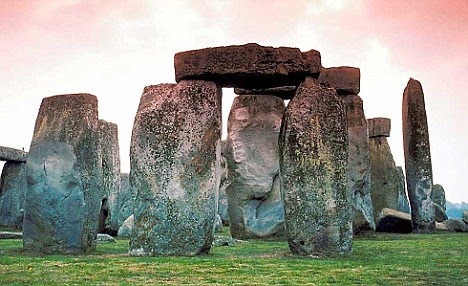
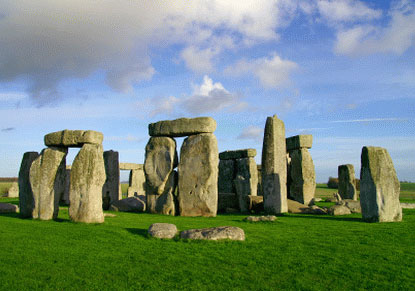
The great and ancient stone circle of Stonehenge is one of the great wonders of the world and has been awarded World Heritage Status. Why it was built is a mystery, it has been a pagan place of worship, an astronomical clock and a Bronze age burial ground. Its origins date back almost 5,000 years. Decide for yourself while you discover this unique monument.

Board our luxury coach for a direct Express service to Stonehenge. On arrival our driver will take you onto the site, where you can enjoy the stones at your leisure with a fascinating audio-guide tour, in the language of your choice.

Languages on the Audio Guide: English, Italian, Swedish, Russian, German, Mandarin, Spanish, Japanese, French, Dutch.


DAYS OF OPERATION

Days of operation: Tuesday, Thursday and Saturday
Tour Starts: 12.15pm, The Original Tour Visitors Centre, Trafalgar Square
Tour Finishes: 6.30 pm

Adults: £29.00 Children (3-16): £26.00
Seniors (60+)/Students (with ID): £28.00

To book this tour – click here

>WHO BUILT IT?

Stonehenge is the ultimate expression of the Spiritual, Artistic, Cultural and Technical understanding of the Peoples and Cultures that collaborated on its building.

Scholars can argue whether these were the ancient Hyperborean’s, the people later to become known as the Picts, the Welsh and indigenous ancient Britons, Pre Celtic Proto-Druids. Latter Bronze / Early Iron, Beaker Age people.

But to us they are simply the Ancestors. The very Giants (Metaphorically speaking) on whose shoulders we sit. The founders of our nation. Who by their exploits put the Might in this once green and pleasant land. The isle of the Mighty.

WHY DID THEY BUILD IT?

Based on what must have been, hundreds of years of observations, Stonehenge’s Primary function was that of a great Solar clock. A means to map out direction and seasonal cycles. A devise to tell with some certainty when to plant, when your very survival was dependent on getting it right.

Later alignments and refinements where incorporated over hundreds of years and it became a gathering point and a place of worship. A place to celebrate the full round of life and to honour the dead.

It was built to map out, and to stand the test, of time. Early mans compass and watch, interpreted by the ‘Priest Caste’, the Wise, from which we get the word Wizard.

A place of Magic to map out also the ‘turning of the wheel’ and the renewal of the Sun and the cycle of death and rebirth.

A Temple and Testament to our Ancestors ingenuity, Philosophy and enduring belief structure. A belief structure shared by many practicing Pagans and Druids to this very day…

WHEN WAS IT BUILT?

Carbon dating places the building of Stonehenge between four and a half and four thousand years ago, a time of a harsh climatic downturn.

A time of great change, a time when agriculture was in its infancy, a time necessitating the accurate marking and keeping of time ,made possible from the observations of the relationship between the sacred land, and Earth mother and the ‘Gods’ of the Heavens and the Sky.

It must be remembered that Stonehenge was not built overnight and was the culmination of hundreds (if not thousands) of years of observations.

The final ‘build’ of the final ‘Phase’ of Stonehenge could have been as long ago as four thousand years ago, but who is to say it was ever completed or what the future holds for this once proud and majestic Temple.

WHAT ELSE WAS GOING ON IN THE REGION?

People from North, South, East and West had been building special places, a great variety of which survive in Wiltshire to this day, marking this as a very significant place within an island littered with the special and the sacred.

Clearly the Ancestors were able to solve complex problems, create amazing designs and execute them in Stone with great precision using simple tools.

They could only achieve this by managing people and resources effectively and co-operating with others not only on a local level but sometimes between people hundreds of miles apart.

The simple logistics, (even with tacit support only) of the ‘tribes’ to bring the stone over such great distances would need an amount of co-operation between what would normally be seen as ‘warring factions’ and would be seem to show either a hierarchy hitherto unknown or lost in the mists of time, or a strength of purpose and unity the likes of which we may only imagine…..

WHAT IS THE THEORETICAL BASIS FOR YOUR INTERPRETATION?

Our sources are more widely inclusive than that of any single scientific discipline. We follow developments in Archaeology, Anthropology, Climate Science etc, all of which contribute greatly to the evidence pool.

In addition to these sources we are accepting of the concept that some ideas from the period of the Stonehenge Ancestors may have survived the transition into the Iron-age and beyond. So we study the folk-lore and legends and the Legal systems of Britain and Ireland to gain greater insight into the values and beliefs, some of which may reflect earlier traditions…..

WHAT IS THE SIGNIFICANCE OF THE SITE NOW?

To us Stonehenge is a living, working Temple. A place of pilgrimage for many people of many different faiths and belief structures from across the world. A place to this day to mark the seasons and celebrate the Longest, Shortest and the Equal days at Solstice and Equinox. A place of great reverence and a place of Worship

A Cathedral in fact. One bereft of the ‘Saints Bones’ it was founded on ‘The Guardians’ taken from Aubrey Hole Seven

When they are returned it will be like re-consecrating the cathedral, albeit a Cathedral in need of some repair but a Cathedral and living, working Temple nonetheless …….

WHO SHOULD HAVE ACCESS TO IT?

Pilgrims, visitors, tourists, in short the General Public.

The people of Britain especially believe it is their ‘right’ to walk among the stones as they do at nearby Avebury – also in the World Heritage Site.

Free and Open access must be the goal.

You cannot wrap it in cotton wool in the name of preservation nor should you preserve it circa 1950’s. It is a living, working Temple and should be treated as such.

WHAT SHOULD THE FUTURE BE?

We support the Principle of Archaeology and further excavations taking place at Stonehenge and other similar sites and have no desire to stop this study. In fact, we have a good relationship with several of the Leading Archaeologists currently investigating Stonehenge and the surrounding Sacred Landscape and look forward to their discoveries

A serious clash of Cultures comes however with the retention of the Ancient Dead by the scientific community.

Currently we are campaigning for the return of the Ancient Human Remains, taken from Aubrey Hole Seven. The scientific community wishing to retain them for re-testing. We on the other hand wishing them to be re-buried. It is a matter of common decency, Let those we lay to rest, stay at rest as we see it.

One supported by members of all the major faiths and those who have no faith at all. The A-Z of religion signing our petition everyone from Anglican to Zoroastrian.

We don’t view Archaeologists as ‘Grave Robbers’ so long as they don’t behave like them ……

WHAT CONSERVATION PLAN FOR THE FUTURE?

Stonehenge should not be seen in isolation nor viewed as it is now. Likened to a snared animal with ropes, electric and barbed wire fences around it.

It should be accessed ‘on foot’ and viewed in context with the sacred landscape. Roads and visitors facilities should be at a discreet distance.

Long term I personally can see no better legacy to leave to our future generations yet to come that to rebuild it, to its one true and former glory.

Re-erect the stones (and put the roof on) and by that I mean replace the Lintels

A great visionary project for a once Great and Mighty Nation …..

>THE origins and purpose of Stonehenge have always been shrouded in mystery and now the ancient monument has made it on to a list of things Britons find most confusing.
‘Why and how Stonehenge was built’ came 28th in a survey of what people think are the most confusing things – and it wasn’t the only one on the list for Wiltshire, with crop circles coming in at 35th and Swindon’s Magic Roundabout at number 48.
The survey, which polled 4,979 people between the ages of 16 and 65, placed foreign call centres, algebra, what women see in Russell Brand and why Cheryl Cole is still with her husband were named as the top four biggest confusions in Britain.
Birmingham’s Spaghetti Junction ended up 37th in the survey survey, conducted by Confused.com.

>

THE planned visitor centre for Stonehenge has received a £10m boost from the Government.

Stonehenge

The move has been confirmed today by the Secretary of State for Culture, Media and Sport, Ben Bradshaw.

Mr Bradshaw said:‪ “Stonehenge is one of our best known historic attractions, but facilities for visitors are below par.

“This will mean Stonehenge will be ready to cope with all the extra visitors expected because of the Olympics.

“The capital investment announced today means that our most iconic World Heritage Site will finally be able to welcome visitors in a way that is fitting to its international importance.”

Welcoming the announcement, Baroness Andrews, Chair of English Heritage, said: “English Heritage is delighted at this financial commitment from the Government to secure the future of Stonehenge. “Thanks to this investment, Stonehenge will finally have a setting which is worthy of its significance.”

>

ANOTHER stone circle has been discovered just a mile away from Stonehenge.

The find, on the west bank of the River Avon, has been named Bluestonehenge after the colour of the 25 Welsh stones from which it was formed.

The discovery was made during the Stonehenge Riverside Project, in which teams from British universities led by Professor Mike Parker Pearson from the University of Sheffield are studying the area around the famous monument.

The stone circle is 10 meters in diameter and surrounded by a ditch and external bank.

Although the stones at the site of the new discovery were removed thousands of years ago, the holes remain and show it was a circle of bluestones brought from the Preseli Mountains in Wales.

Like the stones that make up Stonehenge it appears they were dragged 150 miles 5,000 years ago and put up in a circle.

Archaeologists revealed the builders of the stone circle used deer antlers as pickaxes and radio carbon dating is being carried out to give more precise dates.

Experts also believe the stones from Bluestonehenge were removed by Neolithic people, and possibly dragged along the route of the Avenue to Stonehenge, to be incorporated within its major rebuilding in around 2,500 BC.

Director of the project, Prof Pearson said: “It could be that Bluestonehenge was where the dead began their final journey to Stonehenge.

“Not many people know that Stonehenge was Britain´s largest burial ground at that time. Maybe the bluestone circle is where people were cremated before their ashes were buried at Stonehenge itself.”

Dr Josh Pollard, co-director from the University of Bristol added: “This is an incredible discovery. The newly discovered circle and henge should be considered an integral part of Stonehenge rather than a separate monument, and it offers tremendous insight into the history of its famous neighbour. Its landscape location demonstrates once again the importance of the River Avon in Neolithic funerary rites and ceremonies.”

« Previous Page