>
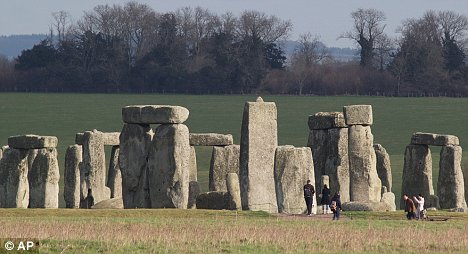
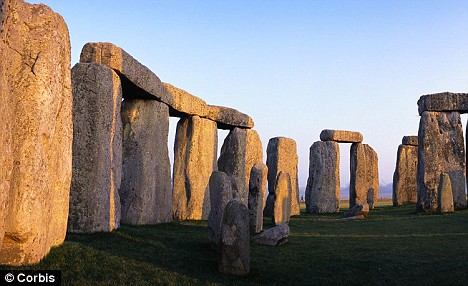
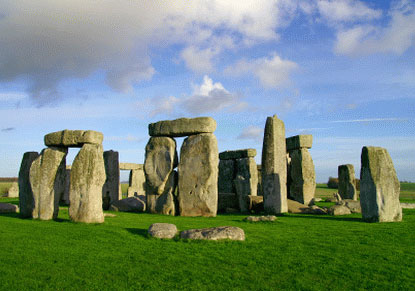
Stonehenge has been voted as the UK’s top wonder in a new list of the country’s unmissable attractions.

The ancient site beat competition from other notable UK landmarks including Snowdonia and Edinburgh Castle to top the survey of the ‘Seven Wonders of Britain’.
The poll, by holiday firm cottages4you, asked 1,000 holidaymakers what made a great British break.
It found that as a nation we are lovers of Britain’s natural beauty as we shun modern-made attractions for natural and historic sights, with prehistoric monument Stonehenge topping the list.

The survey also found that while a third of 18-24-year-olds said fish and chips on the pier was the most memorable British holiday activity, over 35-year-olds were wowed by the UK’s countryside and scenery.

Apart from Stonehenge, the list includes Hadrian’s Wall, the White Cliffs of Dover, Loch Ness and Cheddar Gorge.

There are so many fantastic places to visit in the UK from mountains and beaches to historic monuments and stately homes, I’m sure those taking their first UK holiday for a few years will be spoilt for choice.’
Yet despite the British love affair with holidaying at home (60 per cent have already taken one break in the UK this year) we are still not so adventurous when it comes to exploring our green and pleasant land – London and the Lake District were voted as the most popular destinations

The ‘Seven Wonders of Britain’ are:
Stonehenge
Hadrian’s Wall
The White Cliffs of Dover
Loch Ness
Snowdonia
Edinburgh Castle
Cheddar Gorge

>

A new tour has been launched by the sightseeing coach tour company Evan Evans, based in London. Itinerary as follows;
Afternoon Express Coach Service from London to Stonehenge, including admission into Stonehenge.

Included Highlights•Express Service to Stonehenge by luxury Motor-coach
•Entrance to Stonehenge included
•Information Fact Sheet and Audio Guide
•Extended Visit

The great and ancient stone circle of Stonehenge is one of the great wonders of the world and has been awarded World Heritage Status. Why it was built is a mystery, it has been a pagan place of worship, an astronomical clock and a Bronze age burial ground. Its origins date back almost 5,000 years. Decide for yourself while you discover this unique monument.

Board our luxury coach for a direct Express service to Stonehenge. On arrival our driver will take you onto the site, where you can enjoy the stones at your leisure with a fascinating audio-guide tour, in the language of your choice.

Languages on the Audio Guide: English, Italian, Swedish, Russian, German, Mandarin, Spanish, Japanese, French, Dutch.


DAYS OF OPERATION

Days of operation: Tuesday, Thursday and Saturday
Tour Starts: 12.15pm, The Original Tour Visitors Centre, Trafalgar Square
Tour Finishes: 6.30 pm

Adults: £29.00 Children (3-16): £26.00
Seniors (60+)/Students (with ID): £28.00

To book this tour – click here

>The Heritage Lottery Fund (HLF) has given its funding green light to English
Heritage’s proposals to improve the setting and visitor facilities of Stonehenge, it
was announced today (19th November).
The HLF first-round pass* means that English Heritage can now progress to the
second stage of the HLF application process. As part of the process, English
Heritage has up to two years to finalise its proposals for the £4.95m of HLF support
that they are seeking for their £27.5m project.
Stonehenge receives over 40,000 education visitors every year from both the UK and
around the world. The existing visitor facilities at Stonehenge have no provision for
education and interpretation, with all education activities currently being conducted
outdoors.
A new, multi-functional education area at the proposed new visitor centre at Airman’s
Corner will provide space and facilities for school groups. Community groups and
family activities will also be catered for.
A new, dedicated exhibition and interpretation space will also, for the first time,
provide a much needed introduction to Stonehenge, helping visitors to better
understand the monument and its setting.
Loraine Knowles, Stonehenge Project Director at English Heritage, said: “This is
fantastic news. We are delighted that the Heritage Lottery Fund supports the

project. The project has immense potential for education and training, as well as at
last providing a visitor experience fitting for the country’s most famous monument.”
Carole Souter, Chief Executive of the Heritage Lottery Fund, said: “Stonehenge is
one of the UK’s most important archaeological landmarks and a place that has
intrigued and delighted people for thousands of years. The Heritage Lottery Fund’s
initial support for these plans to better protect and present the site reflects our
strong belief that Stonehenge is an iconic part of our heritage.”

Notes to Editors:
*A first-round pass means the project meets the HLF criteria for funding and they believe
it has potential to deliver high-quality benefits and value for Lottery money. The application
was in competition with other supportable projects, so a first-round pass is an endorsement
of outline proposals.
However, a first-round pass does not guarantee the applicant will receive a grant as the
second-round application will still be in competition for funding, and no money is set aside
at this stage. Having been awarded a first-round pass, the project now has up to two years
to submit fully developed proposals to compete for a firm award.
Using money raised through the National Lottery, the Heritage Lottery Fund (HLF) sustains
and transforms a wide range of heritage for present and future generations to take part in,
learn from and enjoy. From museums, parks and historic places to archaeology, natural
environment and cultural traditions, we invest in every part of our diverse heritage. HLF has
supported more than 28,800 projects, allocating over £4.3billion across the UK.

>

The best way to visit Stonehenge is to go after hours (with special permission from the English Heritage) These special access tours are only provided by one company (see below) If you want a scheduled sightseeeing tour from London check this company out (The Stoneheneg Tour Company)
However, should you require a private tour of Stonehenge ‘beyond the fences’ please do not hesitate to contact me –

2009 / 2010 Stonehenge Inner Circle Tours- Including the City of Bath and Lacock Village
Go beyond the fences!

We have arranged with English Heritage for you to experience a unique guided visit to this ancient sacred site – beyond the fences and after the crowds have gone home. Walk amongst the stones and experience the magical atmosphere within the inner circle.

Highlights:

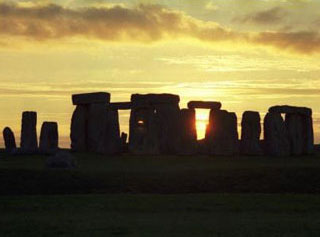
Private viewing of Stonehenge at sunset or sunrise
Enter the stone circle and touch the stones
Visit Lacock, a delightful Saxon village
See where Harry Potter and Pride and Prejudice were filmed
Meal stop in a 13th century inn (food/drinks not included)
Visit Bath – free time to shop and explore
Entrance to the Roman Baths and Pump Room included

“A Unique Experience!”

For those of you who have not visited this sacred site, we should mention that the complex is roped off. Visitors observe the stones from a distance and are not permitted within the temple complex……….our special access tours allow you to be amongst the stones and to actually touch them. Your guide will bring to life its many myths, legends and rich and fascinating history. All tours depart central London at 6.00am and return mid-day leaving you time to make the most of your stay in London.

The Tour:

After your pick-up directly from or near to your hotel, we drive to Bath to visit the Roman Baths and Pump Room. In the late afternoon we visit Lacock for an early evening supper in a 13th century inn, before driving to Stonehenge. As the sun begins to set, we enter the stone circle (which is normally roped off to the public) for a unique private viewing. The most dramatic and atmospheric way of visiting Stonehenge.

On selected days the tour operates in reverse, beginning with a private viewing of Stonehenge before it opens to the public in the morning, so we see the stones in the eerie morning light. This is followed by our visits to Lacock and Bath.

STONEHENGE – PRIVATE VIEWING AT SUNSET AND TOUCH THE STONES
Built nearly 5,000 years ago, Stonehenge is the most popular prehistoric monument in the world. Most visitors to the site are not allowed direct access to the stones. With Premium Tours you get that access, with a private viewing of the mysterious monoliths. We will enter the stone circle itself and stand beside the mighty Sarsen rocks towering above us. Our guide will explain the history of this ancient site, pointing out the altar, slaughter and heel stones, above which the sun rises dramatically on the summer solstice. There will be time to enjoy the peace, away from the crowds, as we experience Stonehenge at its most mystical and atmospheric best. Not to be missed!

LACOCK

Lacock is a little known, picturesque village dating back to the Saxon era. Many of the beautiful buildings originally formed part of an extensive monastic complex and are now owned by The National Trust. So pretty is the village that it has provided the setting for many movies and television dramas including Jane Austens Pride and Prejudice and more recently Harry Potter and the Philosophers Stone. We will take a delightful walk before we enjoy an early evening supper* (or breakfast for morning tours*) in The George, a vintage English pub built in 1361.
*food/drink not included

BATH
Bath, a world heritage site, is a beautiful Georgian city with delightful crescents, terraces and architecture. There will be plenty of time to visit Bath Abbey, or to shop and explore. Your guide will also conduct an optional walking tour to show you where Charles Dickens lived and worked as a young man, and a give you a chance to sample some delicious cheeses fresh from the local dairy farms. Then we will enter the magnificent Roman Baths, where over one million litres of boiling water still burst free from the hot springs everyday.

The Stonehenge Tour Company – click here

>
Thought I’d share this Stonehenge Joke with you……..

It was an early attempt to precisely map positions of stars and planets to facilitate better horoscope writing.

A few people drank too many cups of espresso one morning, had to work it off.

It was a technological innovation from a people way ahead of their time, as explained by the little-known inscription: “Someday we will be able to use this to receive something called ‘satellite TV’ for free.”

And if you have time, read further………….

Stonehenge, Merlin, and gallows humour
Stories that `explain’ Stonehenge have been told since the Middle Ages.

People have tried to explain Stonehenge for centuries – certainly since the Middle Ages. The monument probably takes its name from Old English stan hengen – `the stone hanging (- places)’, suggesting it could perhaps have been an Anglo-Saxon execution site. But no excavation there has located one of those pathetic, contorted burials that so graphically illustrate early medieval royal control (see BA, February). Although Domesday Book shows that Stonehenge was on a royal estate, it was not the meeting-place of the local hundred court. Nor is it close to a boundary, and although roads went close by, it was not at a crossroads. So it was probably not an Anglo-Saxon `killing-place’; but people who saw in the stone trilithons a similarity to the two-post and crossbeam gallows typical of the period may have given the monument its macabre name – England’s first example of gallows humour?

Any joke was lost on Henry of Huntingdon, the author of the work in which Stonehenge is first recorded, for the early copies of his book spelt it stanenges, perhaps because he took the name from an h-dropping Wiltshire native. The section of his History of the English that mentions Stonehenge was issued c. 1130, and it is quite likely that Henry had seen Stonehenge, for he gives an eye-witness account: `stones of remarkable size are raised up like gates, in such a way that gates seem to be placed on top of gates’ – a graphic description of how the lintels of the outer sarsen circle are overtopped by the central trilithons.

Henry regarded the monument as one of England’s marvels: `no-one can work out how the stones were so skilfully lifted up to such a height, or why they were erected there’. He was soon to be given an explanation, however. Geoffrey of Monmouth’s History of the Kings of Britain of c 1136 claimed that Merlin had the stones brought from Ireland and re-erected, using his `wondrous art’ at the behest of his British patron. Twelfth century writers understood patronage, and their Histories reflected contemporary tensions by offering legitimisation variously to Normans, English, or Welsh.

Henry accepted Geoffrey’s story, but many others since have not, doubting the existence of the `old book’ that he claimed was his main source. He must have had some source other than Henry, however, as he put the `h’ in his spelling of Stonehenge. But what he says about the monument does not suggest that he had ever seen it; he seems to have thought it a single ring, and makes no mention of the lintel-stones. If he had known the area better, he would not have described Amesbury, beside the Avon, as a mons (`mountain’).

If Geoffrey did not know the area, how much trust can be placed in his stories about the stones being moved? The archaeologist Stuart Piggott argued that the story of the transfer of the stones was a folk-memory of the bluestones being brought from Wales. Folklore scholars say that these stories were common-place, and that Geoffrey could have heard them told about other stone rows and circles, and done a bit of transferring of his own.

Stories to `explain’ landscape features were probably told often enough; `the tendency of fiction to gather round places and place-names’, as the historian Patrick Sims-Williams wrote in a study of their use (or uselessness) in understanding the Anglo-Saxon settlement. One area for which much has been claimed is Uffington, where the long barrow Wayland’s Smithy is recorded in a 10th century charter, and where other names around the White Horse, such as the Ring Pit, may seek to locate the exploits of Wayland, the mythical smith. Barrows, recognised as ancient burial places, were particularly likely to acquire heroic names. But in general the boundary marks in Anglo-Saxon charters are boringly prosaic. The circuit of an estate close to Stonehenge went `from the Avon to the old camp ditch . . . to the track . . . to the boundary that Wulfsige laid down’, recognising previous use of the land with its reference to an Iron Age or Roman enclosure but not giving it a fabulous origin. Ownership rights are stressed by the reference to Wulfsige. Heroes, giants and gods are allowed an occasional place, but overall the landscape is viewed as parcels of property.

Local people may have told stories about Stonehenge, but the monument’s name does not suggest anything but some grim tale about an execution – or it may just be a nickname. It can only be said that, from archaeological evidence, medieval people seem not in fact to have used the place at all. It was what Henry of Huntingdon said, a marvel, but it had no role to play in the medieval landscape of managed, demarcated downland, where the king’s sheep grazed under the watchful eyes of their shepherds.

One of these shepherds may have spoken to Henry of Huntingdon. When Henry asked for an explanation of the monument, the shepherd did not reply with a story about Merlin and the rest, but gave the answer that summed up local knowledge and has not changed since – `I don’t know.’

>Superb interactive ‘full screen’ panoramic image of Stonehenge.

Take a spin from within the famous stone circle. This stunning panoramic was created on a beautiful crisp morning, just days before the Timewatch dig. Best viewed full-screen, link below.

Drag the picture with the mouse or use the cursor keys to rotate the view – use Shift and Control to zoom in and out.

Can you spot the magical bluestones, transported 250km from Wales by our Neolithic ancestors? Professors Darvill and Wainwright believe they hold the key to unlocking one of archaeology’s biggest mysteries – the purpose of Stonehenge.

Click here – http://www.bbc.co.uk/history/programmes/stonehenge/panorama.shtml

>

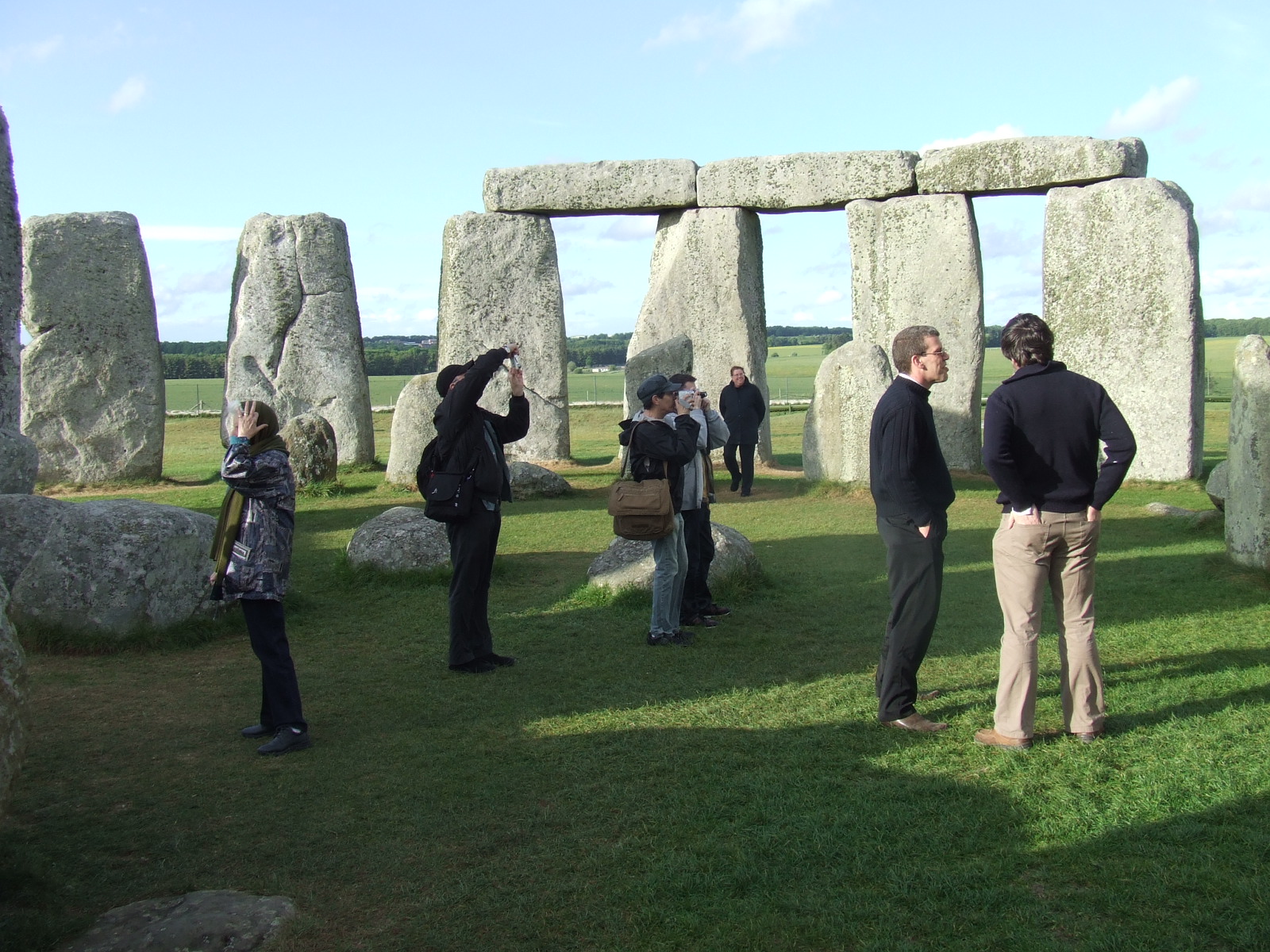
Just completed a great tour of Stonehenge with a fantastic group of travellers (see image) We did a special access tour – beyond the fences after the crowds have gone home (the best way by far) Today we did my classic itinerary, see below.
Anyone eklse want to join me ? sightseeing@o2.co.uk

Visit the beautiful medieval city of Salisbury and explore the magnificent Cathedral crowned with the tallest spire in Britain and built by medieval craftsmen over 750 years ago. See one of the few surviving original texts of the Magna Carta and wander around the picturesque streets of this ancient market town.

Afterwards,we visit Old Sarum Castle (Old Salisbury), one of Britain’s earliest settlements. First occupied over 5000 years ago, its been occupied and defended in turn by the Romans, Saxons and Normans and it was the site of the original city and cathedral. Explore the ruins of this once thriving city in their ancient and beautiful setting, and enjoy spectacular views over the sweeping landscape of Salisbury Plain.
A highlight of the day is a hearty lunch in a cosy country pub nestling in the beautiful Woodford Valley. Maybe sample the local ales before continuing our scenic drive to the awe – inspiring prehistoric monument of Stonehenge – Click here for /2009 Special Access Dates. Hear about the many myths, legends and mysteries of this World Heritage Site, built over 5000 years ago, and take time to reflect upon its powerful, mysterious presence. As we meander through the the countryside to Avebury, we pass famous white horses carved into the chalk hillsides and picturesque, tucked away villages. We explore the mysterious phenomena of crop circles and take a closer look at any which may be in the area (seasonal). Avebury, the largest stone circle in Britain and the product of over 500 years of effort by Neolithic man. Enjoy a walking tour of this ancient site and try your hand at the ancient art of dowsing. Prepare to be amazed !There’s also time to explore the
charming village of Avebury with its thatched cottages, antiques and village church – and maybe enjoy a cream tea.We also see Silbury Hill, Europe’s largest prehistoric man-made monument yet forever a mystery, before returning back to the present – London.

A truly legendary day out in the ancient Kingdom of Wessex !

I operate private tours all year round – please contact me if you want a ‘proper’ tour of Stonehenge.

>
This is not an advert! (search online to buy a copy – Lulu.com or Amazon will sell it. I have just finished this book and can highly recommend it.
Even though the ancient Druids would seem as much an enigma today as they have ever been, this book very much sets the record straight. By firmly placing the Druids within the ancient Celtic socio-religious framework to which they so evidently belonged and, further, by comparing the pagan practices of the Celts with the other inhabitants of ancient Indo-Europe, much light is shed on the curious practices of this ancient priesthood.
This is very much a book of comparisons. By studying the pagan practices found elsewhere in ancient Europe, such as those of ancient Greece and Rome, ancient Persia and Germany, we find that in many respects the Druids were not that original but shared a common heritage, that of their Indo-European forebears. This book therefore is just as much about the ancient Indo-Europeans, formerly known as the Aryans, as it is about the Druids and the other inhabitants of pagan Europe.
The approach taken in this book reveals to us the true significance of the mighty oak of the Druids, the meaning of the elaborate ceremony of the cutting of the mistletoe detailed by Pliny, and even the original meaning of the Eleusinian Mysteries of ancient Greece.
Also revealed in this book are the mythological origins of the custom of the contention to become Rex Nemorensis at Aricia in ancient Italy, the original meaning of the swastika, and the identity of the legendary Soma plant of the Vedas.

>

The designs were unveiled as a planning application for the visitor centre on the Airman’s Corner plot – along with an application to close the A344 that runs next to the Stones – was made to Wiltshire Council.

The scheme features a perforated undulating canopy, supported by a forest of thin columns, which sits ‘lightly in the landscape above a pair of self-contained pods’ on a limestone pavement. The transparent, glazed box will house a shop and a café while the other solid ‘pod’ – clad in locally sourced chestnut wood – will be home to the exhibition space (click here to see early sketches).

DCM landed the contest to design the new facility back in February – effectively for a second time following the demise of its original £65 million proposals in 2007 – seeing off Bennetts Associates and Edward Cullinan Architects in the process.

Stephen Quinlan, director of architects’ Denton Corker Marshall, said: ‘Designing a visitor centre at a site of such importance is both a major challenge and a serious responsibility. Our proposal, above all, seeks not to compromise the solidity and timelessness of the Stones, but to satisfy the brief with a design which is universally accessible, environmentally sensitive, and at the same time appears almost transitory in nature.

He added: ‘If once back at home, a visitor can remember their visit to the stones but can’t remember the visitor centre they passed through on the way, we will be happy.

‘The biggest challenge has been the centre’s setting on open grassland. There is nowhere to hide unlike the previous scheme which was camouflaged.’

Speaking to the AJ, Quinlan admitted the practice, which has a six-strong team working on the scheme, almost didn’t enter the second contest. However the London-based director decided to have another crack partly to counter accusations of ‘sour grapes’ following the demise of the practice’s original, sub-terranean proposals [on a different plot to the North East of the Stones].

The long-running visitor centre project has been rumbling since 1986 and is set to be funded by English Heritage (EH), Highways Agency, Department for Culture, Media and Sport, the Department for Transport and the Heritage Lottery Fund (HLF).

EH told the AJ that it had factored in the possibility of a public enquiry into its timescale but still hopes the centre will be open in time for London’s Olympic Games in 2012. The total budget for the scheme, including roadworks, is £27.5 million.

>

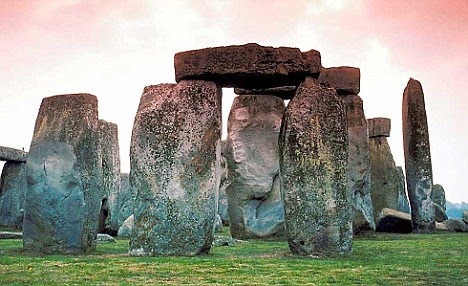
Discovered this old image of Stonehenge in my archive and had to share it with you. I also managed to find this very old article about saving Stonehenge.

An appeal

This is the text of the historic appeal launched by the Stonehenge Protection Committee and the National Trust in the 1920s to save Stonehenge. Please note that this is not an ongoing appeal. The Stonehenge Alliance will be very pleased to hear from you if you’d like to make a donation towards their current campaign to protect the monument. Click here for more details.

Note: We have added the bold emphasis to draw attention to inconsistencies between the National Trust’s highly commendable attitude 80 years ago and the British government’s determination to bulldoze a road through the World Heritage Site today. We have added the strike through emphasis to stop people accidentally donating money by mistake.

——————————————————————————–

OVER £14,000 has been raised in three months for the Protection of Stonehenge. More is urgently needed.

In the first week of August 1927 the following letter appeared in the leading London and provincial newspapers. The signature of Mr. Lloyd George, who was travelling, arrived after the letter had been published:

SIR,

A Stonehenge Protection Committee has been formed, the object of which is indicated by its title. We desire earnestly to support its appeal to the public for funds.

It is now nine years since Sir Cecil Chubb made the nation the magnificent present of the Stonehenge circle itself; and the great stones are safely in the charge of the Commissioners of Works. The land of the Plain around them, however, is still private property. So long as it remains in private hands, there is an obvious danger that the setting of Stonehenge may be ruined and the stones dwarfed by the erection of unsightly buildings on the Plain.

Any visitor to Stonehenge may at this moment form a notion as to what, if steps are not at once taken, may happen to the Stonehenge section of the Plain. During the war the military authorities found it necessary to erect an aerodrome and rows of huts very near the circle. These have reverted to the owner of the land, but they are still standing. In recent months an enterprising restaurateur has built a bungalow, the Stonehenge Cafe, within hail of the stones, though happily just out of sight of them. The conditions of modern transport make it extremely likely that this structure, if no preven- tive measures be adopted, will be the first of many, and that the monoliths will in time be surrounded by all the accessories of a popular holiday resort. The Stonehenge ring, as every British child has learnt to picture it from his earliest years, will no longer exist.

The solitude of Stonehenge should be restored, and precautions taken to ensure that our posterity will see it against the sky in the lonely majesty before which our ancestors have stood in awe throughout all our recorded history.

We are glad to be able to state that options have just been secured for the purchase of an area of the Plain which includes the whole of what may be called “the Stonehenge sky-line.” Should the purchases be effected, the Air Force buildings will be removed, further building will be prevented, and the valuable archeological remains of the site permanently protected from the plough.

The land purchased will be placed under the guardianship of the National Trust; and part at least of the revenues derived from rents for grazing, etc., will it is hoped, be available for the further protection of the archaeological treasures and amenities of Salisbury Plain.

The total area under consideration is 1,444 acres; the sum aimed at is about £35,000. The sum is small compared with several amounts recently raised for the preservation of great national monuments; and here we have a monument unique in its fame and significance. A substantial beginning has already been made; and a first sub- scription. list is appended to this letter. The need is urgent. Projects are already in existence which would involve extensive building and the laying of water mains; and one important option to purchase expires at the end of August. Cheques should be made out to the National Trust (Stonehenge Fund), and crossed Barclay�s Bank, and sent to the Secretary, 7 Buckingham Palace Gardens, S.W.1.

Yours faithfully,

STANLEY BALDWIN
J. RAMSAY MACDONALD
CRAWFORD & BALCARRES (President of the Society of Antiquaries)
GREY OF FALLODON (Vice-President of the National Trust)
RADNOR (Lord-Lieutenant of Wiltshire)

As a result of this appeal, and the enthusiastic labour of a Committee including representatives of the National Trust, the Wiltshire Archaeological Society, the Society of Antiquaries, acting with the cordial approval of the Office of Works, half the area in question is already secure. The position may be briefly explained.

THE THREE PLOTS

Short options were, in August, secured by the Committee on three plots which include areas Of 389 acres, 404 acres, and 650 acres respectively.

PLOT A

This plot is that to the south and south-east of the stones, which has for years been defaced by the derelict aerodromes and hutments. The cost of this was £8,000. The money was secured before the end of October. PLOT A IS SECURE IN THE NATIONAL POSSESSION FOR EVER, AND THE DEMOLITION OF THE BUILDINGS HAS ALREADY BEGUN.

PLOT B

This part of the Stonehenge area lies towards Amesbury, and the threat of building from that quarter is serious. The purchase price is £8,ooo. OWING TO A NOBLE DONATION OF £5,000 BY AN ANONYMOUS LADY WHO HAD ALREADY SUBSCRIBED £1,000, AND A TIMELY GIFT OF £500 FROM THE GOLDSMITHS� COMPANY, THE PURCHASE OF THIS PLOT HAS ALSO BEEN COMPLETED.

PLOT C

There remains, therefore, the third plot: 650 acres to the north of the Devizes Road. This tract, which includes the southward-facing road frontage immediately opposite the stones, is in obvious and immediate danger of building, and the price asked is £16,000. UNLESS IT IS SAVED THE WHOLE WORK OF THE COMMITTEE AND THE SUBSCRIBERS WILL HAVE BEEN IN VAIN) AND STONEHENGE WILL HAVE A SOLITUDE TO THE SOUTH AND A STREET TO THE NORTH.

THE HEART OF ENGLAND

That the leaders of all political parties should unite in appealing for such a cause is not surprising. Salisbury Plain is the greatest of our archeological sites, and Stonehenge, a mysterious legacy from the dim beginnings of our civilization many centuries before the Romans came, is the heart of the Plain. Causes-and good causes- are appealed for every day, and it is evident that not everything worth “saving” can be “saved.” But we have not two Stonehenges, and our generation will be vilified by all posterity if we allow the surroundings of this monument, the frontispiece to English history, to be ruined beyond repair.