Uncategorized


Stonehenge is one of the most speculated about prehistoric landmarks in the world and it is located right here in Britain.

Close to quaint countryside Wiltshire holiday cottages, it is easy to visit and many often base whole holidays around this most famed of attractions. With English Heritage having recently opened a brand new visitor centre, as reported in this previous article on our sister site, curiosity over Stonehenge has never been higher.

Following on from this article on Stonehenge we have asked the experts for answers to some of Stonehenge’s biggest questions.

Why is Stonehenge so important?

As mentioned earlier, English Heritage recently opened a new visitor centre. The centre has plenty of information about the site and the Druids that not only answer some of the questions visitors might have about the monument, but also provoke new questions. Their recently opened Neolithic Houses show reconstructions of how they think the people that built Stonehenge lived, provoking thoughts on the people of the times themselves. To read more about these fascinating houses see this VisitWiltshire article.

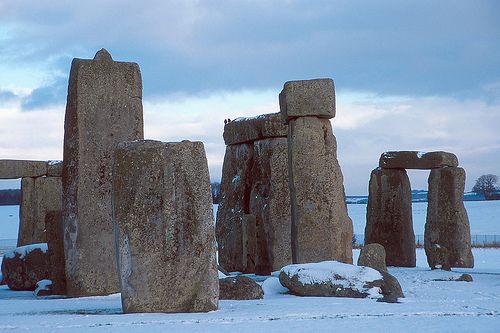
Stonehenge Neolithic Houses

Here English Heritage themselves tell us a bit about why they think Stonehenge is so important.

• “Stonehenge is the most architecturally sophisticated and only surviving lintelled prehistoric stone circle in the world.

It is a unique prehistoric monument that forms part of an extraordinary ancient landscape so rich and varied that it was designated a World Heritage Site in 1986.

It does not stand in isolation, but forms part of a remarkable archaeological landscape of early Neolithic, late Neolithic and early Bronze Age monuments. This landscape is a vast source of information about the ceremonial and funerary practices of Neolithic and Bronze Age people and helps to shed light on how prehistoric society was organised.”

– English Heritage

For more information on Stonehenge from English Heritage, see the StonehengeEH Facebook page where they regularly post the latest news and views on this fascinating site.

Further to English Heritage, Stonehenge.co.uk acts as the ultimate guide to the historic site. From how it was built to visitor information and resources on other ancient sites in the area, the independent website is a great guide for planning a trip to the Wiltshire area. Here they shed some light on the historic structure.

• ‘The importance of Stonehenge rests with its longevity, unique position, but above all its enduring enigma. We shall never truly know its origins or the thoughts of those clever people who designed, built, embellished and maintained the site. Experts may come and go, but their delving and surmise may be no better than that of any other. Long may it last.’

– Stonehenge.co.uk

Why do you think people are still so intrigued by Stonehenge and its history?

VisitWiltshire have some fantastic current information of the Stonehenge site. Here is what they said about Wiltshire’s most famous landmark.

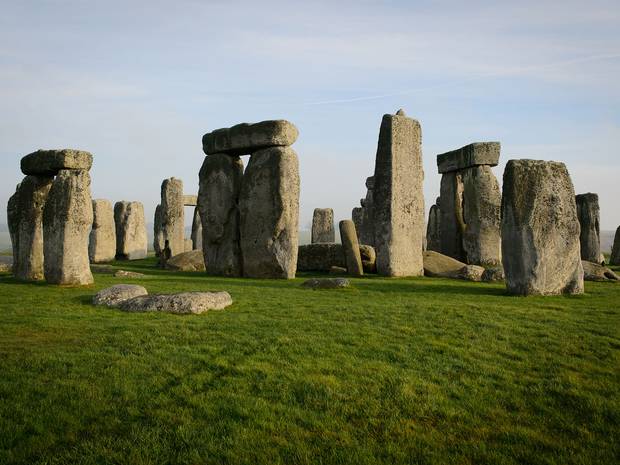
Stonehenge in Golden Light

• ‘We think the reason people are so intrigued by Stonehenge is because of the mystery that still surrounds it. There are so many different theories about how it was constructed and why it is where it is. Continuous archaeological discoveries in the area keep the mystery alive too as bits of the puzzle are slowly unveiled.’

– VisitWiltshire

When visiting the Wiltshire area and staying in English country holiday cottagesit is definitely worth going to VisitWiltshire’s website for local information on what to do and see.

Are there any guided tours of Stonehenge?

For those looking to take a tour of the area the options are endless – whether you want to go it alone with the information provided in this guide or use one of the reputable tour guides in the area, both are sure to make for an unforgettable experience of this magical landmark.

Stonehenge Guided Tours are fantastic Stonehenge tour experts and have been operating small group guided tours of Stonehenge since the early 1990s. They offer a highly personalised and professional service that is ideal for individuals, families and groups. Here is what they said about Stonehenge:

• ‘Stonehenge – Britain’s Best Historic Site Stonehenge is a prehistoric monument without parallel. Voted ‘Britain’s Best Historic Site’ and ‘UK’s top wonder’ in a list of the country’s unmissable attractions, the ancient site also topped a survey of the ‘Seven Wonders of Britain’. Part of an ancient landscape, Stonehenge is one of the most thought-provoking and keenly debated ancient monuments in the world.’

– Stonehenge Guided Tours

Are there other historical sites to see as well as Stonehenge?

If you want to explore further afield once you have visited Stonehenge to gain a greater understanding of the area and its relevance to the site, there are some great tour operators that provide some fantastic insights. The Stonehenge Tour company is operated by Salisbury Reds and they cover a wide area and have plenty to offer their guests by way of information and views of the magnificent local landscape.

The Stonehenge Tour

• ‘Stonehenge is a historical, famous landmark, over 5000 years old. It is truly magnificent and mysterious and many visitors are in awe of such a wondrous monument.

The tour is a unique way to experience Salisbury, Old Sarum and Stonehenge – tour bus visitors get priority upon arrival to Stonehenge and you don’t have to worry about booking a time slot. Our all-inclusive ticket includes Stonehenge admission and a cathedral donation.

There are fantastic views from the top deck as well as a knowledgeable commentary throughout the trip. Visitors can board the tour in the city centre at stop U in New Canal or from the rail station.’

– The Stonehenge Tour

What exactly are Druids?

In answer to this question we though it better to go to the people themselves and asked Aes Dana Grove or, as they are better known, the ‘Amesbury Stonehenge Druids’ if they could shed some light on their practices and tell us about their faith and traditions.

Stonehenge Druids

• “Druids are the priests of the native spiritual tradition ‘the old religion’ of the peoples who inhabited the islands of Britain and Ireland, spreading through much of Europe. It is increasingly understood, and within the Druid community acknowledged, to be of an older indigenous if ever-evolving religious tradition sourced within these islands.

As an ancient pagan religion, our belief is based on the reverential, sacred and honourable relationship between the people and the land. In its personal expression, it is the spiritual interaction between an individual and the spirits of nature, including those of landscape and ancestry, together with the continuities of spiritual, literary and cultural heritage.

Druids may be men or women, or any social class, and born to any race. In ancient times the Druids were an educated spiritual elite who coordinated resistance to expansion of the Roman empire into France and Britain and hence were outlawed under Roman law and vilified in some cases by this enemy who wrote many of the historical accounts.

In 2010 the Druids became once again a recognised religion in England and Wales ending nearly 2000 years of social exclusion.”

– Frank Somer, The Stonehenge Druids

You can find out more and see for yourself at www.stonehenge-druids.org.

Expert View: What is the most interesting question you have ever been asked about Stonehenge?

Kindly, Mike Parker Pearson of the Institute of Archaeology and a well-regarded English archaeologist specialist of Neolithic Britain provided us with his insight into the wonders of Stonehenge.

• “Ramilisonina, my colleague from Madagascar who I have worked with for many years, asked me in 1998 if I realized that Stonehenge was built for the ancestors. I laughed at first but it soon dawned on me that he had a really interesting insight. That led to the start of the Stonehenge Riverside Project 4 years later, and to a complete reinterpretation of Stonehenge.

Books of relevance are my paperback ‘Stonehenge’ published by Simon Schuster, and Marc Aronson’s ‘If Stones Could Speak’ (for younger readers) published by National Geographic. If you take a look at them, you’ll find plenty of information of interest to visitors.”

– Mike Parker Pearson

You can read more on Pearson’s views on the ancient site in his publications, ‘If Stones Could Speak: Unlocking the Secrets of Stonehenge’ and‘Stonehenge: Exploring the greatest Stone Age Mystery’.

Image Credits: Visit Wiltshire, English Heritage, VisitWiltshire/Paul Chambers, The Stonehenge Tour- Diana Jarvis, Aes Dana Grove

Article source: http://www.hideaways.co.uk/news/answers-to-stonehenge-s-biggest-questions

Hideaways offer a carefully chosen selection of english country cottages, country homes, farmhouses and apartments in rural and coastal settings and in historic towns and cities throughout the West Country, Wessex, the South East and the Heart of England: http://www.hideaways.co.uk/

Stonehenge Guided Tours


This recent article in the Independent Newspaper proves that joining a Stonehenge guided sightseeing tour from London is far easier, faster and much cheaper than attempting to use Britain’s complicated public transport network

Tourists left baffled by Britain’s ‘peculiar’ transport system

Foreign tourists trying to reach Stonehenge by public transport must put up with Stone Age speeds, a new report has found.  Barriers to Overseas Visitors’ Use of Public Transport”, commissioned by VisitBritain from Social Research Associates, slams the UK’s transport operators for baffling overseas visitors and dissuading them from venturing beyond London.Visit Stonehenge

Britain’s “peculiar” transport system makes access from London to some leading tourist attractions exasperating. The journey to Wiltshire’s ancient stone circle begins with South West Trains from London Waterloo to Salisbury. Next, tourists must take a six-minute walk towards the city centre, followed by a half-hour bus ride to Shrewton. “Here, a wait of up to an hour can occur, until a Connect2Wiltshire bus continues on a 20-minute journey to Stonehenge,” say the researchers. 

The 9.5-mile segment from Salisbury station to Stonehenge can take two hours, averaging below 5mph. The report calls it: “Public transport at its most fragmented and unhelpful.”

Many visitors are barely off the plane before their public transport problems begin. The Heathrow Express from the UK’s main gateway into the capital is described as “the most expensive airport connection anywhere”. The report say the operator “steadfastly refuses to provide any onward journey information on the train”.

A Heathrow Express spokesperson said: “Our on-board TV provides onward tube and taxi travel information which is supplemented by on-board announcements detailing the location of the taxi rank and London Underground stations at Paddington.”

The report also criticises UK train operators’ refusal to use any language other than English or Welsh on websites. In contrast, German Railways’ site offers nine languages, while French Railways provides English and German translations.

The report concludes: “While persisting with our peculiarly British way of doing things, we have to make the adverse impact on visitors as little as possible.” 

Baffling public transport has not dulled overseas visitors’ appetite for the UK. The first six months of this year set a new record for incoming tourism. On average, 90,000 visitors a day arrived in Britain between January and June – up eight per cent on 2013.

Full article here: http://www.independent.co.uk/travel/news-and-advice/tourists-left-baffled-by-britains-peculiar-transport-system-9669957.html

Be wise and book a guided sightseeing tour!

Stonehenge Guided Trips
The Stonehenge Tour Experts
http://www.StonehengeTours.com

Once again, we are offering a guided tours / transport from London to the Stonehenge Summer Solstice: Experience sunset or sunrise from within the inner circle. A magical experience – http://www.stonehengetours.com/summer-solstice-tour.htm

StonehengeNews's avatarStonehenge Stone Circle News and Information

English Heritage is pleased to be providing Managed Open Access to Stonehenge for the Summer Solstice on 20-21 June 2014. Please help us to create a peaceful occasion by taking personal responsibility and following the Conditions of Entry and guidelines set out on these pages. The full Conditions of Entry can also be downloaded from their website.

midsummer-sunset

We have a duty of care to ensure public safety and are responsible for protecting Stonehenge and its surrounding Monuments. If we are to ensure that future access is sustainable, it is essential that everyone observes and abides by these Conditions of Entry.

Celebrating the Summer Solstice at Stonehenge

Stonehenge is an ancient prehistoric site and has been a place of worship and celebration at the time of Summer Solstice since time immemorial.

During Managed Open Access for Summer Solstice at Stonehenge, we support all individuals and groups conducting their own forms of ceremony and celebration providing…

View original post 255 more words

New research suggests stones came from Carn Goedog in Pembrokeshire – almost a mile from site of excavations

One of the mysteries of Stonehenge is how some of its stones were brought from Pembrokeshire in Wales to Wiltshire. Photograph: I Capture Photography/Alamy

One of the mysteries of Stonehenge is how some of its stones were brought from Pembrokeshire in Wales to Wiltshire. Photograph: I Capture Photography/Alamy

For almost a century archaeologists have been braving the wind and rain on an exposed Welsh hillside in an attempt to solve one of the key mysteries of Stonehenge.

But new research about to be published suggests that over the decades they may have been chipping away at the wrong rocky outcrop on the Preseli Hills in Pembrokeshire.

The work in the hills is a crucial element in the understanding of Stonehenge because it is generally accepted that the bluestones that form part of the ancient Wiltshire monument came from this remote spot in south-west Wales. One of the many huge puzzles remains how the bluestone from Wales travelled 190 miles to the heart of south-west England.

Since the 1920s much of the work in Preseli has focused on a spot known as Carn Meini. Now researchers are claiming that in fact the Stonehenge bluestones actually came from Carn Goedog – almost a mile away.

Richard Bevins, keeper of geology at the National Museum of Wales and one of those involved in the study, suggested he was not going to be terribly popular with some fellow experts.

“I don’t expect to be getting Christmas cards from the archaeologists who have been excavating at the wrong place over all these years,” he said.

The celebrated geologist Herbert Henry Thomas linked the Stonehenge bluestones with Preseli in 1923 and pinpointed the tor on Carn Meini as the likely source. Over the years teams worked assiduously on the spot searching for evidence of a Stonehenge quarry.

Two years ago there was excitement when a burial chamber was found, leading to speculation that this could be the resting spot of an architect of Stonehenge.

Now, using geochemical techniques, Bevins and his colleagues have compared samples of rock and debris from Stonehenge with data from the Preseli site and concluded the bluestones in fact came from Carn Goedog.

Bevins, who has been studying the geology of Pembrokeshire for over 30 years, said: “I hope that our recent scientific findings will influence the continually debated question of how the bluestones were transported to Salisbury Plain.”

There are different theories about how the bluestone may have got to Wiltshire. Some believe it was laboriously transported by man but there is another theory that it could have been swept east by glaciers.

Rob Ixer, of University College London, who also took part in the new research, said: “Almost everything we believed 10 years ago about the bluestones has been shown to be partially or completely incorrect. We are still in the stages of redress and shall continue to research the bluestones for answers.”

Bluestones are believed to have arrived at Stonehenge about 4,500 years ago. Some experts believe the bluestones – rather than the much larger sarsen stones that give Stonehenge its familiar shape – were the real draw because they were believed to have healing powers.

The paper setting out the discovery is to be published in the Journal of Archaeological Science.

: theguardian.com http://www.theguardian.com/culture/2013/nov/20/archaeologists-stonehenge-origins-wrong-place

Guest Blogger
Stonehenge Tour Guide

Needless to say ‘Stonehenge Guided Tours’ will be offering a small group guided tour from London on the 21st December 2013: http://stonehengetours.com/stonehenge-winter-solstice-tour.htm

StonehengeNews's avatarStonehenge Stone Circle News and Information

The celebration of the Winter Solstice at Stonehenge will take place at sunrise on Saturday 21 December 2013 (approximately 08:09 hrs).

English Heritage is pleased to be offering ‘Managed Open Access’ for those who wish to celebrate the Winter Solstice peacefully

Visitors will be allowed into the Monument when it is considered sufficiently light to ensure safe Stonehenge Winter Solsticeaccess. Entry will be available from approximately 07:30 hrs until 09:00 hrs when visitors will be asked to vacate the site. All vehicles must vacate the area by 09.30.

Access might not be possible if the ground conditions are poor or if it is felt that access might result ¡n severe damage to the Monument.

Toilets are available at Stonehenge for the duration of the access although these facilities will not be available prior to access commencing.

Public car parking will be made available on Byway 12, the old Visitor Centre Car Park…

View original post 96 more words

nancy wisser's avatarCLONEHENGE

Attention hengers of all kinds: Clonehenge’s 5th birthday is coming up on the 20th of this month, and what better way to celebrate than with photos of Stonehenge cakes?

Your challenge is to make a Stonehenge cake (or other dessert of your choice), and send us a photo (nancy (dot) wisser (at) gmail.com), or post it to our Facebook group or page, or address it to us on Twitter, @Clonehenge. These can be brilliant or lame. They don’t even have to be cakes. Any sweet goodie roughly Stonehenge-shaped will do.

We’ll love them regardless! We’ll post the pictures on Facebook, on Twitter, and on the Clonehenge blog itself, and then you get to eat your entry!

You make it, we post it, you eat it. Yum! Happy birthday to us.

Hengers, you may start your ovens!

View original post

The new Stonehenge visitor centre is due to open on Wednesday December 18th 2013.

English Heritage have been unveiling details of the first exhibitions at the site of the Stone Circle.221699-320x240_credit-show
It’s taken a number of years to get to this stage – and at a cost of £27 million, it’s the biggest capital project English Heritage have ever done.

300 prehistoric artefacts will be displayed in the exhibitions, and there’ll be a virtual experience where we can take a look at the stones from within the circle.
Today will also be the first time the visitor centre building itself, which is almost complete 1.5 kilometres away at Airman’s Cross, will be seen without its scaffolding.

Lorraine Knowles is from English Heritage – click play to hear her interview with Spire FM’s Faye Marsh:
http://www.spirefm.co.uk/news/local-news/1086351/opening-date-of-stonehenge-visitor-centre-revealed/

Article with thanks tp Spire FM, Salisbury

Stonehenge Tour Guide

Modern researchers have puzzled for centuries over the striking stone construction known as Stonehenge. But now researchers have discovered new aspects of the site, including a processional road, that may eventually help unravel some of its mysteries.

Researchers believe they have found an ancient path that once connected Stonehenge with a river and possible village nearby.

Researchers believe they have found an ancient path that once connected Stonehenge with a river and possible village nearby.

There are many theories about why ancient peoples constructed the prehistoric megalithic monument, which is estimated to have been built between 3000 and 1520 B.C. Located outside Salisbury, England, Stonehenge is the focus of ongoing research projects coordinated by English Heritage, a cultural preservation agency.

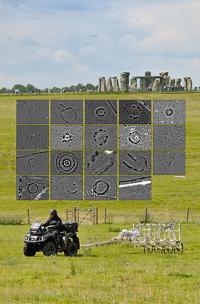
One of those projects recently uncovered previously hidden sections of an ancient pathway that researchers believe led directly to the site from the Avon River in the nearby town of Amesbury.

Known as the Avenue, the pathway is believed to have been built sometime between 2600 and 2200 B.C., according to English Heritage. Over time, parts of the road were obscured, and a modern road called A344 was built across it, reports LiveScience. The new road has made it almost impossible for researchers to confirm the purpose of the Avenue, according to LiveScience.

In an effort to answer some of these questions, researchers carefully began removing the paved A344. While the banks of the original path had long since eroded away, archaeologists were excited to find traces of two parallel ditches that once ran on either side of the path. These ditches connected segments of the Avenue bisected by A344.

“And here we have it –- the missing piece in the jigsaw,” Heather Sebire, properties curator and archaeologist at English Heritage, said in an interview with BBC History Magazine. “It is very exciting to find a piece of physical evidence that officially makes the connection which we were hoping for.”

While the purpose of the Avenue is not exactly clear, Sebire told LiveScience she believes it was involved in ancient processions to and from the site.

“It was constructed in 2300 BC so is a later addition to the stone circle, but people would have processed along it to the monument,” Sebire told BBC Magazine. “It’s quite a dramatic finding.”

At least one researcher unaffiliated with English Heritage believes the excavation could help confirm a theory that the Avenue leading to Stonehenge was built along the solstice axis. As archaeologist Mike Parker Pearson told National Geographic, this means that the direction of the Avenue moving away from the monument points toward where the sun rises on the midsummer solstice, the longest day of the year. But if you turn, the path leading back toward Stonehenge points toward where the sun sets on the midwinter solstice, the shortest day of the year.

Article source: The Huffington Post  By : http://www.huffingtonpost.com/

Stonehenge Tour Guide

« Previous PageNext Page »